
Learning how to wax a surfboard is one of the first skills a new surfer picks up, and it is worth doing well. In the warm waters around Bali, the wax you choose and how you apply it matter even more. Get it right and your feet stay planted. Get it wrong, and you slide off before you even reach the first wave.
Why Waxing Matters More in Warm Water
Wax gives your board grip. Without it, the deck is slick, and your feet have nothing to hold on to. Water temperature decides which wax works, because every bar is designed to stay tacky within a set range. Tropical water sits at the warm end of that scale, so a harder cold-water wax turns greasy and loses its grip in the heat.
A soft tropical wax stays firm enough to grip yet sticky enough to hold your feet in place. This is what warm-water surfers most often get wrong, and it is easy to fix once you know it. If you are just starting out and want to learn to surf in Bali, good wax habits are a simple place to start.

Choosing the Right Wax for Tropical Water
Surf wax is generally categorised by the water temperature it suits, so reading the label correctly is where good grip begins.
How Wax Temperature Ratings Work
Surf wax comes graded by water temperature, and the label on each bar tells you the range it is made for. The four common grades are:
- Cold water (below 14°C / 58°F): the softest formula, for maximum grip in cold conditions
- Cool water (14 to 20°C / 58 to 68°F): medium-soft, for temperate zones
- Warm water (20 to 26°C / 68 to 78°F): medium firmness, for summer and mild tropical conditions
- Tropical (above 26°C / 78°F): the hardest formula, made to resist melting in hot climates
For Bali and similar climates, always reach for the tropical grade. It is the one bar hard enough to hold up when the heat would flatten a softer wax.
Base Coat and Top Coat Explained
A full wax job uses two layers. The base coat is a harder wax laid down first, forming the bumps that give the deck its grip, and it does not wear away quickly. The top coat is softer and stickier, and it is the layer your feet press into. Because it wears down with regular use, you add a fresh top coat every week or two, while the harder base lasts for months underneath. In warm water, a single tropical bar can serve as both if you prefer to keep things simple.
How to Wax a Surfboard Step by Step
Once you have the right bar, the rest comes down to a few easy steps, and a clean board makes every layer grip better. These are the same steps our surf coaching in Bali runs through with beginners.
Clean and Prepare the Board
Start with a dry, clean deck. If old wax is still on it, strip it back first so the new layer bonds properly. A board fresh from the shop, or one stripped bare, gives you the best surface to work from.
Lay Down the Base Coat
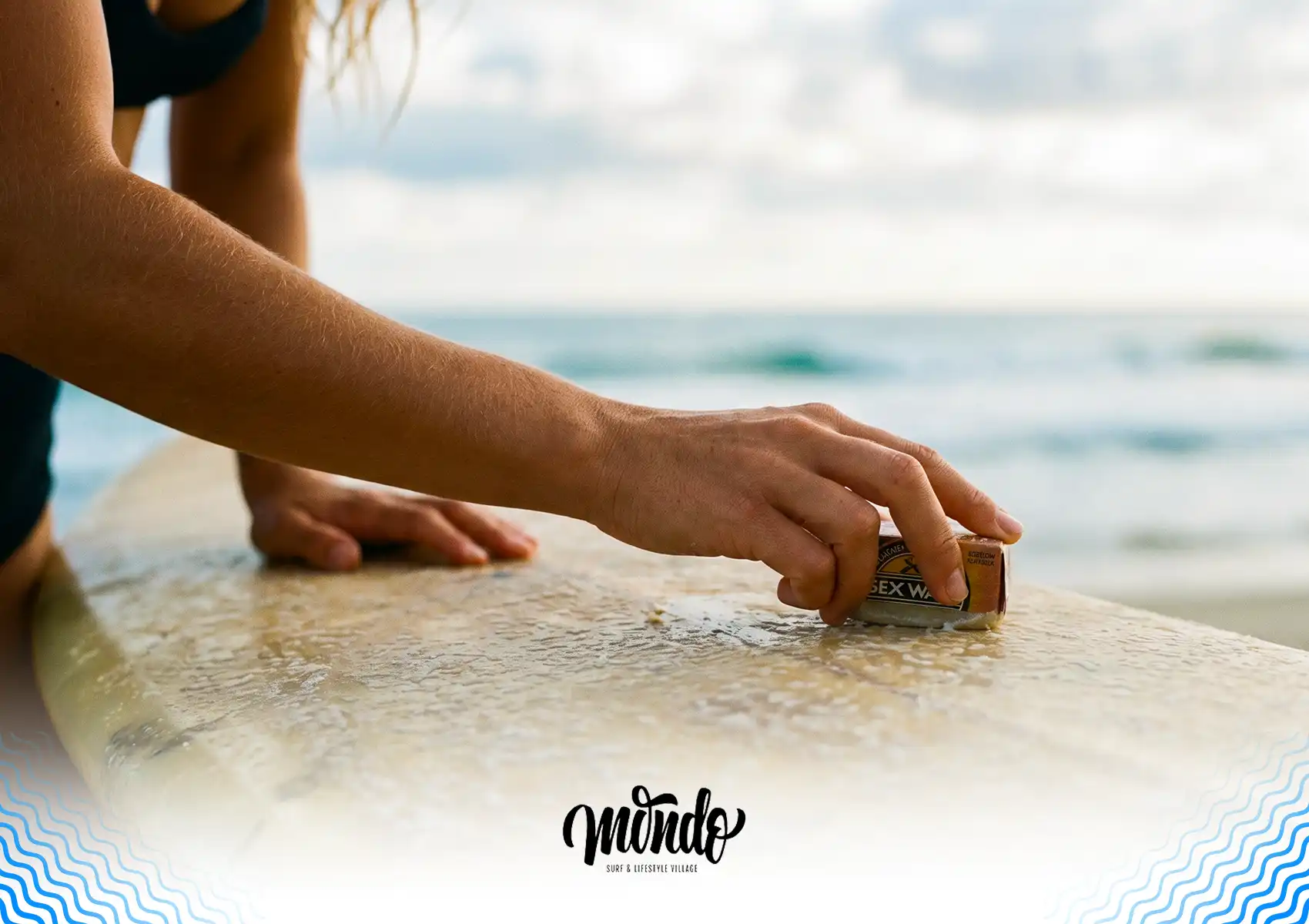
Rub the base coat on using light pressure, first in a criss-cross pattern, then in small circles. You are building a bumpy layer, not smearing on a flat film. When small bumps rise across the deck, the base is ready for the top coat.
Build Up the Top Coat
Apply the top coat over the base in gentle circles. Let the existing bumps do the work and avoid pressing hard, which only flattens them. A few light passes give you a tacky finish with plenty of grip.
Where and How Much Wax to Apply
Wax the areas your body touches. On a shortboard, that means the top two-thirds of the deck where your feet go, plus a strip near the tail. On a longboard, wax the full deck. Reapply whenever the grip starts to fade.
Keeping Your Wax Fresh in Tropical Heat
Heat, sun, and sand are hard on a wax job in Bali, and a coat fades faster here than it would in cooler water. A little regular care protects what you have laid down and keeps your grip dependable for longer between fresh coats.
Protecting Your Wax From Sun and Sand
Never leave your board deck-up in direct sun, as the wax will melt and run straight off. Keep it in the shade or under a cover between surfs. Rinse sand off after each session, because loose grains dig in and turn a good grip slick.
When to Strip and Rewax
When the bumps flatten, the wax turns grey, or sand fills the surface, it is time to strip it back and rewax. If you surf most days from a Bali surf camp, expect to do this every month or two to keep the grip reliable.
Wax Up and Paddle Out in Bali
With the right tropical wax, a clean application, and a board kept out of the sun and sand, your grip will hold from your first wave to your last. Ready to put fresh wax under your feet and paddle into the clean Bali surf? At our surf camp in Bali, Mondo Surf Village helps you build the small skills that add up to real progress in the water, with coaching, video feedback, and daily yoga alongside your surfing. Come and join a session, and feel the difference good preparation makes.
Frequently Asked Questions
What wax should I use for warm tropical water?
Use a tropical-grade wax, the hardest option on the shelf. It is formulated to stay firm in warm water and hot air, where softer cold-water waxes melt and lose their grip almost straight away.
How often should I wax my board in Bali?
Refresh your top coat every one to two weeks if you surf often, and strip the whole board every month or two. Tropical heat and sand wear a wax job down faster than in cooler climates.
Can I apply new wax over old wax?
Yes, you can add a fresh top coat over a base that is still bumpy and clean. Once the wax greys, flattens, or traps sand, strip it off and re-wax from scratch.
Does surf wax melt in hot weather?
Yes, surf wax melts in direct sun and high heat, which is exactly why tropical grades exist. Keep your board shaded and out of the sun when it is not in use to stop the wax running.