
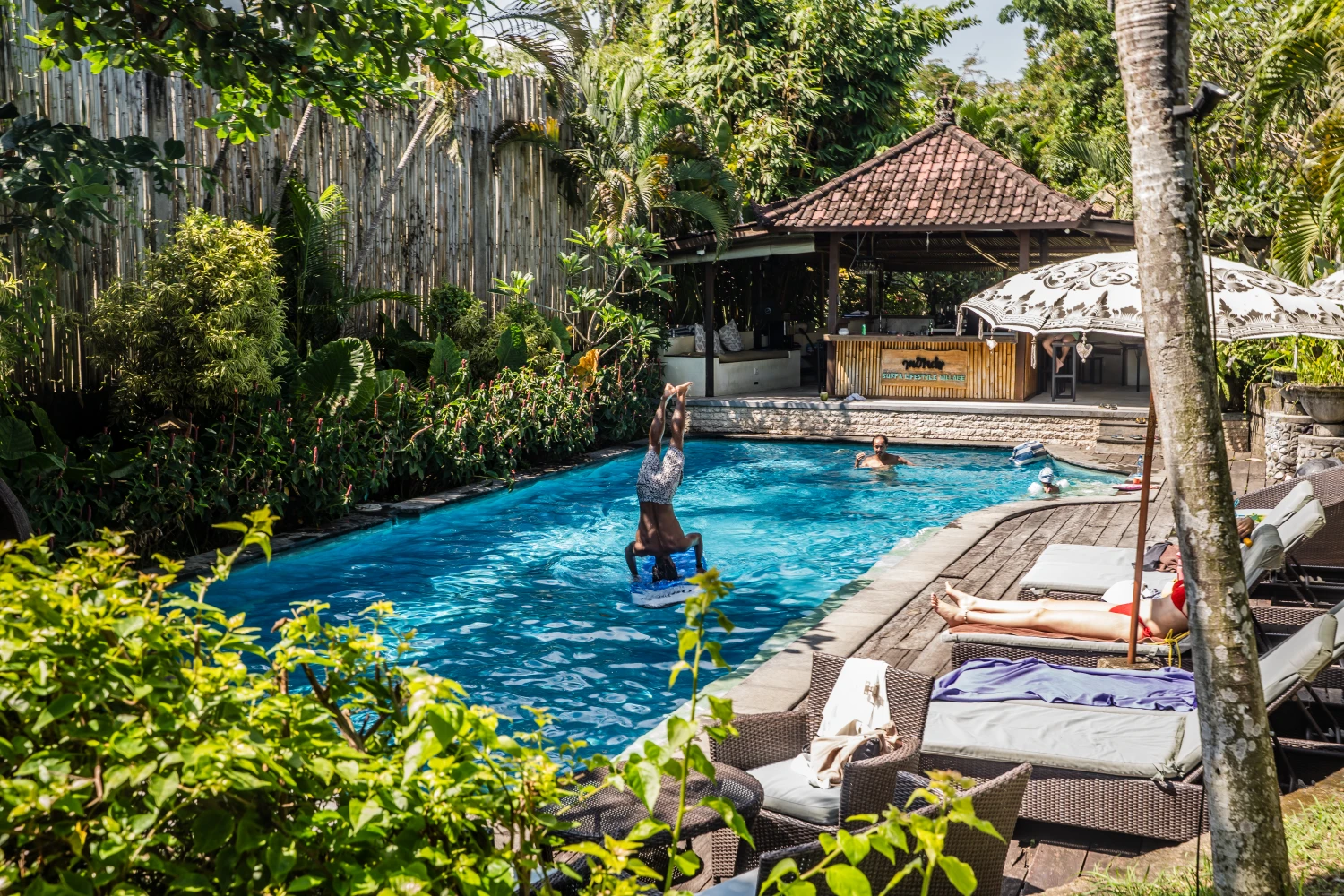
If you’re considering joining a surf camp for the first time, you may be wondering what daily life actually looks like. A beginner surf camp schedule in Bali is designed to balance learning, rest, and enjoyment, so you progress without feeling overwhelmed.
This article walks through a realistic day at a beginner surf camp and explains why structure plays a key role in learning to surf.
Why Beginner Surf Camps Follow a Schedule
Beginner surfers learn best with routine. Surf camps structure the day around:
- Tides and wave conditions
- Energy levels and recovery
- Consistent coaching and feedback
Instead of surfing randomly, each session builds on the last.
Morning: Surf Session & Fundamentals
Most beginner surf camps start early, when waves are cleaner, and crowds are smaller.
A typical morning includes:
- Light breakfast or coffee
- Warm-up and surf theory
- First surf session focused on basics
- Instructor feedback in small groups
Morning sessions usually focus on paddling, timing, and pop-up technique.
Midday: Rest & Recovery
After the first surf session, rest is essential, especially for beginners.
Midday often includes:
- Lunch and hydration
- Stretching or optional yoga
- Free time to relax or explore
Surf camps in Canggu emphasise recovery to avoid fatigue and injuries.
Afternoon: Technique & Progression
Afternoon sessions are often lighter and focused on refinement.
Activities may include:
- Second surf session (conditions permitting)
- Video analysis or technique breakdown
- Balance or fitness training
At surf-focused places like Mondo Surf Village, afternoons balance progression with flexibility, allowing guests to recover properly.
Evening: Community & Wind-Down
Evenings are usually relaxed and social.
Common evening routines:
- Dinner with other guests
- Informal surf discussions
- Early nights for recovery
This community aspect helps beginners stay motivated and comfortable in the learning process.
How Long Are Surf Camp Days?
Beginner surf camp days are active but not exhausting. Total surf time is usually 2–4 hours per day, depending on conditions and energy levels.
This balance prevents burnout and keeps learning enjoyable.
Why Structure Helps Beginners Progress Faster
A structured schedule helps beginners:
- Build muscle memory
- Reduce fear through repetition
- Improve technique consistently
- Understand ocean conditions
Rather than guessing what to do each day, beginners can focus entirely on learning.
Final Thoughts
A beginner surf camp schedule is designed to support steady progression, not just maximise time in the water. By combining surf sessions, recovery, and community, surf camps create an environment where beginners feel confident and supported.
For travellers who want a clear routine and guidance, staying at a surf camp like Mondo Surf Village offers structure without pressure.
FAQs
How many surf sessions are there per day at a beginner surf camp?
Most beginner surf camps include one to two surf sessions per day, depending on conditions and energy levels.
Do beginners get rest days at surf camps?
Yes. Rest and recovery are important, and many camps adjust schedules to avoid fatigue.
Is a strict schedule mandatory at surf camps?
Schedules provide structure, but most camps allow flexibility based on guest needs and conditions.
Are surf camp schedules the same every day?
They are similar but adjusted daily based on tides, swell, and weather.
Is a beginner surf camp better than booking lessons independently?
For beginners, structured schedules often lead to faster and safer progression.