
Two disciplines that look unrelated ask for the same qualities. Balance while the ground moves, timing that beats strength, and the ability to stay calm when something goes wrong. Martial arts for surfers is not simply gym-based cross-training. It is a way to develop balance, timing, and composure, which is why afternoons at a surf camp in Bali can look different from a standard surf trip.

What Martial Arts and Surfing Share
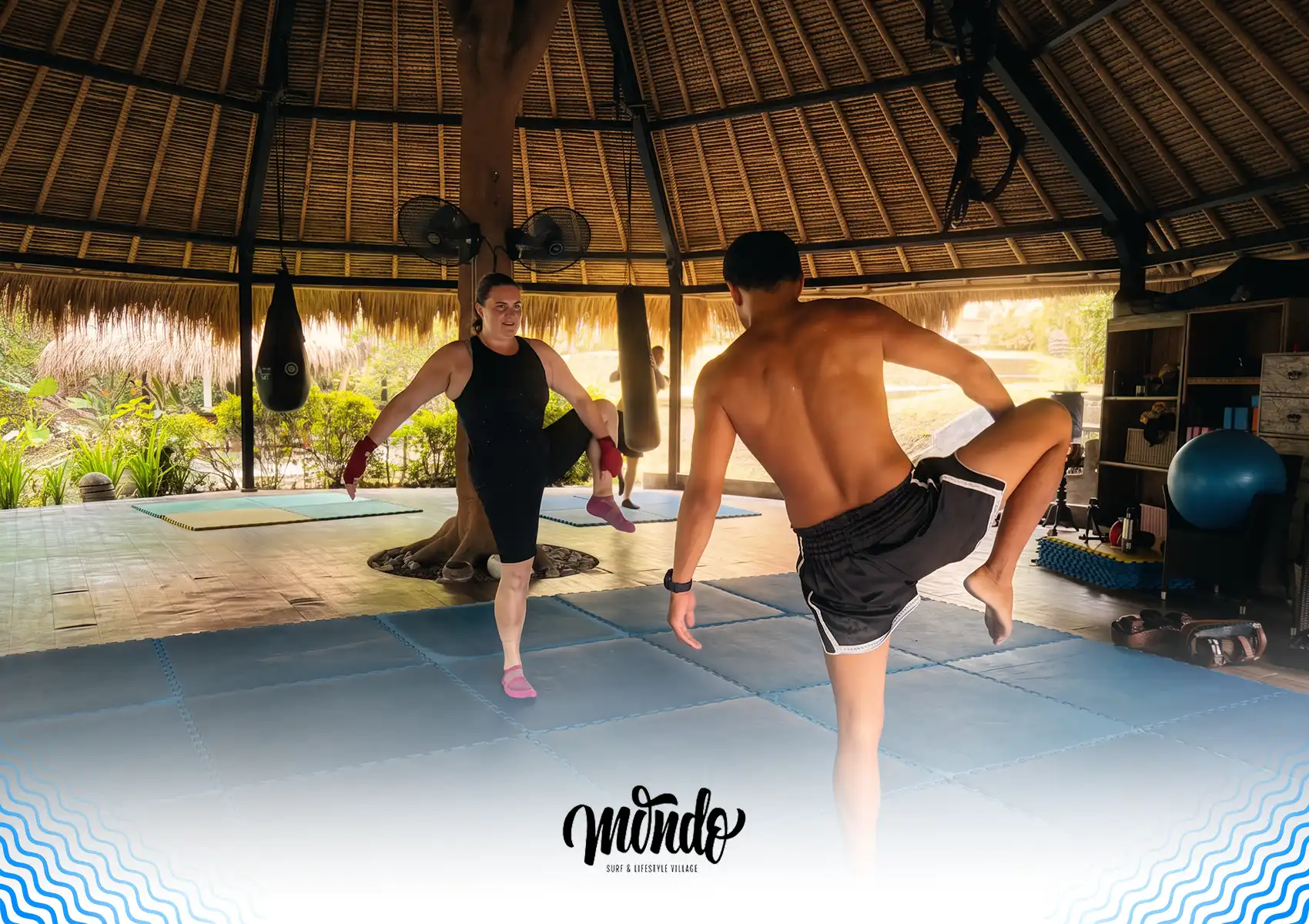
The overlap is not obvious from the outside, and it becomes clear the first time you train after a week of surfing.
Balance While Everything Moves
Neither pursuit lets you settle. A martial artist adjusts to another person’s movement, while a surfer adjusts to constantly changing water. Both rely on small corrections through the feet, hips, and core.
Timing Rather Than Force
Power applied at the wrong moment achieves very little in either discipline. Both reward the person who waits, reads the moment, and then commits fully once it arrives.
Composure When It Goes Wrong
Training teaches you to keep thinking while you are uncomfortable. That is the same skill a surfer needs underwater after a heavy fall, where controlled breathing helps create the calm needed to recover.
The Physical Carryover
The physical benefits show up in places surfers do not associate with training, which is why a surf camp in Bali makes room for them.
Rotational Strength Through the Core
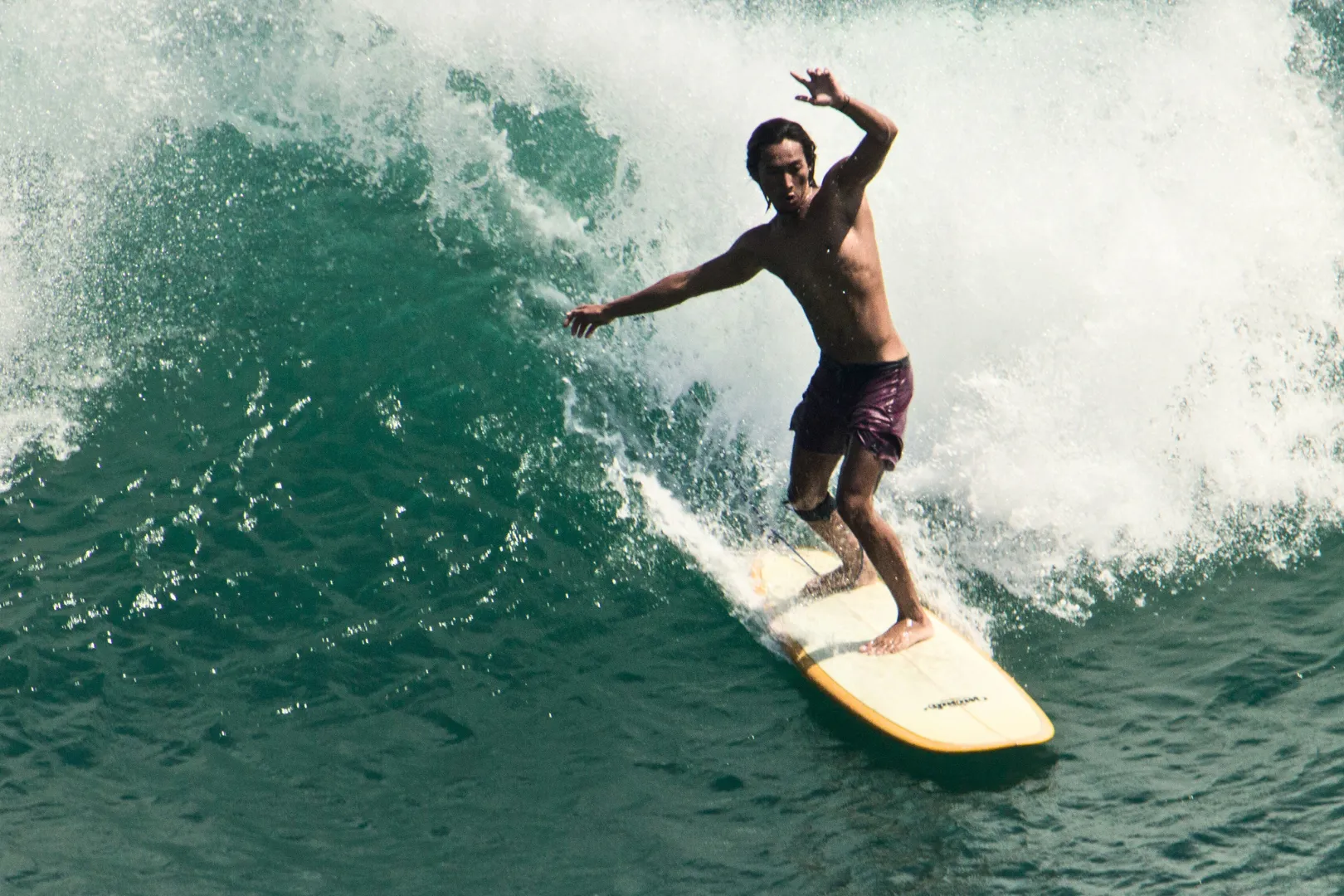
Many martial arts movements generate power through rotation of the hips and core rather than relying only on the arms. Turning a surfboard works the same way, and the strength behind it is built in the same place.
Footwork and Foot Placement
Martial arts train you to know where your feet are without looking at them. That habit is worth a great deal on a board, where glancing down is one of the quickest ways to fall.
Explosive Power for the Pop Up
Getting from the floor to a stable stance quickly is a familiar demand on the mat. It is also exactly what the pop up asks for, and the repetition on land costs you nothing in the water.
The Mental Carryover
The less visible half of the carryover is the half surfers tend to notice later.
Staying Calm Under Pressure
Training regularly puts you in situations where the easy response is to tense up. Learning to breathe and think through those moments changes how a bigger set looks from the lineup.
Reading What Is About to Happen
Experienced martial artists watch for the movement before the movement. Surfers do the same when they read a wave beginning to stand up further along the bank, and both come from repetition rather than instruction.
Accepting Slow Progress
Both pursuits humble people who arrive in a hurry. Weeks of small corrections come before anything that looks impressive, which makes the patience a training room teaches useful on a Bali surf holiday.
How It Fits Into a Surfing Week
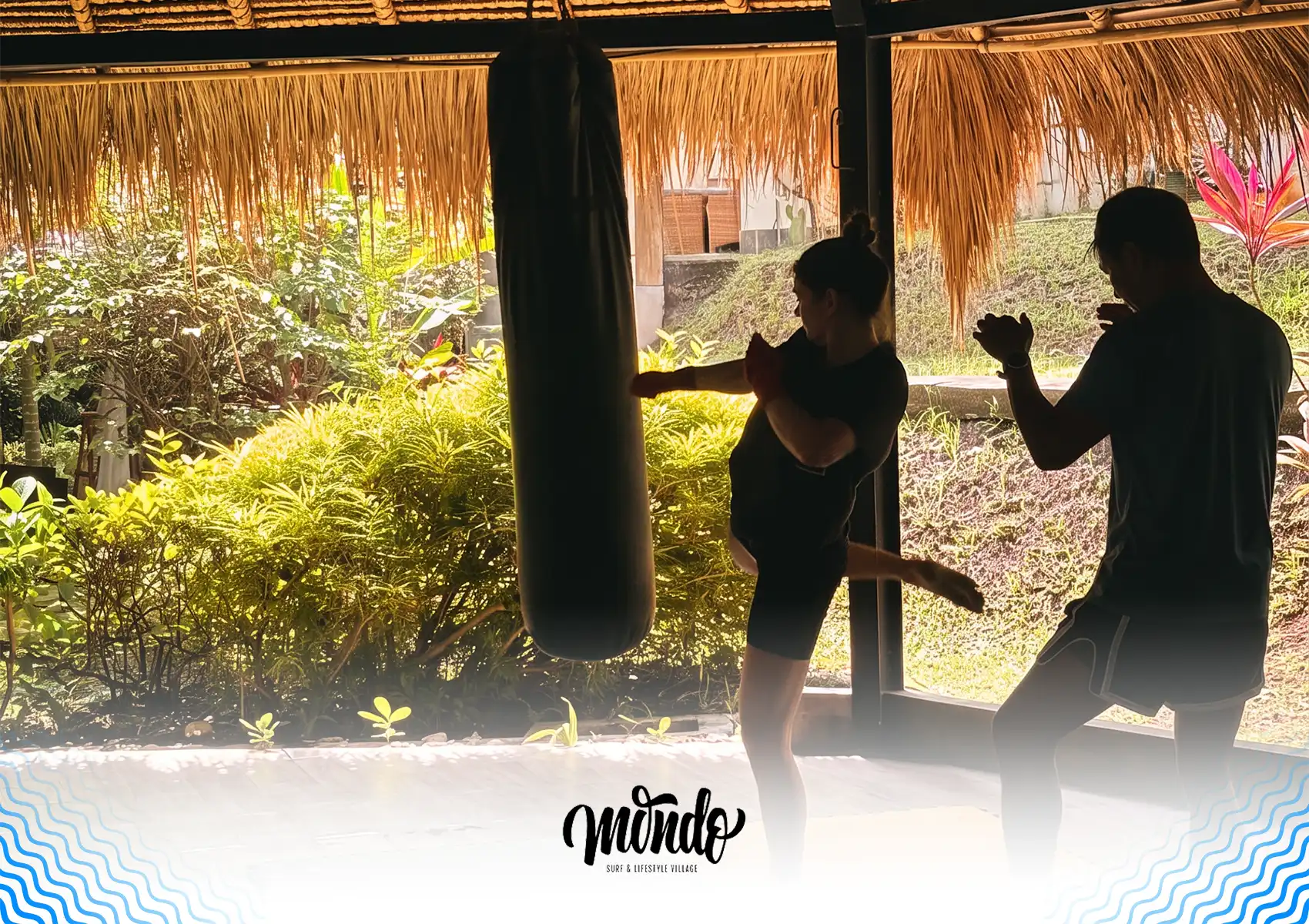
Cross-training only helps if it leaves you fresh for the water, so the order of the day matters.
Train in the Afternoon
The surf session is in the morning, when conditions are usually best, so martial arts is later in the day. Training in the afternoon makes use of the time when surfing conditions are often less favourable, leaving the best hours for the water.
Keep the Morning for Yoga and Surfing
A day at a surf camp in Bali opens with yoga and then the surf session, in that order. The poses that open your shoulders belong there, not after training.
Rest Still Matters
Adding sessions is not the same as adding progress. If your paddling starts to suffer, the answer is a rest day rather than another hour of training, whichever discipline it happens to be in.
Common Questions About Martial Arts and Surfing
Do martial arts help with surfing?
Yes, mainly through balance, timing, and composure rather than raw strength. The rotational power and body awareness developed through many martial arts styles can also support surfing movements.
Can beginners join martial arts sessions at a surf camp?
Usually, because sessions are aimed at general training rather than competition. It is worth checking what a particular camp offers before you book if it matters to you.
How often should surfers cross-train
A few sessions a week is usually enough alongside regular surfing, depending on your training level and recovery. More than that tends to cost you in the water rather than add anything to your surfing.
Does martial arts training improve balance?
It does, through footwork and constant adjustment rather than through balance exercises. Both sports ask for small corrections made without conscious thought.
Is martial arts training tiring before a surf session?
It can be, which is exactly why it suits the afternoon. Surfing in the morning at a surf camp in Bali keeps the freshest hours for the water.
More Than Surfing in the Afternoons
Curious how a week of this feels? Surf coaching, daily yoga, aerial yoga, martial arts, and photography sit alongside each other at a surf camp in Bali, and the range is the point rather than a list of extras. Come find out with Mondo Surf Village.