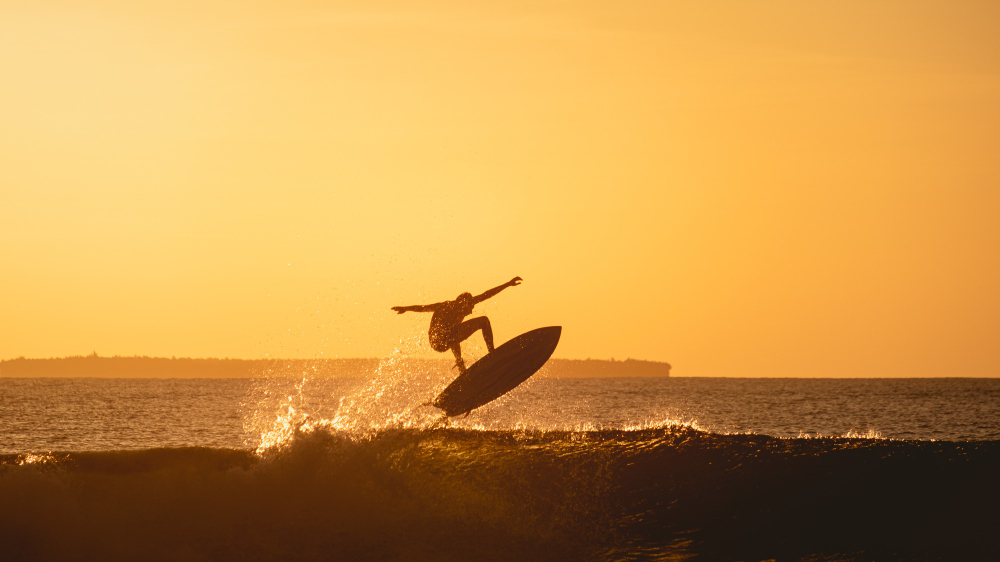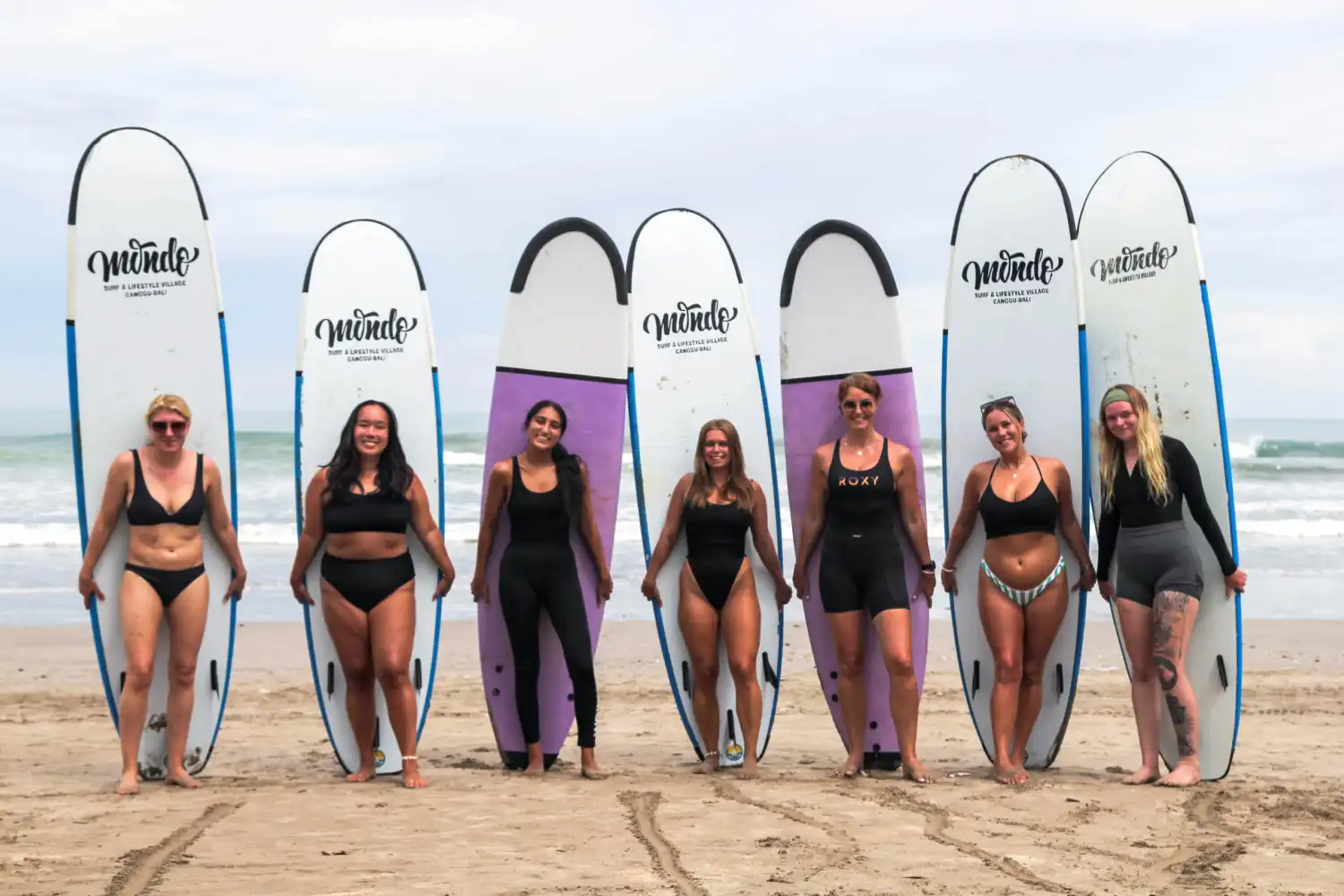
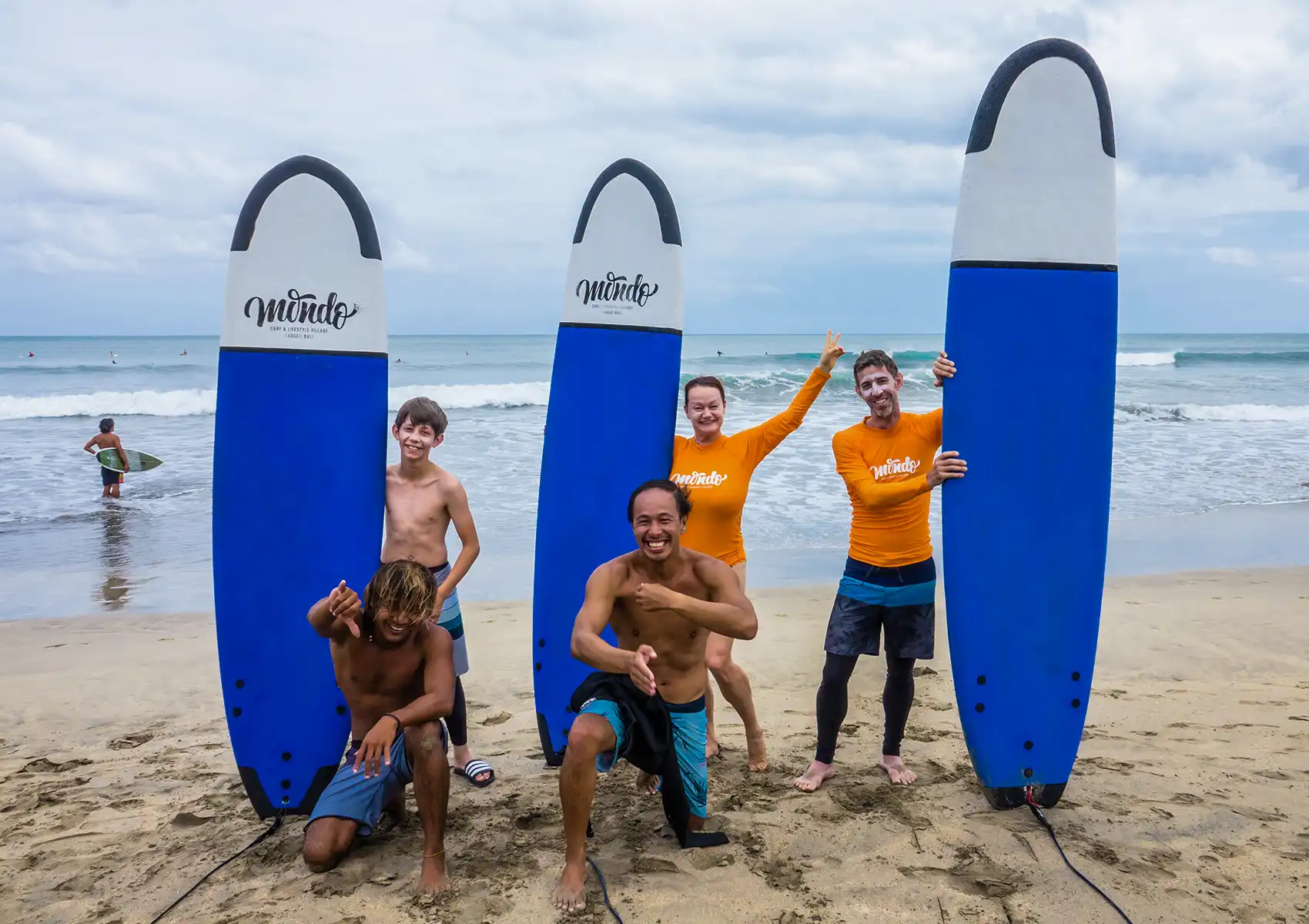
If you’re serious about improving your surfing, combining focused intermediate techniques with structured coaching, such as a surf camp in Bali, can be one of the most effective ways to break through a plateau.
Many surfers reach a stage where they can comfortably stand up and ride waves, but then find their progress slowing down. The key to improving faster isn’t simply spending more time in the water, but working on specific technical habits that refine control, timing, and wave selection.
Defining the Intermediate Surfer
Before targeting your weaknesses, it helps to understand what the intermediate stage actually looks like. The label covers a wide range of abilities, and being honest about where you sit is the starting point for real progress.
What Are Considered Intermediate Surfing Skills
An intermediate surfer can consistently catch unbroken waves, complete a basic pop-up, and link a bottom turn with a follow-up manoeuvre. You are reading the wave with growing confidence, riding lefts and rights, but your technique still relies more on instinct than deliberate intention.
Identifying the Intermediate Plateau
The intermediate plateau occurs when visible progress slows despite regular time in the water. It typically happens once muscle memory forms around imprecise movement. Without targeted correction, those ingrained patterns become harder to shift the longer they continue.
Master These Intermediate Surf Techniques
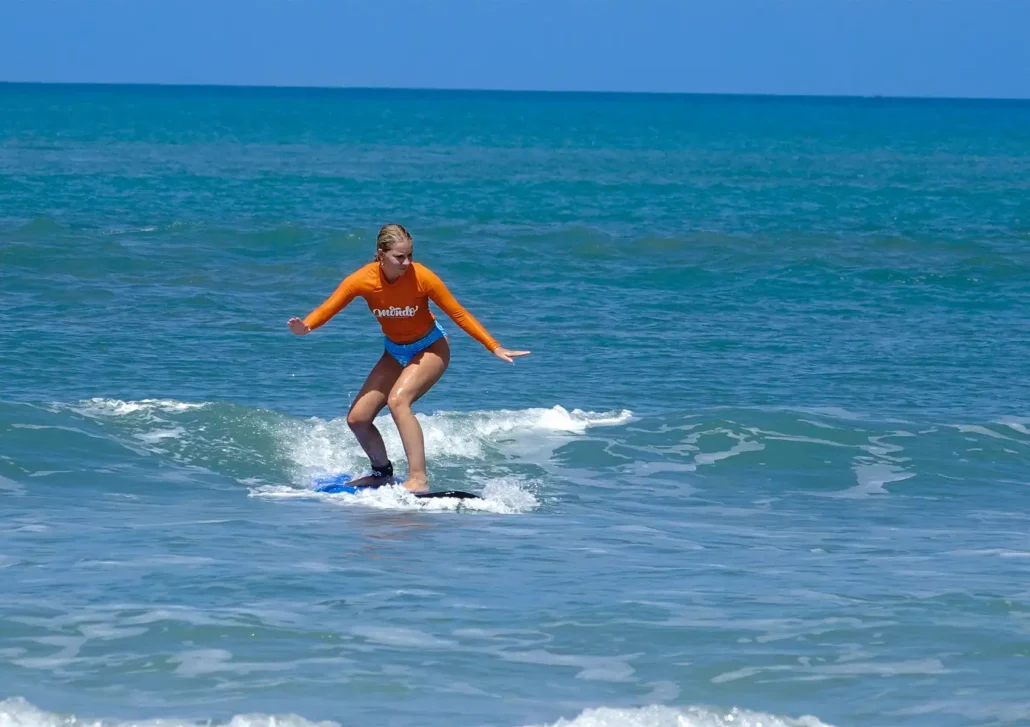
Improving at this stage is about precision rather than repetition alone. These are the fundamental movements that separate surfers who remain intermediate from those who move decisively past the intermediate stage.
Effective Wave Selection and Positioning
Poor wave selection is one of the most overlooked surfing progression tips at this level. Reading the peak, understanding how a set moves, and positioning yourself in front of the right section puts you on better waves with less wasted effort and more opportunity to practise your technique.
The Art of the Bottom Turn
The bottom turn is the foundation of every manoeuvre in surfing. Without a committed, well-timed drive off the bottom, top turns lose all power, and it becomes impossible to build flow. Practise projecting low and loading your back foot before redirecting hard up the face.
Generating Speed and Improving Flow
Speed comes from rail engagement and reading the wave’s energy, not from paddling harder once you are on your feet. Compressing through the trough and extending through the shoulder of the wave pumps natural momentum into each section, giving your turns more power and your surfing more continuity.
Essential Strategies to Improve Surfing Fast
Progress in the water depends heavily on what you do away from it. These strategies build the physical foundation and habits that accelerate technical development across every session.
Refining Your Paddle Technique and Out Back Etiquette
Inefficient paddling wastes energy before you even catch a wave. Focus on a high elbow entry, full extension through the stroke, and a clean exit. Stronger paddling also improves your positioning in the water, making it much easier to apply good surf etiquette in the line-up, a practical skill that builds your confidence and awareness immediately.
Land-Based Training and Muscle Memory
Pop-up drills, core stability work, and land-based balance training reinforce the movement patterns your body needs to perform automatically in the water. Regular yoga or skate sessions also build hip flexibility and proprioception, which directly translate into more controlled surfing.
Mental Preparation and Confidence Building
Knowing how to get better at surfing at an intermediate level means committing to the wave in front of you. Hesitation in the take-off zone is one of the most common limiters at this stage. Choosing to go, even when the outcome is uncertain, builds the decisiveness that all good surfing requires.
Equipment Mastery for the Intermediate Level
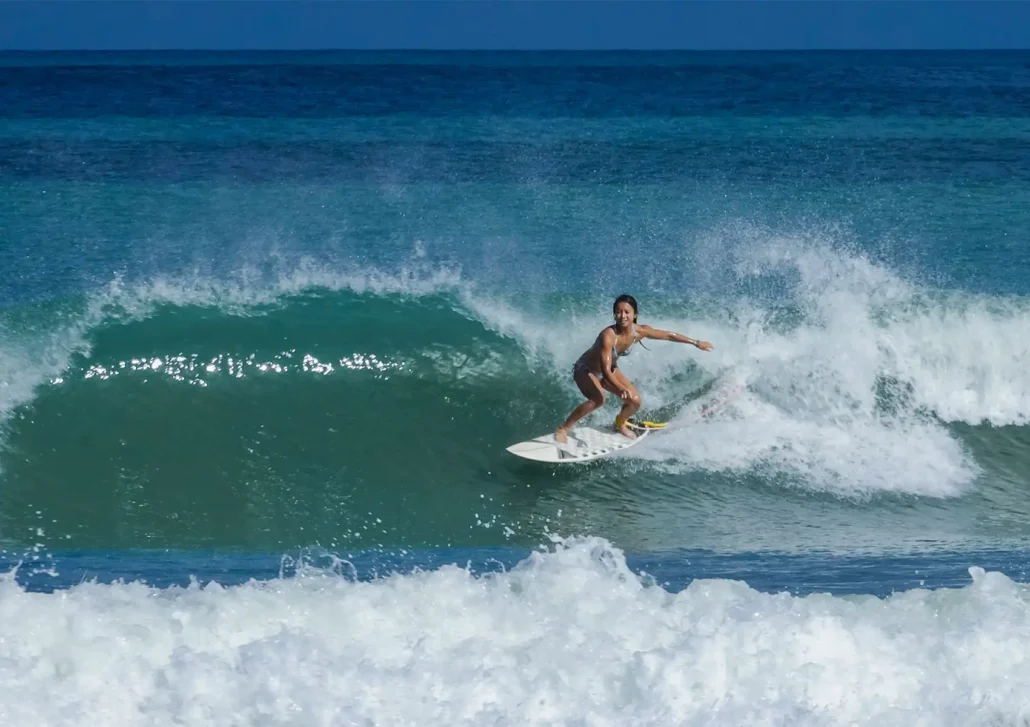
Your board is no longer just something to stand on. At this stage, equipment choices directly shape how quickly you can develop specific technical skills and how well you understand what your body is actually doing.
Choosing the Right Board for Progression
Staying on too much volume keeps you comfortable but prevents you from generating your own speed and turn control. When choosing the right board for Bali’s waves, a careful step down in litres, matched to your weight and fitness, creates enough challenge to accelerate learning without making every session a struggle.
Understanding Fin Setups and Rail Control
Fin configuration changes how a board responds to your input. A standard thruster setup provides a reliable balance of drive and release for most intermediate surfers. Experiment gradually with looser rear fins to introduce more pivot, helping you understand how your back foot controls direction.
Elevate Your Growth at Mondo Surf Village
Structured coaching in the right environment brings everything covered above together far more quickly than self-directed practice alone. Mondo Surf Village provides intermediate surfers with daily guidance, varied breaks, and the kind of direct feedback that changes habits fast.
The Advantage of an Intermediate Surf Camp in Bali
Professional coaching is the fastest way to break the intermediate plateau because it removes guesswork from the process. At a surf camp in Bali, experienced coaches identify the exact habits holding you back and build a session plan around correcting them, rather than allowing poor technique to become further ingrained.
Using Video Analysis to Fix Technical Errors
Visual learning is one of the most powerful tools available for intermediate surfers. Mondo Surf Village uses surf video analysis so you can see exactly what your body is doing on the wave. Watching your own surfing closes the gap between what you think is happening and what the footage actually shows.
Expert Guiding to Bali’s Best Intermediate Reefs
Knowing which break suits your current level on any given day requires years of local experience. Our guides understand the tides, swell windows, and crowd patterns at Canggu’s intermediate breaks, ensuring you surf the right conditions consistently while keeping your safety a clear priority throughout.
Committing to Consistent Practice
Technical knowledge alone does not produce progress. The surfers who improve fastest commit to showing up regularly, applying what they have learnt, and remaining patient when development feels slow. Shifting your mindset from chasing waves to building movement patterns is what separates those who plateau from those who keep growing.
Book Your Next Step at Our Surf Camp Bali
Ready to put these intermediate surf techniques into daily practice? Join our surf camp in Bali and train within a structured coaching program designed to help you progress with confidence, consistency, and clear technical improvement.