
How long does it take to learn to surf? The honest answer has two parts because it depends on what you consider surfing. Standing up in whitewater often happens within the first lesson or two. Riding unbroken waves with any control belongs to a longer timescale, and knowing that before you book a surf camp in Bali makes the first week far less frustrating.

What Happens in the First Lesson
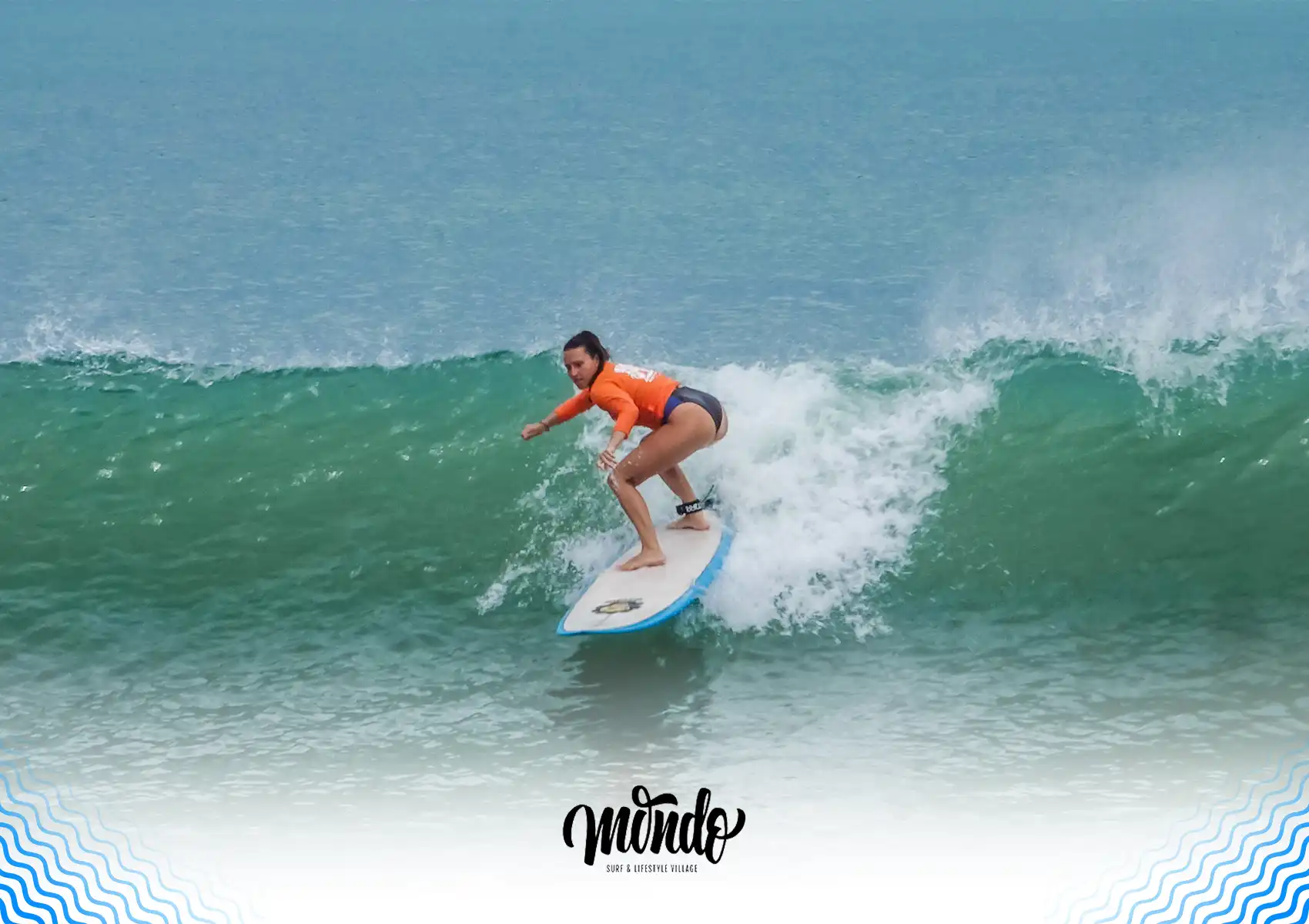
The first session tends to go better than people expect, which is why surf lessons in Bali start in the whitewater.
Standing Up Is Realistic
With a large board, small whitewater, and coaching, many beginners can stand up during their first session. It is a genuine milestone and the easiest one.
Whitewater Comes First
Those first rides come on waves that have already broken, with a steady, forgiving push. It is the right place to start, and a beginner lesson in Canggu is usually built around this progression.
What the First Week Looks Like
A week is long enough to change what your body does automatically, which is what a surf camp for beginners in Bali counts on.
Repetition Builds the Pop Up
The pop up gradually becomes automatic within the first few days. Once it is automatic, your attention is free for the wave, which is when surfing begins to feel like surfing rather than gymnastics.
Paddling Fitness Arrives Slowly
Shoulders take longer to adapt than technique does. This is why early sessions often feel physically demanding, even when the surfing itself starts to improve. Expect the early sessions to end because your arms are finished rather than because you ran out of things to work on.
Tiredness Shapes the Week
The middle of the week is often the hardest part, when fatigue has built, and the novelty has worn off. Progress tends to reappear once the body catches up with the workload.
What Takes Months Rather Than Days
Everything beyond the pop-up runs on a slower clock, and nobody puts that part in a brochure.
Catching Unbroken Waves Consistently
Paddling into a green wave without a push is a different skill from riding whitewater. Some surfers manage it within a week; others take several trips, and neither can predict where they end up.
Knowing Where to Sit
Reading where a wave will break and putting yourself there is the slowest thing to learn and the hardest to teach. It comes from hours of watching rather than from instruction.
Turning With Control
Angling along the face arrives reasonably early. Turning deliberately, in the direction you chose and on the part of the wave you chose, is the work of months rather than days.
What Speeds Progress Up
Three things reliably shorten the timeline, and none of them involves trying harder in the water.
Surfing on Consecutive Days
Two sessions a week for a month often create slower progress than a focused week of daily surfing, which is the argument for a surf camp in Bali rather than occasional lessons. Skills reinforced on consecutive days are easier to remember and build upon.
Coaching and Video Feedback
You cannot see your own surfing, so the same faults survive until somebody names them. Watching footage with a coach turns weeks of guessing into a single conversation. At Mondo Surf Village, video feedback helps guests understand what changed between sessions, turning small corrections into visible progress.
Waves That Match Your Level
Progress happens on waves you can actually ride. Surfing conditions beyond you produce long sessions with very few rides, which is slow learning dressed up as ambition.
Common Questions About Learning to Surf
Can you learn to surf in a week?
You can learn to stand up, ride whitewater, and understand what you are doing out there. Catching unbroken waves unaided within a week happens for some people and not for others.
How many lessons does it take to stand up?
Often one or two, with a coach guiding you into the wave. Standing up on a wave you caught entirely by yourself takes considerably longer.
Why is surfing progress not linear?
Because conditions change every session and the ocean never repeats itself exactly. A poor day can follow a good one for reasons that have nothing to do with your ability.
Is it harder to learn to surf as an adult?
Not especially. Adults often bring patience, awareness, and the ability to follow instructions, which can help the learning process.
How often should you surf to keep improving?
Consecutive days where possible, with enough rest that your paddling holds up. A focused week at a surf camp in Bali can lead to more progress than months of occasional sessions.
Give Yourself More Than a Weekend
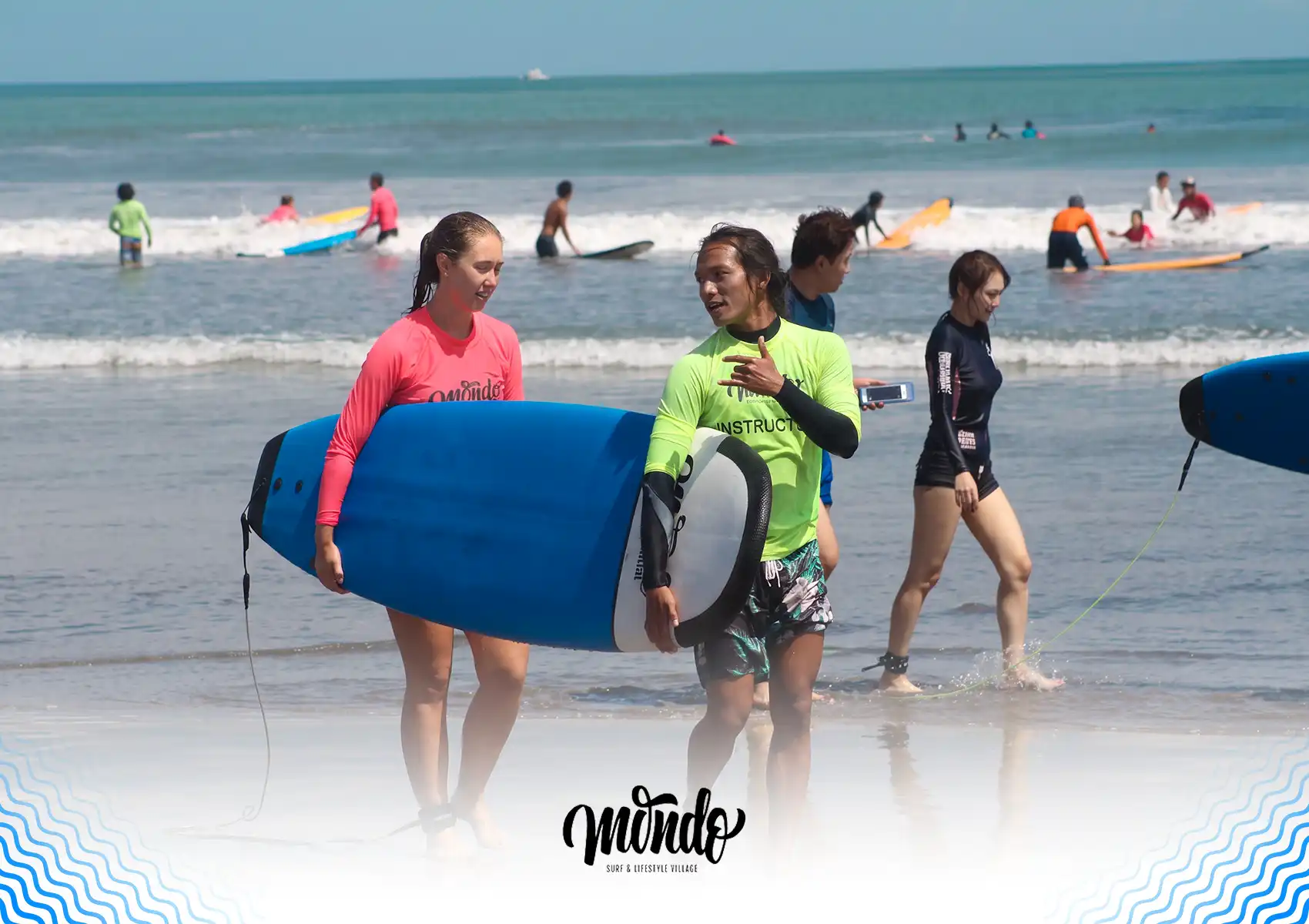
Ready to find out where a week can take you? Daily coaching, video feedback, and waves chosen for your level at a surf camp in Bali help you build experience quickly. The honest part is that surfing still takes patience, and it will probably feel slow on Wednesday. Start your surfing journey with Mondo Surf Village.