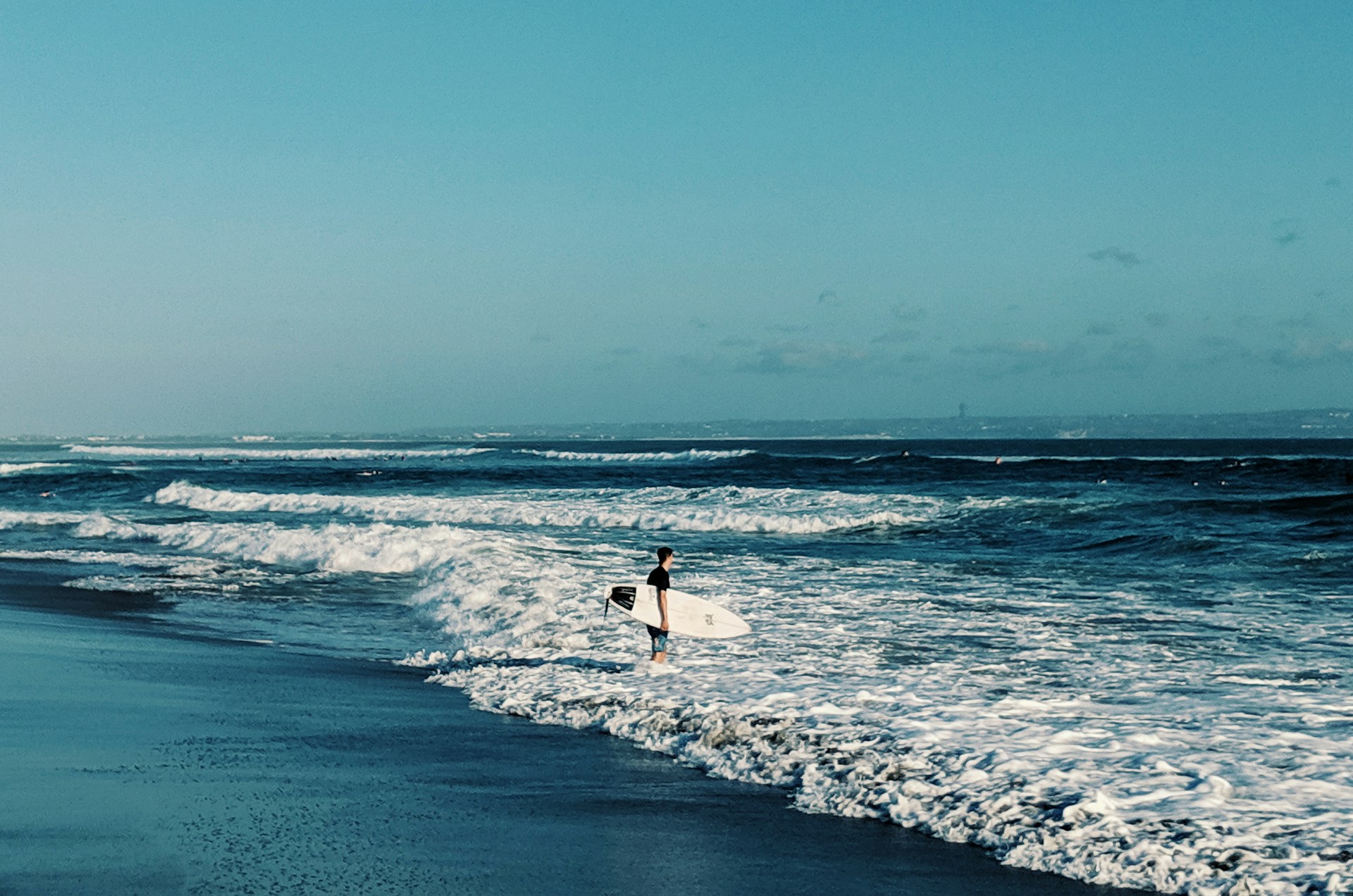

A wave in beginner conditions usually releases quickly. Fear stretches those moments into something much longer, and the tension it creates is what leaves you gasping when you surface. Breath control for surfing is less about capacity than about composure, and the daily yoga class at a surf camp in Bali is where most of that work quietly happens.

Why Breathing Matters Once You Are in the Water
Nothing about a wipeout requires athletic lungs. It requires not making the situation worse in the first second.
Calm Uses Less Air Than Panic
Thrashing about burns through what you have and tightens everything at once. Staying loose uses far less energy, which is why calm surfers are often able to recover more easily after a wave that feels intimidating.
The Wave Passes Faster Than It Feels
Ask anybody after a heavy fall, and they will overestimate how long they were down there. Knowing that the estimate is unreliable takes some of the power out of the moment.
What Yoga Breathing Teaches Surfers
Yoga is part of the timetable at a surf camp in Bali because it supports the body, though it is the breathing practice that surfers often notice most in the water.
Slow Exhales Settle the Body
A long, unhurried exhale slows everything down, including your heart rate and the urge to rush. It is the most portable thing yoga gives a surfer.
Steady Breathing Between Sets
Sitting on your board with slow, even breaths keeps you ready rather than winded. Recovering between waves is what allows you to maintain a longer session rather than becoming tired too quickly.
Attention on the Breath Rather Than the Fear
Following one breath gives your mind something ordinary to hold on to. That sounds small on land, and it is the difference between managing a wipeout and being managed by one.
How to Practise It on Land
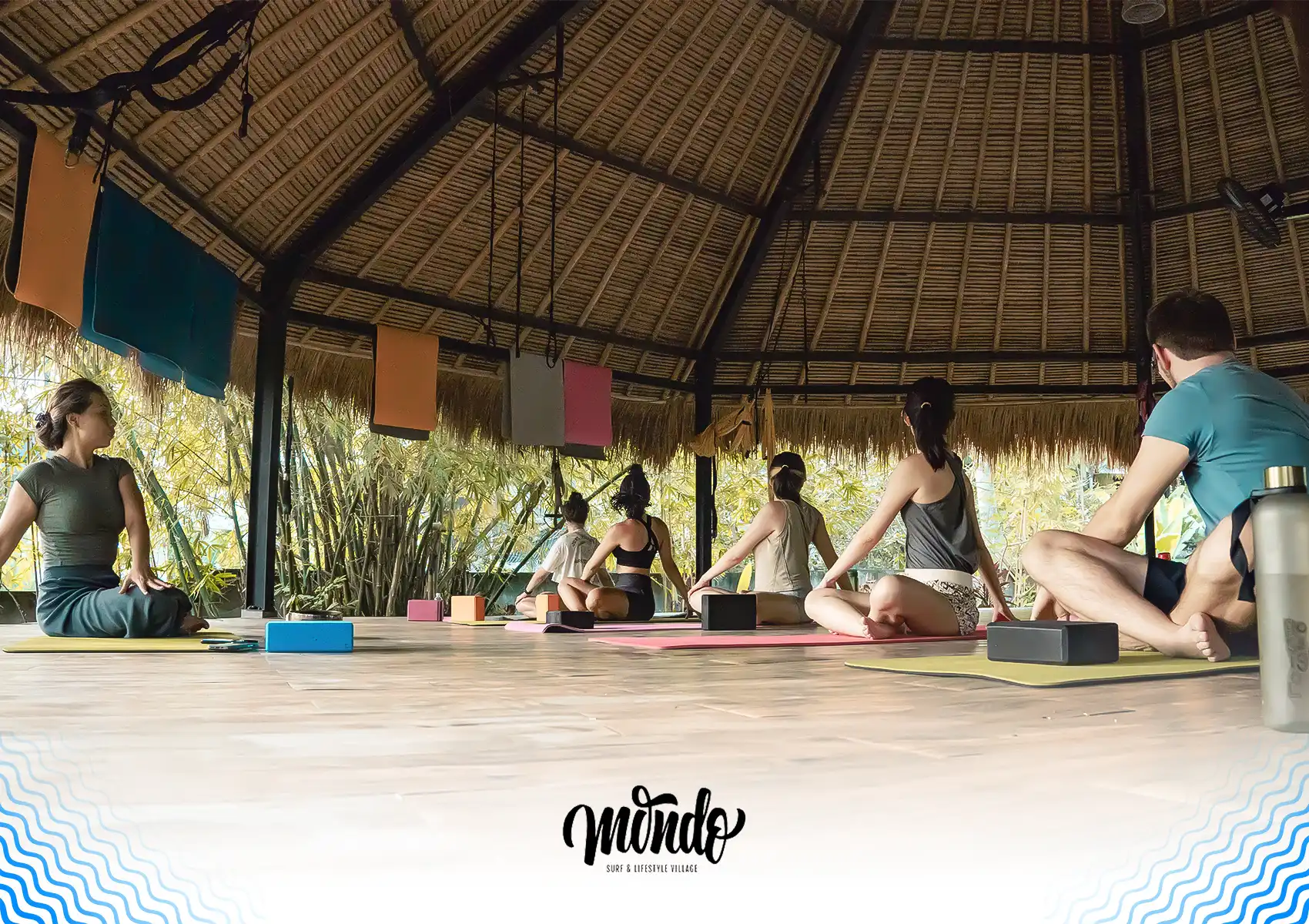
The best time to practise calm breathing is before you need it. Building the habit on land makes it easier to use when the ocean feels overwhelming.
Use the Morning Yoga Class
At a surf camp in Bali, yoga before the surf session can help settle your breathing before you paddle out. Bringing your attention to it there costs nothing and carries straight into the water.
Breathe Through the Effort in Martial Arts
Martial arts sessions ask you to keep breathing while you work, which is the same demand a heavy surf makes. Holding your breath under effort is a habit worth losing on land.
Keep It Gentle and Regular
None of this needs to be intense. A few unhurried minutes each day does more than an occasional long session, and there is nothing to gain from pushing the practice hard.
How It Feels in the Water

Out there, the practice reduces to three simple moments, none of which involve doing anything clever.
Take a Breath Before the Impact
If you see the fall coming, take a calm breath if you have time before the impact. One is enough, and a series of hurried deep breaths is a habit to avoid entirely.
Let the Whitewater Go Past
Go soft, protect your head, and let the wave move you rather than swimming against it. Coming up calm is mostly decided before you go under rather than after.
Surface and Reset Before the Next One
Take a few slow breaths as soon as you are up rather than sprinting straight back out. Surf coaching in Bali often flags this, because rushing is how sessions end early.
Common Questions About Breathing and Surfing
How do surfers stay calm underwater?
By staying loose rather than fighting the water. Relaxation uses far less energy than struggling, and the wave releases you either way.
Does yoga breathing help with surfing?
Yes, mostly through composure rather than capacity. Slow exhales and steady breathing between waves keep you settled, which is one reason yoga sits on the daily timetable at a surf camp in Bali.
Should you hold your breath when you wipe out?
You will naturally take a breath as you fall, and that is all that is needed. Deliberate breath holding is a specialised discipline with its own risks, so it is not something to practise around surfing on your own.
Why does fear make a wipeout feel longer?
Attention narrows when you are frightened and time stretches with it. Surfers often overestimate how long they were underwater, which is worth remembering the next time it happens.
Can breathing practice reduce nerves before a session?
Often, yes. A few slow breaths on the sand settle the body before you paddle out, and it works on the same principle as the class you did that morning.
Calm Is Something You Practise
None of this is learned in a panic. Morning yoga, martial arts, and waves matched to your level are how a week at a surf camp in Bali builds composure before you need it. Book your surf experience with Mondo Surf Village.