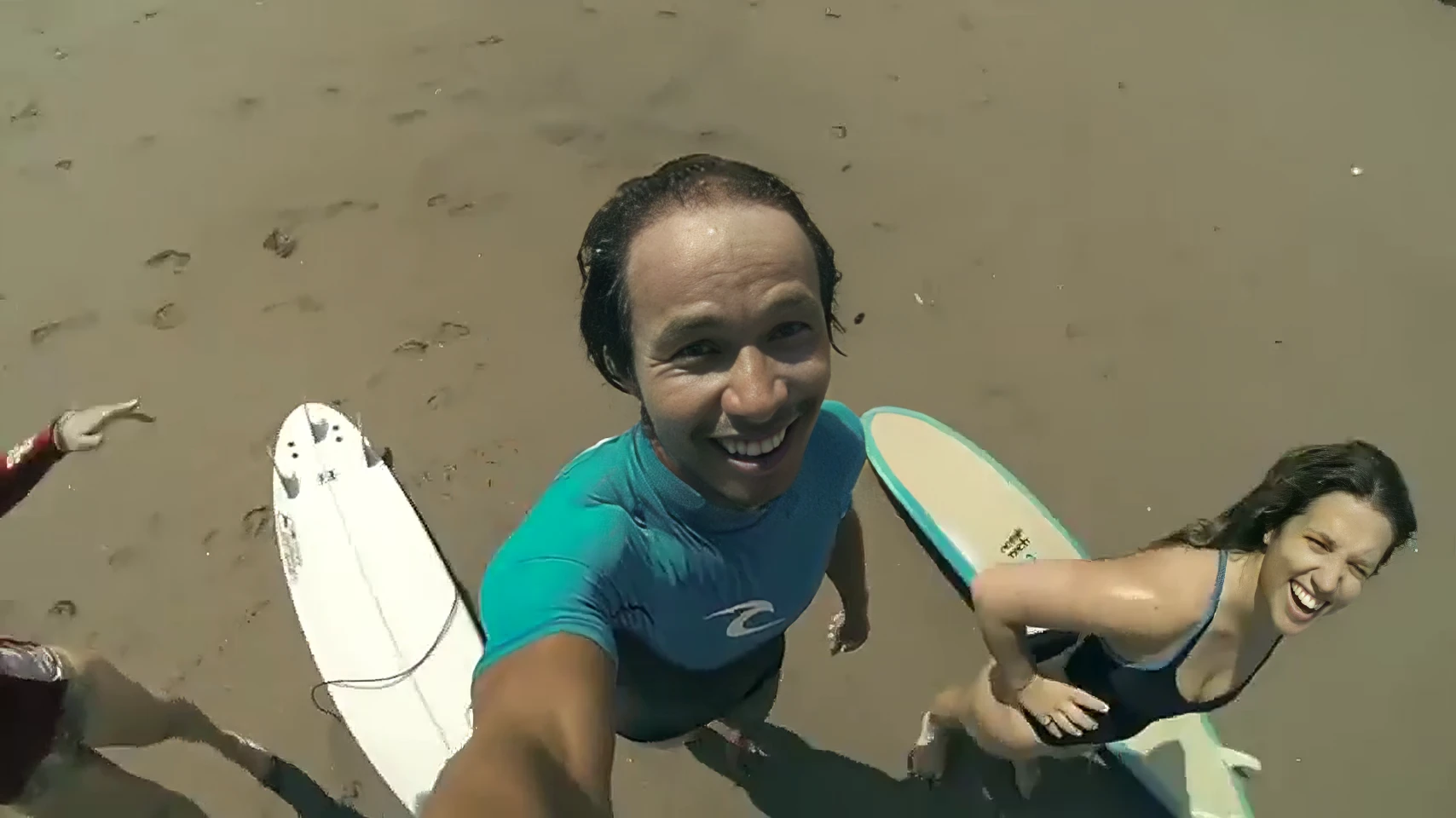
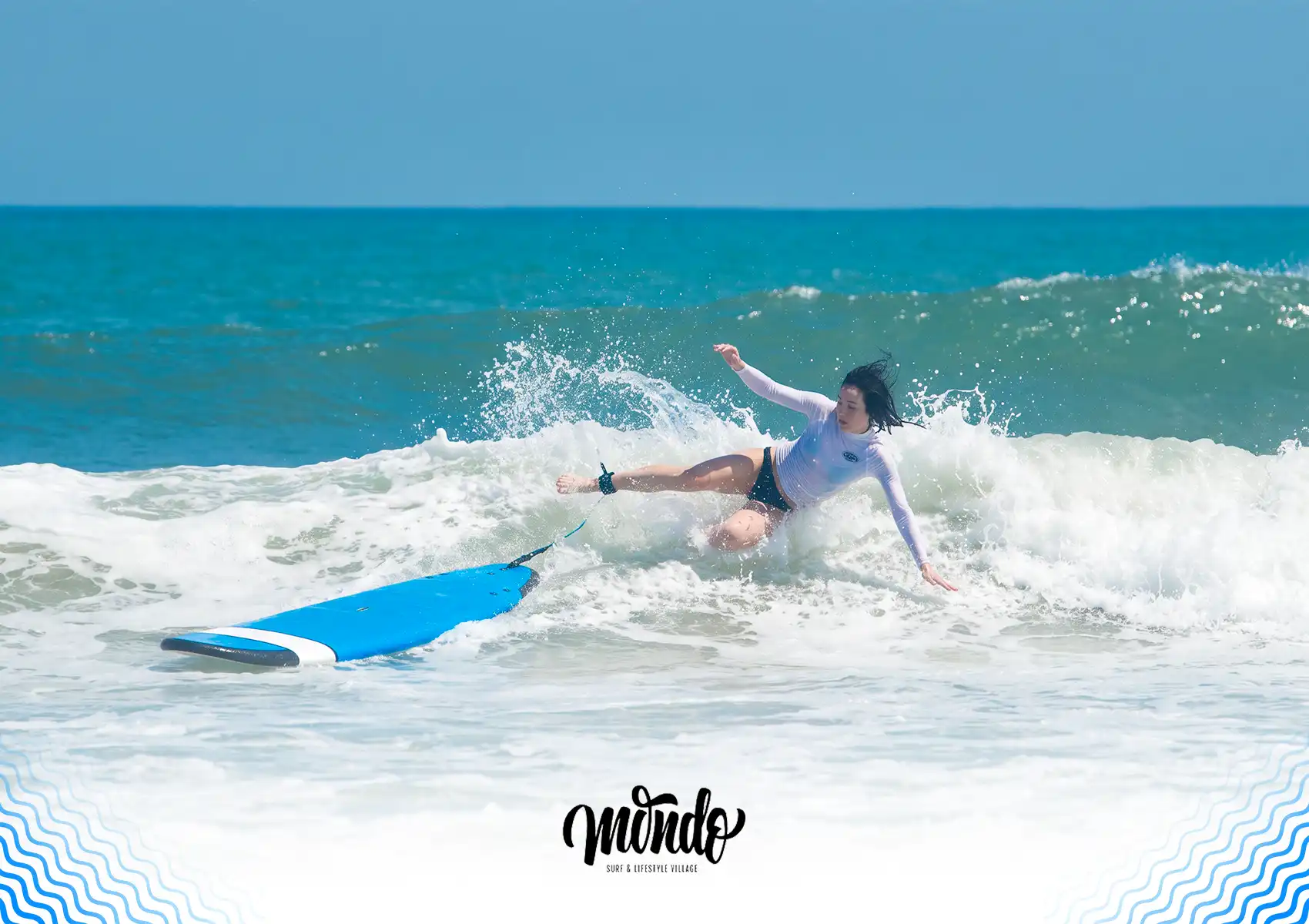
Falling is not the exception in surfing; it is the default. Beginners fall on most waves, and experienced surfers fall on the ones worth trying. Learning how to fall off a surfboard safely removes a surprising amount of fear, and it is one of the quieter things a good coach teaches at a surf camp in Bali. The technique itself is simple, and it matters most when you are learning in shallow water.

Why Falling Well Is a Skill
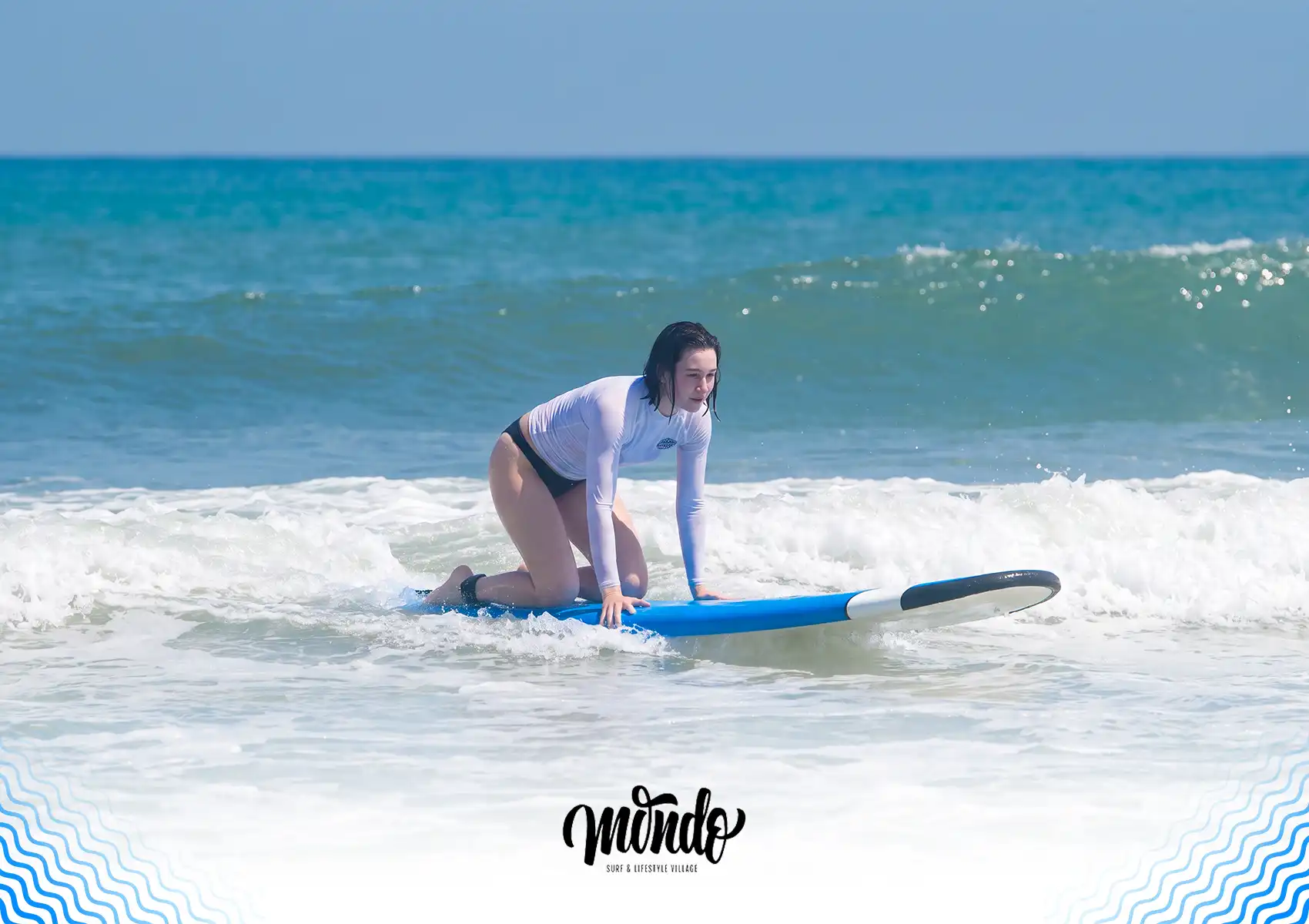
Nobody plans the fall, which is why the habits you build now decide what happens when you are not thinking.
You Will Fall More Than You Ride
Count the waves in any beginner session, and the falls usually outnumber the successful rides. Treating them as part of the practice rather than as failures changes how the whole session feels.
Most Knocks Come From Your Own Board
Many beginner injuries come from their own equipment rather than the wave itself. Fins, rails, and the nose of your own board account for most cuts and bruises, which is why surf lessons in Bali cover where the board goes.
How to Fall
Falling well is mostly a question of direction, and you have more control over it than the moment suggests.
Land Flat Rather Than Head First
Aim to land flat on your side or back, with your limbs spread naturally, rather than diving in. That matters most on the classic beginner fall of burying the nose on take-off, because it throws you forwards.
Push the Board Away From You
As you go, send the board in the opposite direction with a hand or a foot. It stays attached by the leash, so you can focus on protecting yourself rather than chasing the board.
Cover Your Head as You Surface
Come up with your arms over your head and your hands protecting the back of your neck. You cannot see where the board is from underwater, and it is usually somewhere above you.
What to Do Underwater
What happens underwater feels far longer than it is. This is why good coaching teaches calm before technique.
Stay Relaxed Instead of Fighting the Water
When a wave pushes you underwater, your first instinct may be to fight your way back up immediately. Staying relaxed uses less energy and allows the turbulence to pass naturally. Keep your body loose, avoid rushing, and wait for the wave’s pressure to ease before moving towards the surface.
Let the Wave Go Past
Waves in beginner conditions let go quickly, so the instinct to claw upwards is rarely necessary. Let the wave move on and come up once the water stops turning you around.
Follow Your Leash Up
If you surface into whitewater and cannot find your board, run a hand along the leash until you reach it. Getting back on your board gives you flotation and visibility if the water continues moving you, such as in a rip current.
What Changes in Shallow Water and Over Reef
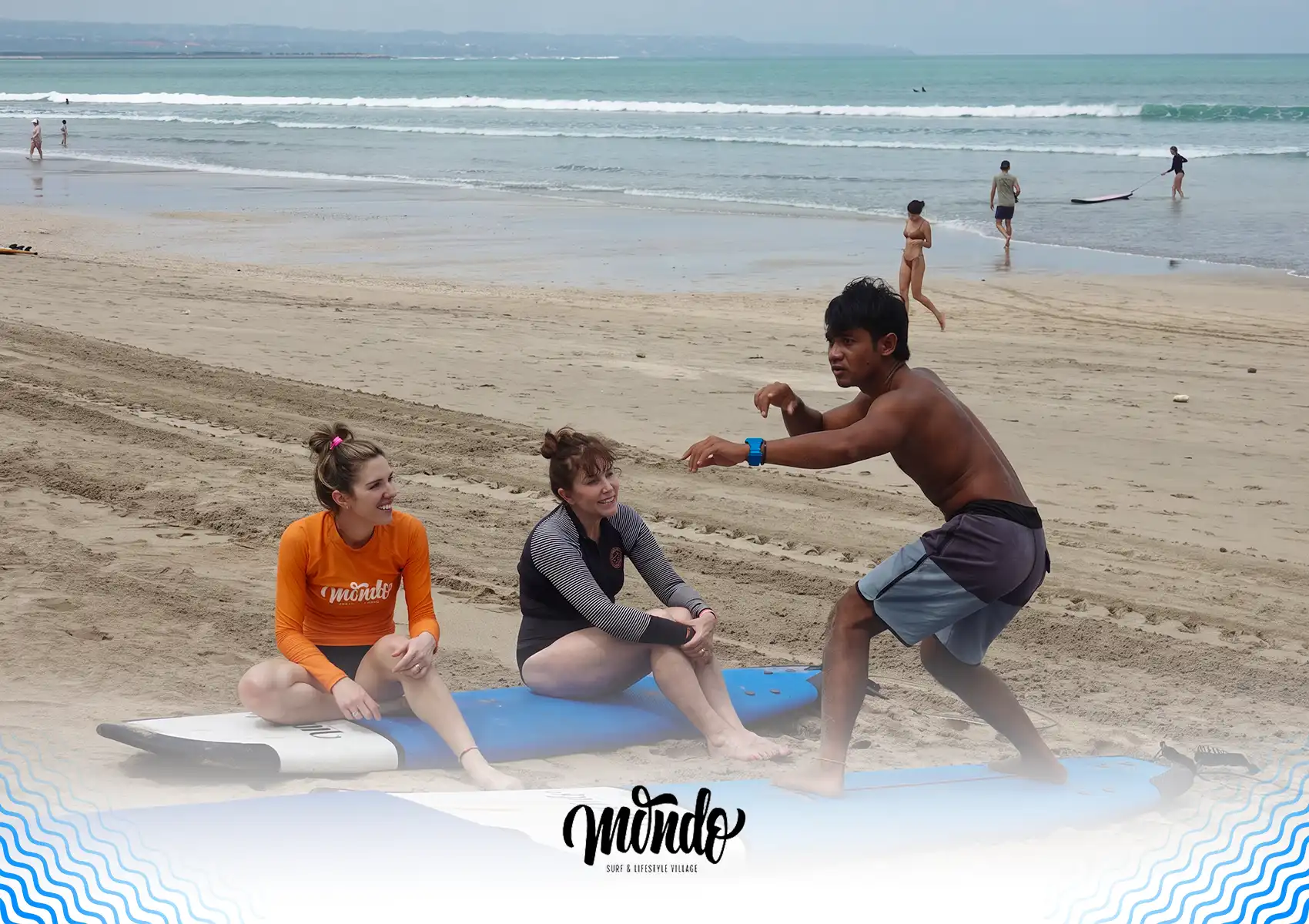
Depth changes the priorities, and the shallow water where a surf camp for beginners in Bali spends its time is where care matters most.
Land Flat Where It Is Shallow
In waist-deep water, there is very little between you and the sand. Avoid trying to stop your fall with your hands, as this can put unnecessary pressure on your wrists and fingers. Falling flat with your arms out spreads the impact, and you should never drop head first when you can see the bottom.
Stay Covered Over Reef
Reef can injure exposed hands, knees, and feet more easily than deeper water. Land flat, keep your head covered as you come up, and stand carefully rather than putting a foot down blindly.
Check Yourself After a Heavy Fall
Cuts in warm water are best cleaned properly rather than ignored. Sit out the rest of the session if something feels wrong, because one heavy fall is easier to recover from than a repeat of it.
Common Questions About Wiping Out
How do you fall off a surfboard safely?
Fall flat and away from your board, rather than headfirst. Push the board in the opposite direction as you go, and cover your head with your arms as you come back up.
What should you do if a wave holds you under?
Stay relaxed and let the water move you until it eases, then follow your leash to the surface. Most waves in beginner conditions release quickly, and struggling costs more energy than staying calm.
Should you cover your head when you wipe out?
Yes, every time. Your own board is the most likely thing to hit you, and you cannot see where it is until you are back at the surface.
Is it safer to fall in shallow or deep water?
Deeper water is more forgiving, because there is far less chance of reaching the bottom. In shallow water, the priority is to land flat rather than headfirst.
Do beginners get hurt when they fall?
Rarely seriously in small waves over sand. Most knocks are cuts and bruises from the board, which is one reason beginner sessions at a surf camp in Bali use soft boards.
Falling Gets Easier When You Know How
Nobody enjoys the first few heavy falls, and they stop mattering surprisingly quickly once you know what to do with your body. Coaching at a surf camp in Bali covers this alongside your surfing, using waves chosen to help you learn with confidence. Come find out with Mondo Surf Village.