
Some waves roll in slowly and give you time to react. Surging waves do not. They rush up a steep shore, barely break, and pull back fast. That makes them harder to read than a soft, rolling wave. Learning to spot them keeps you safer and calmer in the water. It is also one of the first skills we work on at our surf camp Bali.
What Is a Surging Wave?
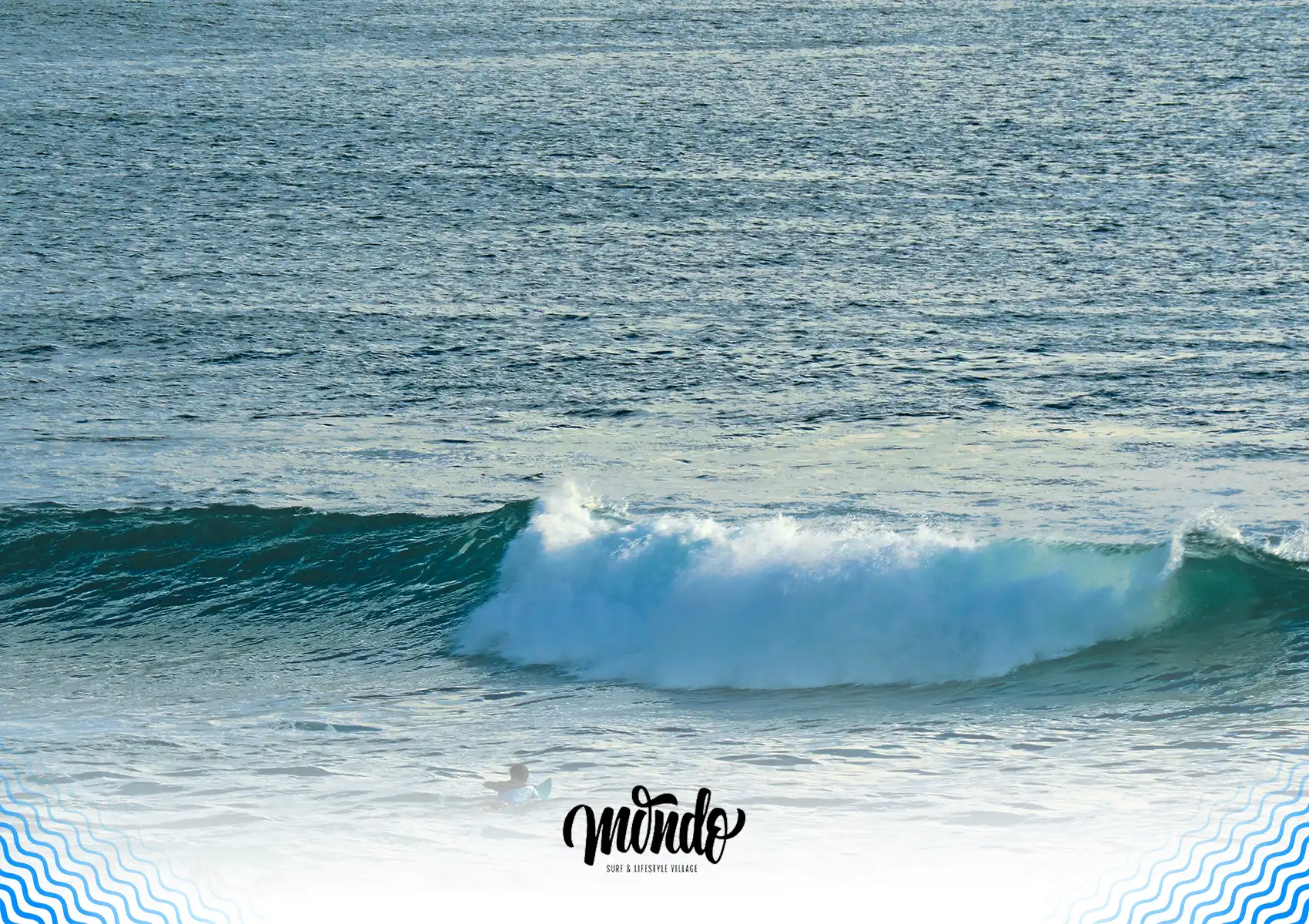
A surging wave reaches the shore almost fully formed and never really breaks. Spilling and plunging waves break as they arrive, but this one does not. It is one of the less common waves a surfer meets. It forms along steep coastlines and keeps its shape until the last second. That is why it is so easy to misjudge.
The wave holds together right up to the shore, without curling over or foaming. It runs up the beach quickly, then slides back almost as fast. A wave normally dissipates its energy as it breaks, but this one hardly does, so it retains that energy, and the water pulls back hard, leaving a strong backwash at the shoreline.

What Causes a Wave to Surge?
Every wave is shaped by the seabed beneath it as it nears the shore. A surging wave forms when that seabed rises abruptly, leaving no room or depth to break before it meets the beach.
On a gently sloping beach, the wave touches the shallow bottom early. That contact slows it down and lets it break in soft, gradual stages. A steep beach works the opposite way. Deep water sits right against the shore, so the wave keeps its full depth until it hits the sand. With nothing to hold it back, it carries almost all of its energy and rushes straight up the slope.
Tides matter too, because they change the water depth over that same stretch of beach. At low tide, more of the shallow, sloping seabed is exposed, giving waves enough room to break normally. At high tide, deeper water submerges that slope, creating a sharp drop-off right off the sand. That is why the same beach can have gentle, spilling waves in the morning and dangerous surging waves by the afternoon.
How to Read Surging Waves from the Shore
Reading the ocean before you go in is a habit worth building from your first lesson. Surging waves leave clear signs once you know what to look for, and a few quiet minutes on the beach will tell you most of what you need.
Watching Where and How the Wave Breaks
Look at where the waves meet the sand. A normal wave curls over and spills into white foam. A surging wave does not. It rides up the beach as a smooth wall and slides straight back, often with a loud slap instead of a long, tumbling roll. When the water rushes up and drains away with little foam in between, you are most likely looking at a surging wave, not a gentle break you can paddle into.
Reading the Beach Before You Paddle Out
Spend a few minutes on dry land before you go in, and start with the shape of the beach. A steep bank of sand that drops away quickly is a common warning sign, because it means deep water lies close in. Then follow the waves for a full set. If they hit hard, drain fast, and leave little flat water between them, the beach is probably surging. Entries are hard to time here, so it is often better to move along to a gentler stretch.
Signs the Water Is Deeper than It Looks
Water colour is a useful clue to depth. Pale, sandy tones usually indicate shallow water, while a darker band near the beach indicates deeper water there. Surging waves rely on that depth, so a sudden shift in the sand from light to dark is worth noticing. It tells you the seabed falls away fast, so any wave will arrive with real force. When you notice that change, treat the water there with extra care.
What Surging Waves Mean for Surfers
face worth riding, so it is better watched than chased. Knowing this early saves you effort and a few scares.
Why They Are Difficult to Ride
Surging waves do not give you a clean, breaking face to ride. On a normal wave, the breaking part moves steadily along to one side, so you always have somewhere to go. A surging wave has none of that. It rises and drops back too fast to catch, and there is nowhere to ride along even if you did. The backwash can also pull your feet from under you close in, which surprises people in water that looks shallow and safe.
Staying Safe Around Surging Waves
Be cautious near rocks or a steep shore, where the pull of the water is strongest. Keep clear of the place where it drains back, since that is where you are most likely to lose your footing. If you are unsure, there is no shame in sitting one out and watching for a bit. The safest move is usually to choose an easier break and build your skills through beginner surf lessons in Bali with a coach on hand.
Ready to Read the Ocean With More Confidence?
Reading a surging wave comes down to time spent looking before you paddle out. That patience grows faster with a coach by your side. Good coaching starts with the ocean, and that is where we begin at our surf camp in Bali. Ready for your first wave? Join a session at Mondo Surf Village.
Frequently Asked Questions
A few questions come up often about surging waves.
Can You Surf a Surging Wave?
Surging waves are very hard to surf because they never break into a face you can ride. Most experienced surfers leave them alone and pick a spilling or plunging wave instead.
Where Do Surging Waves Usually Happen?
Surging waves usually form where deep water meets a steep beach or rock shelf. With nothing shallow to slow the swell, the wave arrives with most of its energy intact.