
You paddle out, a wall of whitewater rushes towards you, and moments later you are back where you started. Every surfer knows this frustration. Duck dive surfing is the skill that gets you past breaking waves and into the lineup without losing the ground you fought for. Learn it well and paddling out stops feeling like a battle against the ocean and starts feeling like part of the ride.

What Is a Duck Dive?
A duck dive is the technique of pushing your board underwater so a wave passes over you instead of dragging you back towards the beach. It takes its name from the way ducks dip beneath the surface. Done well, it lets you slip under breaking waves and carry on paddling with barely a pause.
Why Duck Diving Matters
Getting past the waves is half the challenge of any surf session, and this is the skill that makes it possible. A duck dive lets you conserve energy and reach the lineup faster, because a single set wave can otherwise undo a full minute of hard paddling. This is why duck dive surfing sits among the first real skills that separate a nervous beginner from a confident surfer.
Check Your Board Before You Duck Dive
The move works with some boards and not others, so start by being honest about what you are riding today.
A duck dive relies on sinking the board, and volume is exactly what resists sinking. High-volume beginner foamies and longboards will not go under no matter how hard you push. This is a shortboard and lower-volume move, which is part of why many surfers meet it only after their first few weeks in the water. If your board floats you easily while you sit still, it will float over any attempt to duck dive. In that case, the turtle roll is your tool until you size down. Honest surf coaching in Bali will tell you when your board is genuinely ready.
Reading the Wave Before You Dive
The way you time and angle your dive changes with the wave in front of you. A wave that has already broken behaves differently from one that is still standing up, so read it before you commit.
Duck Diving Under Whitewater
A broken wave sends a thick, churning band of foam across the surface. This whitewater has no clean shape, and most of its force sits in the top half a metre of water. Aim to be fully underneath it before it reaches you. Push the board down hard and drive it deep, so the foam rolls across your back instead of grabbing the board. If you dive too shallow, the whitewater catches the board and drags you backwards. The deeper you get beneath it, the less it can move you.
Duck Diving Under an Unbroken Wave
A wave that has not broken yet has a smooth, sloping face and cleaner water underneath it. You can time this one more precisely. Wait until the wave is roughly one to two metres in front of you, then dive so you pass under the face as it lifts and rolls over you. Because the water is not churning, you come up on the other side with only a light pull, already in position to keep paddling.
How to Duck Dive Step by Step
Once your board is right and you have read the wave, the dive itself is the same repeatable sequence every time. Practise these five steps in order until they blend into one smooth movement.
Paddle Hard to Build Speed
Paddle straight at the wave with strong, full strokes and build as much speed as you can. A board that is already moving pushes under the water far more easily than one sitting still. Reach your top speed a couple of strokes before the wave arrives, then carry that momentum into the dive.
Sink the Nose with Both Hands
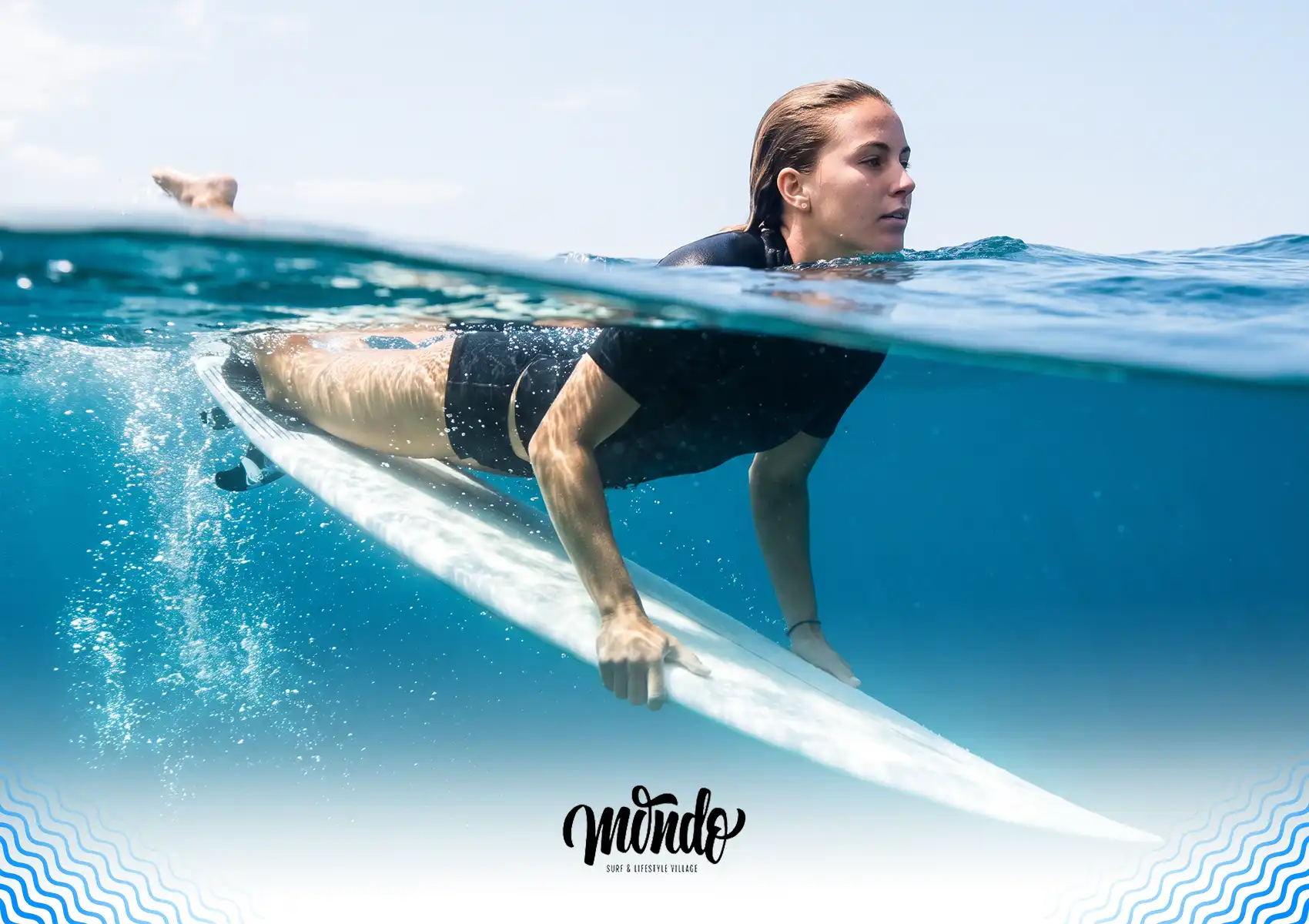
Grip both rails a little behind the nose, roughly level with your chest. Straighten your arms and press the nose straight down, pushing your upper body up and over your hands. Your aim is to sink the front third of the board underwater a moment before the wave reaches you, not as it hits.
Push Down with Your Foot or Knee
As the nose drops, plant your back foot or knee firmly on the tail. This drives the back of the board down and levels it out below the surface, so the whole board sits deep enough for the wave to pass over the top. A foot works well on a shortboard, whilst a knee gives more control on a slightly larger board.
Let the Wave Pass Over You
Tuck in close to the board and hold this position while the wave rolls overhead. Keep both hands gripped on the rails and stay low and compact. Coming up too early is the most common mistake, so wait until you feel the wave’s pull ease off before you move.
Rise and Keep Paddling
Angle the nose back towards the surface and let the float of the board lift you up. Try to come up already pointing out to sea rather than sideways. Start paddling the moment you break the surface, so you hold the ground you gained and continue straight towards the lineup.
Common Duck Dive Mistakes to Avoid
Small errors cost you the most ground, so watch for the habits that quietly hold new surfers back:
- Diving too early, so you surface just as the wave hits.
- Pushing with your arms alone and never getting the tail down, so the board pops back up mid-dive.
- Letting go of the board under pressure, which is the hardest habit to break.
Keep both hands on the rails throughout, stay committed to the depth, and trust that the wave will pass. Working through these with a coach during surf lessons in Bali shortens the learning curve considerably. At Mondo Surf Village, video analysis plays your dive back to you, so you can see exactly where the board pops up or your weight shifts, which is far easier to correct once you have watched it happen.
Ready to Get Past the Break
Duck diving takes repetition, honest feedback, and the right waves to practise on. Ready to stop getting washed back to the beach? Learn to surf in Bali with dedicated coaching and video analysis at Mondo Surf Village, a surf camp in Bali built around steady progress in the water. Join a session and spend more time surfing than swimming.
Frequently Asked Questions
What size board do you need to duck dive?
You generally need a lower-volume board, usually a shortboard, that you can sink beneath the surface. High-volume foamies and longboards float too much to duck dive, which is why the turtle roll suits them better.
How long does it take to learn to duck dive?
It varies from surfer to surfer, but with regular practice, many people get comfortable within a few weeks of moving onto a suitable board. Progress is not linear, so expect some sessions to feel easier than others as your timing and strength improve.
How deep should you push when duck diving?
Push deep enough that the whole board clears the turbulence, usually around half a metre or more in stronger surf. The bigger the wave, the deeper you go to escape its energy.
Why do I keep getting pushed back when I duck dive?
You are most likely diving too early, too shallow, or not committing your body weight. Build more paddle speed, sink the tail fully, and hold your depth until the wave has fully passed.