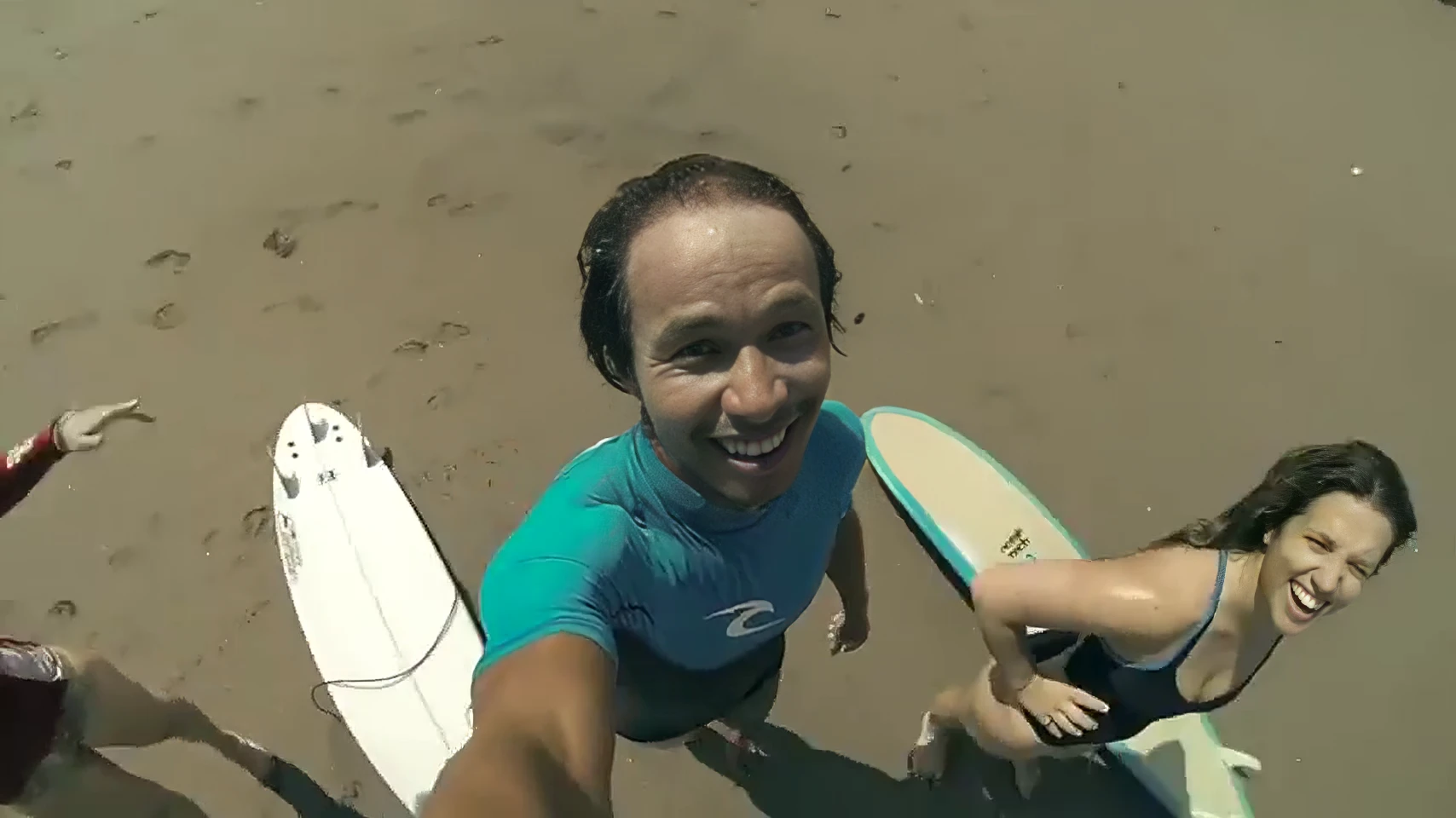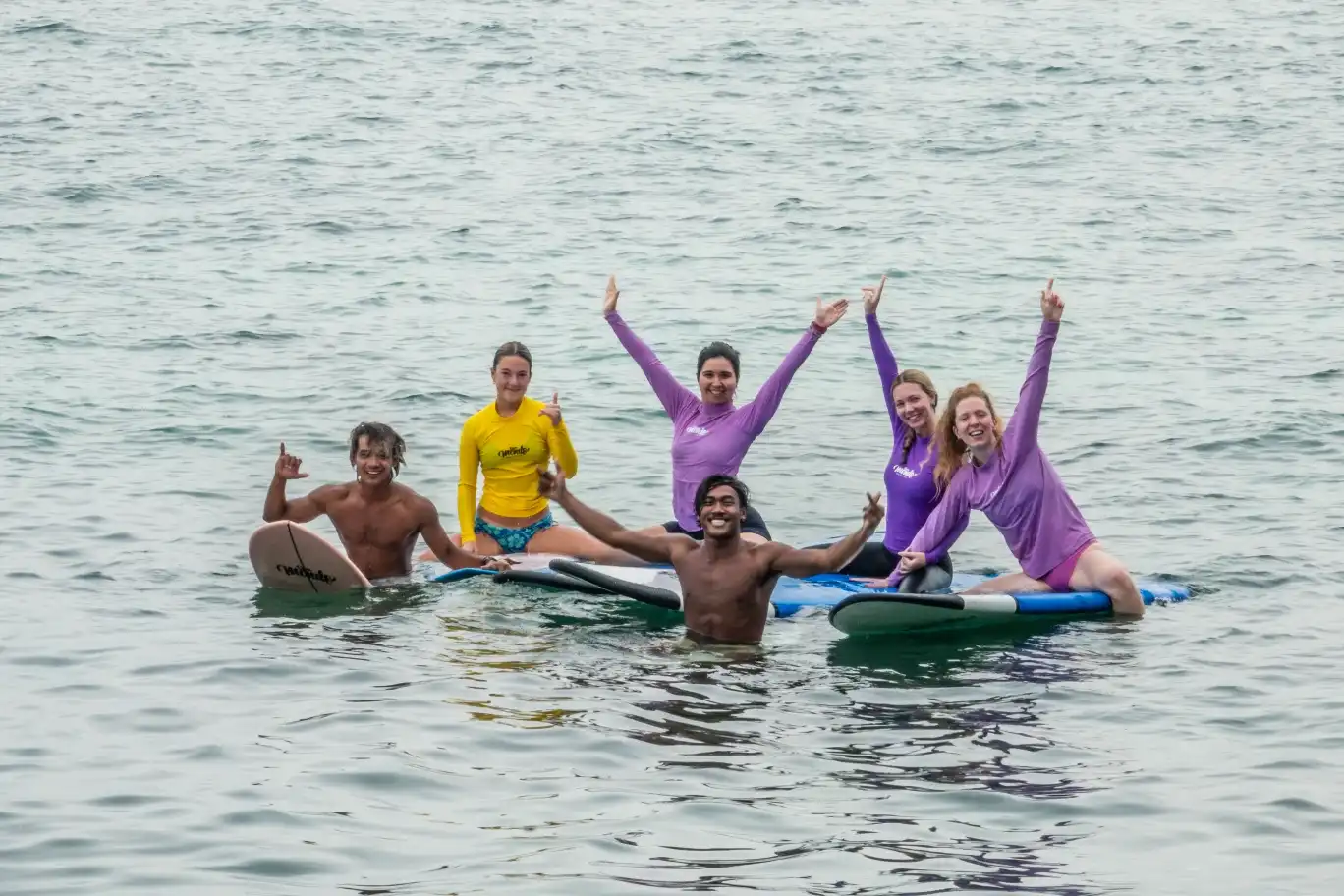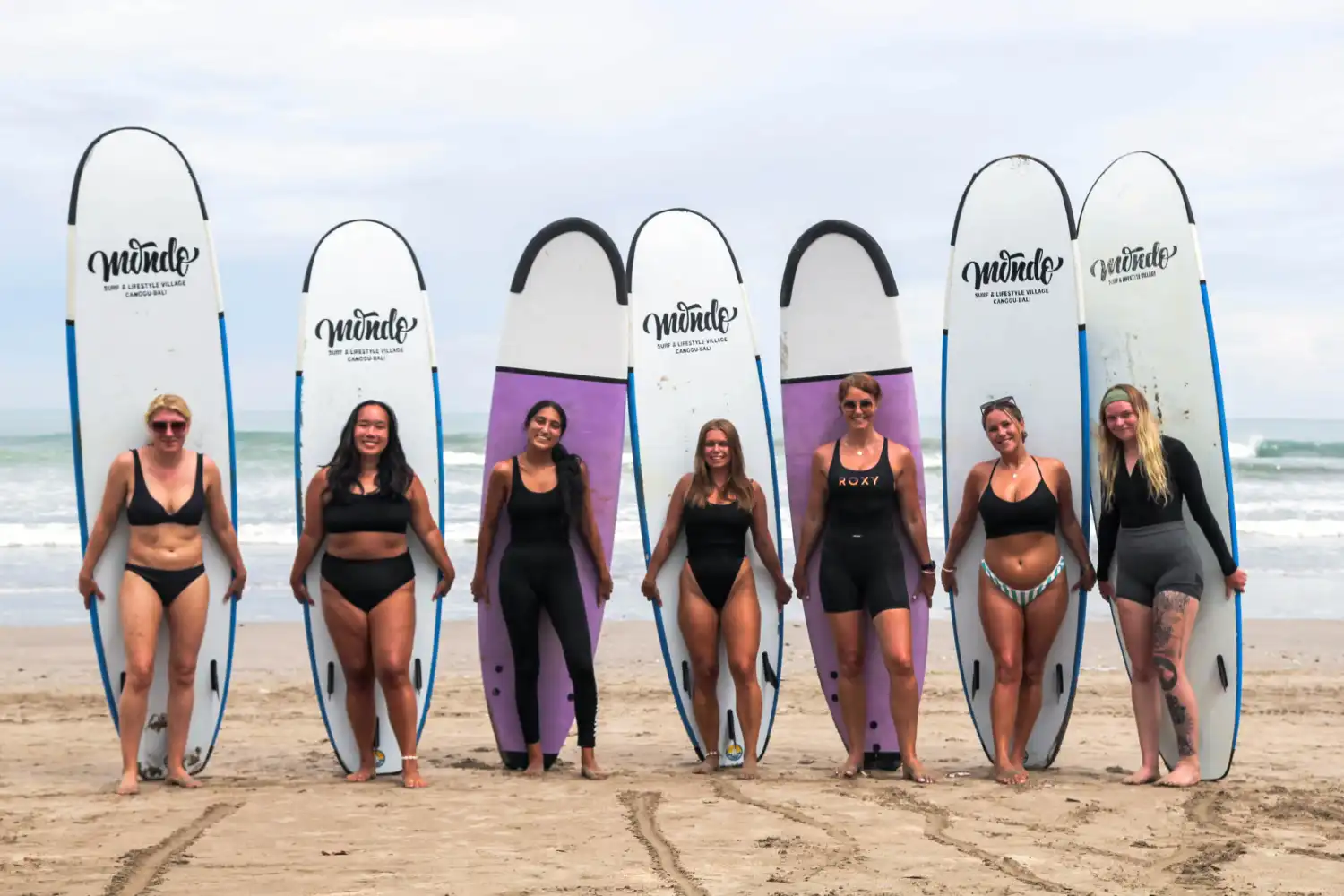

If you have ever come in from the water with tight shoulders and heavy legs, you know how much surfing asks of your body. Yoga meets those same demands, but more quietly. While surfing builds paddling strength, time on the mat helps you move more freely and recover between sessions. That balance is what makes combining surf and yoga feel so natural at a surf camp in Bali.
Why Surf and Yoga Work Well Together
Surfing and yoga train the body from two directions. Surfing calls on muscular strength, balance and stamina, often within the same few minutes. You paddle out, sprint to catch a wave, then stand and ride with your whole body working to keep you on the board.
Yoga looks after what surfing leaves behind, from tight muscles to tired joints. It improves mobility, sharpens your awareness of how your body moves, and gives your muscles time to recover. Practising together, surf and yoga help you move more easily on the board, bounce back after a long session, and feel more comfortable in the water.
What Surfing Does for the Body
A surf session works far more of your body than it looks from the beach, and each part builds something different.
Builds Paddling Strength and Endurance
Paddling makes up the largest share of a typical session. Each stroke works your shoulders, upper back, arms, and core, and that repeated effort builds the endurance to reach the lineup with energy left to catch waves.
Improves Balance and Core Stability
Popping up, holding your stance and shifting your weight through a turn all call on the deep stabilising muscles around your trunk and hips. As that strength grows, your takeoffs feel steadier, and your manoeuvres become more controlled.
Develops Cardio Fitness and Power
A session mixes long, steady paddling with short sprints to catch waves, duck dives, or turtle rolls under whitewater, plus bursts of effort while you ride. This blend trains both your endurance and the explosive power you need when a set arrives.
What Yoga Adds to Surfing
Surfing repeats the same few movements many times over, so yoga adds the variety your body needs.
Increases Flexibility and Mobility
Yoga loosens the shoulders and spine you rely on to paddle, along with the hips and ankles that carry you through pop-ups and turns. Greater mobility in these joints lets you move with less effort and helps you feel less stiff after a session.
Strengthens the Core and Lower Body
Planks, lunges, warrior poses and single-leg balances build strength through your trunk, hips and legs. That support can improve your posture and stability on the board, giving you firmer control as you shift your weight.
Supports Breathing and Recovery
Yoga teaches you to slow and steady your breath, a skill that helps you stay calm on a long paddle or when conditions get challenging. After surfing, a gentle practice lets your body settle and recover.
The Main Physical Benefits of Combining Surf and Yoga
The benefits grow when you combine the two, because each one covers what the other leaves out.
Better Balance on the Board
Surfing trains dynamic balance as the board moves beneath you, while yoga builds conscious control over your body. Together, they help you stay steadier through takeoffs and turns.
More Efficient Pop-Ups and Turns
Pop-ups and turns both draw on shoulder and hip mobility, core strength and leg power at the same time. When your body is both mobile and stable, these movements take less effort and feel smoother.
Less Tightness and Easier Recovery
Hours spent paddling with your chest lifted and riding in a crouched stance can leave your back, hips and shoulders tight. Regular yoga helps ease that tension and supports recovery, though it will not prevent every injury.
More Energy for Longer Sessions
Better mobility, stronger stabilising muscles and calmer breathing all help you use your energy more efficiently in the water. That can keep you fresher for longer, making back-to-back sessions during your week more enjoyable.
A Simple Surf and Yoga Routine
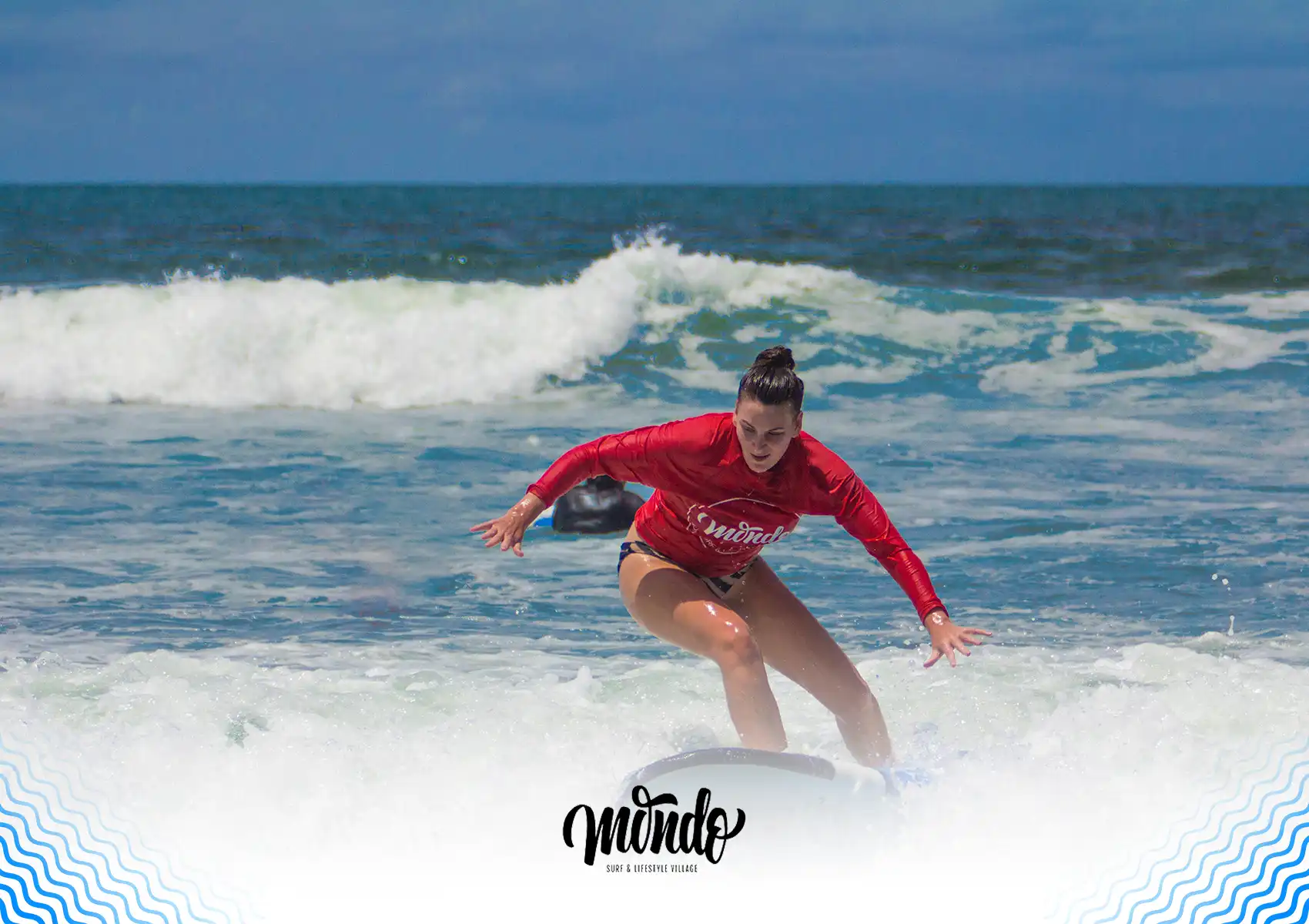
Even with daily classes at a surf camp in Bali, a short routine before and after each session is worth the time.
10 to 15 Minutes of Mobility Before You Surf
Start with dynamic shoulder circles, cat-cow, gentle hip openers, lunges and easy twists. Keep each movement flowing rather than holding long stretches, so your body is ready to paddle and pop up.
15 to 20 Minutes of Recovery Yoga After You Surf
Once you are out of the water, move slowly through stretches for your shoulders, chest, hips, hamstrings and lower back. Child’s pose, pigeon pose, thread the needle and legs-up-the-wall are gentle choices that suit a tired body.
Surf and Yoga at Mondo Surf Village
At Mondo Surf Village in Pererenan, on the Canggu coast, yoga shapes the rhythm of your Bali surf holiday. From Monday to Saturday, each day starts with sunrise yoga in the open-air shala and winds down with sunset yoga. In between, you spend about two hours in the water, timed by the ocean forecast. The rest of the day unfolds in a calm village built in traditional Balinese style from natural materials.
If you have come to learn to surf in Bali, the Beginner Surf and Yoga package combines daily surf coaching with theory classes, pool practice, surf video analysis and two yoga sessions a day, while Sundays stay free. What is included adjusts to the length of your stay. For beginners, yoga builds the mobility and balance that make early pop-ups steadier and help your confidence grow.
Once you have moved beyond your first surf lessons in Bali and are catching waves on your own, the Intermediate Surf and Yoga package pairs coaching and guided sessions with the same two daily yoga classes. At this level, yoga can sharpen your balance, support recovery and help you move more fluidly on the wave.
Whether you are catching your first waves or refining what you already know, time on the mat supports every hour you spend on the board. Ready to feel the difference? Come find out with Mondo Surf Village, a surf camp in Bali where yoga and coaching share the day.
FAQ
A few practical questions tend to come up once surfers start bringing yoga into their week.
Can Yoga Really Improve My Surfing?
Yes, yoga can help by improving flexibility, balance, core strength, breath control and recovery, all of which support your surfing. These benefits come gradually, so regular practice matters more than long, occasional sessions.
Should I Do Yoga Before or After Surfing?
You can do both, with light, dynamic mobility before surfing and slower recovery yoga afterwards. The first prepares your body to paddle and pop up, while the second helps it unwind.
How Often Should I Practise Yoga If I Surf Regularly?
Ideally, on every day you surf, with a short, active session before you paddle out and a gentler one afterwards. On rest days, a slower practice helps keep stiffness at bay.
Is Surf and Yoga Suitable for Beginners?
Yes, combining surf and yoga suits beginners well, helping with balance, mobility, confidence and recovery. At Mondo Surf Village, a surf camp in Bali, the Beginner Surf and Yoga package pairs lessons and pool practice with twice-daily yoga.
What Type of Yoga Is Best for Surfers?
A mix of mobility-focused flows, core and balance work, and gentle recovery yoga is usually most useful for surfers. Together, they cover the flexibility, strength and rest that time in the water demands.