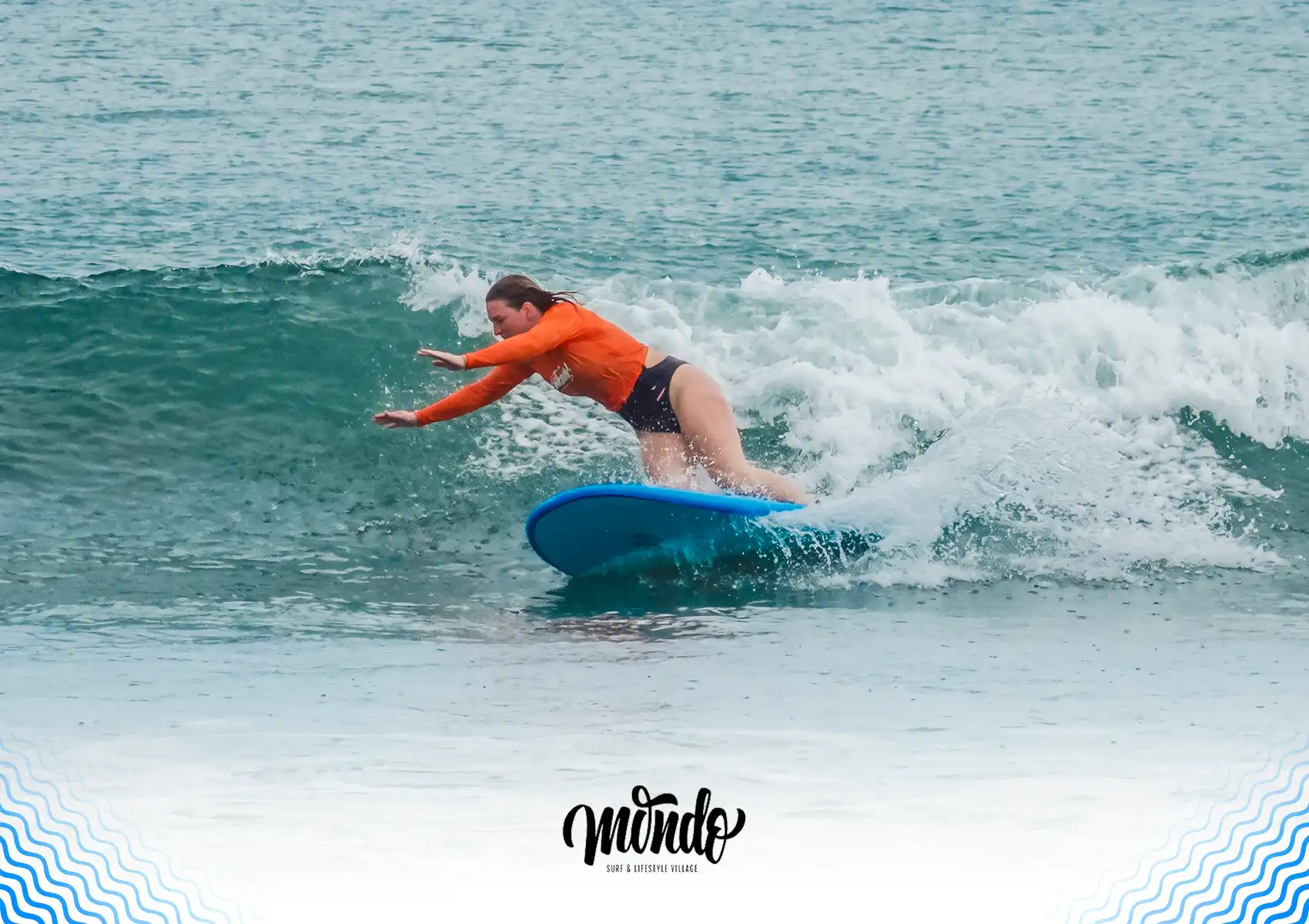
You paddle, you feel the wave, and then the nose of the board disappears underwater. A moment later, you follow it. Nosediving, or pearling, is one of the most frustrating parts of learning because it happens at the moment everything felt right. A surfboard that keeps nosediving is almost always dealing with a weight and timing problem, and it is fixable with the right coaching at a surf camp in Bali.

What Nosediving Actually Is
The board does not sink because of your body weight alone. It sinks because the nose meets water it cannot climb over.
The Nose Digs Before the Board Planes
A surfboard only starts to glide properly once it has enough speed from the wave. Before that point, the nose is still pushing through the water, and extra weight forward can drive it under.
It Happens in the Last Second
Nothing feels wrong until it is already over, which is why this fault is so hard to diagnose on your own. The mistake usually happened a second or two earlier, while you were still paddling.
The Three Common Causes
Most nosedives trace back to one of three things, and they often turn up together on the same wave.
Lying Too Far Forward
Your chest should stay around the centre point of the board, not over the nose. This keeps your weight balanced while the wave lifts the board and helps prevent the nose from digging into the water.
Paddling In Too Late
Catching a wave late means catching it where it has already stood up. The board starts dropping down the face before it has enough speed to stay on top of the water, so the nose is the first thing to hit the water.
Standing Up Too Early
Avoid trying to fix it by jumping up faster. The problem is usually not the speed of your pop-up, but whether you have enough momentum before the board.
How to Fix Each One
Each cause has a fix that costs nothing but attention, which is why surf coaching in Bali usually starts with position rather than effort.
Find Your Position Before the Set Arrives
Lie on the board in flat water and shuffle back until the nose is just above the surface. Surf lessons in Bali check this before anything else, so remember where your chest sits and return to it every time.
Commit Earlier and Paddle Harder
Turning and paddling while the wave is still behind you gives the board time to build speed. Speed is what holds the nose up, so earlier commitment does more than any adjustment to your position.
Wait Until the Board Is Moving With the Wave
There is a moment when the paddling suddenly feels effortless, and the board runs on its own. That is the signal to stand up, and not a second before it.
How to See the Fault in Your Own Surfing
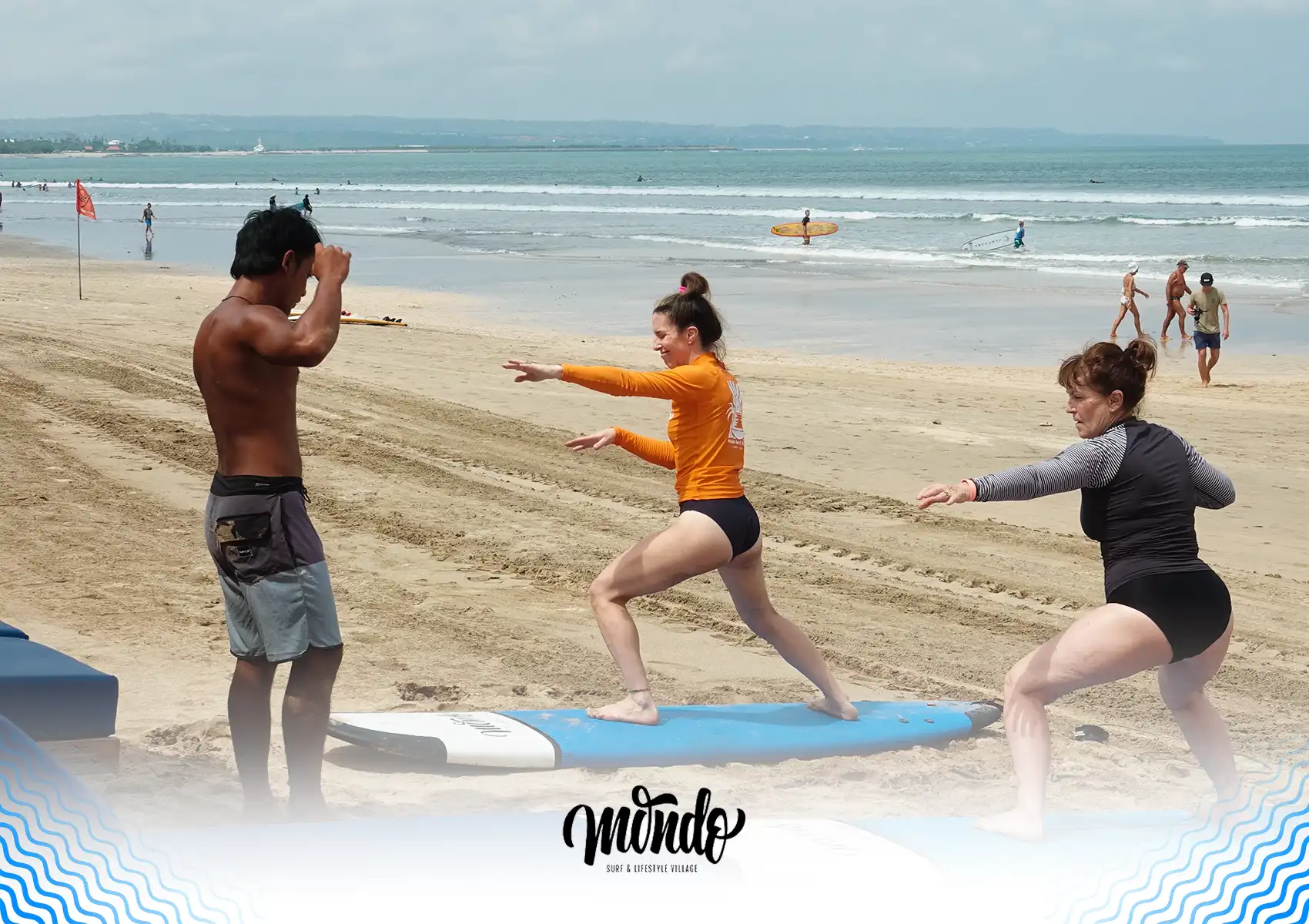
You cannot watch your own takeoff, which is why this fault persists for so many sessions before anybody names it.
Ask for Video Feedback
Surf video analysis at a surf camp in Bali shows you the second before the nosedive rather than the splash. Your chest position and the moment your hands leave the rails usually explain the whole problem.
Count Your Strokes
Give yourself one rule for a session, such as three strong strokes after you feel the tail lift. Counting turns a vague instruction into something you can actually check while you surf.
Change One Thing at a Time
Adjusting your position, your timing, and your pop up together tells you nothing about which one mattered. Start with position, because it is the easiest to control and the quickest to feel.
Common Questions About Nosediving
What causes a surfboard to nosedive
Weight too far forward, a late take off, or standing up before the board has speed. In practice, the three overlap, and lying too far forward is the most common starting point.
How do I stop pearling on take off
Move back on the board and paddle in earlier. Those two changes solve the majority of nosedives without touching your pop up at all.
Does board size affect nosediving?
Yes. Longer boards with a fuller nose resist it, whilst shorter and thinner boards punish forward weight quickly. Moving down in volume too early often produces a run of nosedives.
Is nosediving dangerous
Usually not in small waves over sand, although you can be thrown forwards over the board. In shallow water or over a reef, protect your head and avoid diving straight back to the seabed when you come back up.
Do beginners nosedive on foam boards too?
Yes, but far less often. The volume and wide nose of a foam board forgive a lot of forward weight, which is one reason beginner sessions at a surf camp in Bali start there.
Find Out What Is Actually Going Wrong
Not sure which of the three is yours? A coach watching from the beach, along with a few minutes of video, usually reveals the answer within one session. With a week at a surf camp in Bali, you get the repetition needed to make the correction stick. Come find out with Mondo Surf Village.