Standing up is the first goal. Then you stand up, ride straight at the beach, and the wave closes out behind you. Learning how to turn on a surfboard is what turns a straight-line ride into actual surfing, and it starts higher up the body than most people expect. It is also one of the first things coaching addresses once the pop-up is reliable at a surf camp in Bali.

Why Riding Straight Stops Working
A wave breaks along its length rather than all at once, so riding at the beach takes you away from the part still working.
The Wave Catches Up With You
Ride straight, and the whitewater arrives from behind within a few seconds. You finish standing in whitewater (foam) rather than riding the open face, which is where the rest of surfing happens.
Turning Buys You the Whole Wave
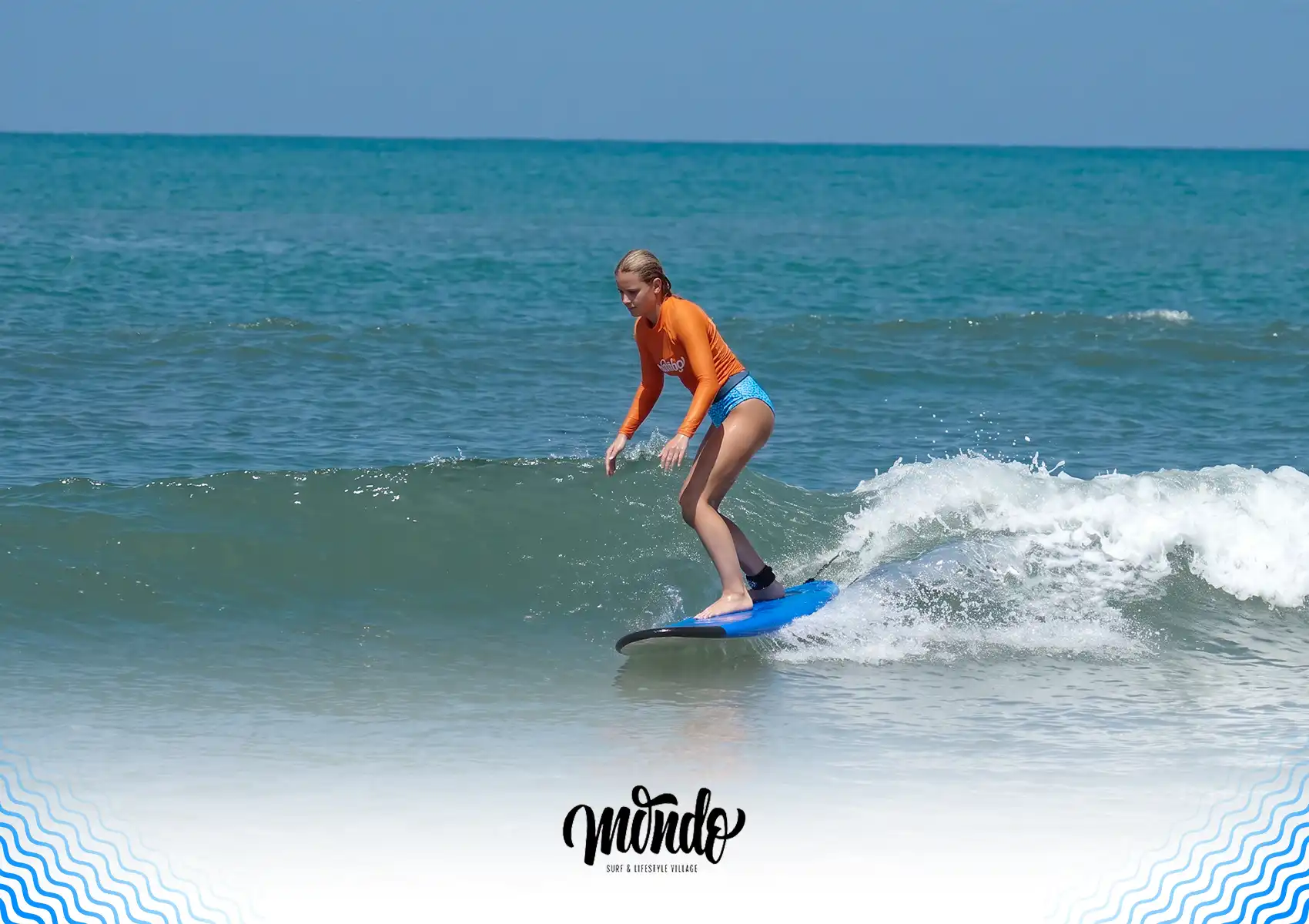
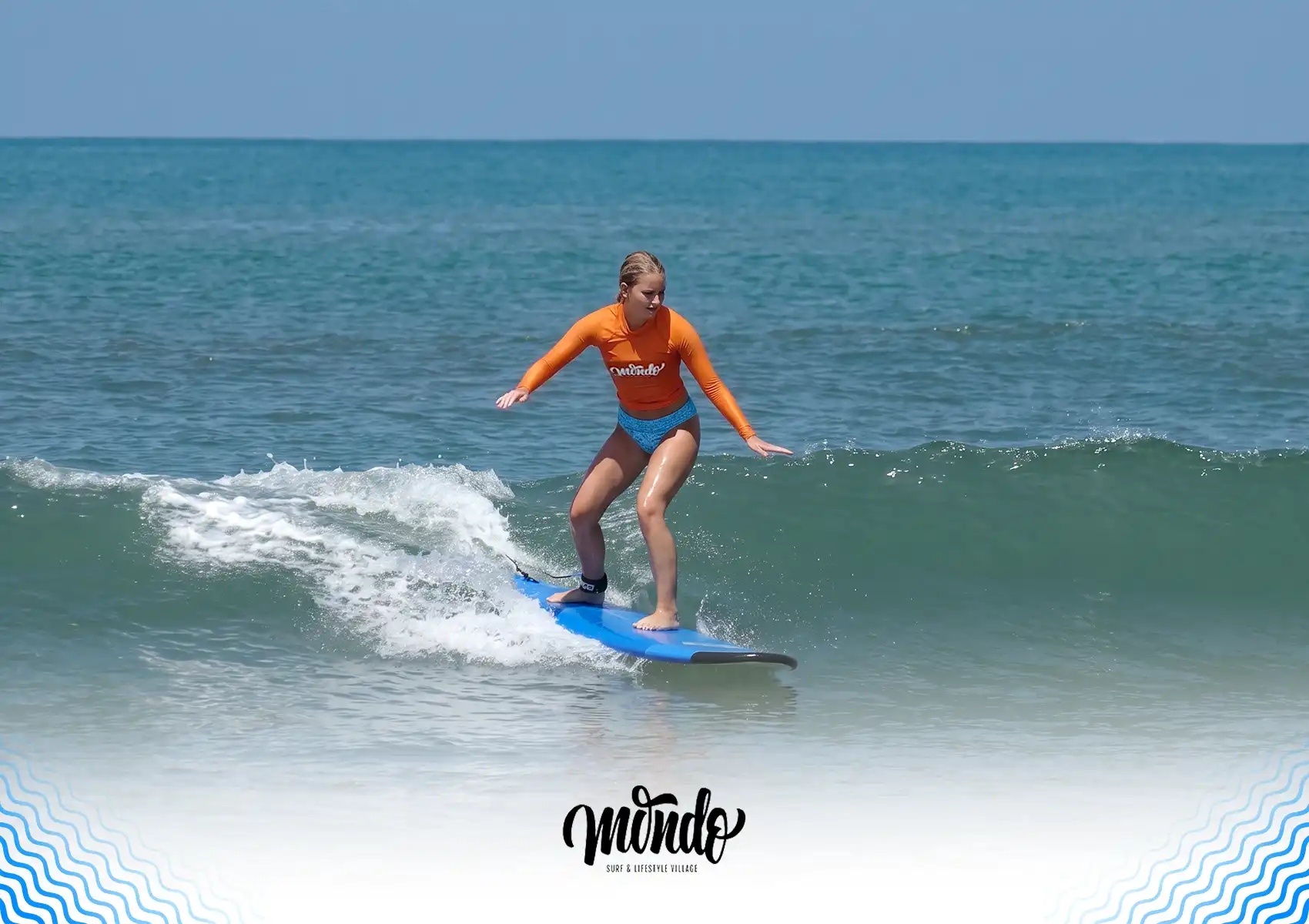
Angling along the face keeps you ahead of the breaking section. The same wave that ended almost immediately can carry you for as long as it keeps standing up.
Where a Turn Comes From
Turning is not something your feet do on their own. The board follows your weight, and your weight follows your eyes.
Look Where You Want to Go
Fix your eyes on a point down the line rather than on your board’s nose. Your head, shoulders, and hips naturally begin to rotate towards that direction, and the board follows the change in weight, which is why staring at your feet keeps you going straight.
Rotate the Shoulders and Hips
Open your chest and your leading arm in the direction you want to travel. The rotation is small and occurs before the board responds, so it should feel early rather than forceful.
Weight the Rail Through the Back Foot
A board turns when one edge sits deeper in the water than the other. Shifting your weight over the back foot and applying gentle pressure through the rail is enough on a beginner board, and pushing harder usually just stalls it.
The First Turn to Practise
The simplest turn is the one you set up before you stand, and it is where coaching at a surf camp in Bali usually begins.
Angle the Take Off
Instead of pointing at the beach, aim the board slightly along the wave as you paddle in. You are already travelling in the right direction when you stand, and an angled takeoff is also less likely to bury the nose.
Ride Along the Wave Rather Than at the Beach
Once you are up, keep your eyes down the line and let the board hold that direction. Staying on the unbroken part is the whole point, and it usually feels faster straight away.
Keep the Knees Soft
Bent knees let the board slide under you as your face changes shape. Locked legs turn every small bump into a correction you have to make with your whole body.
How to Build It Session by Session
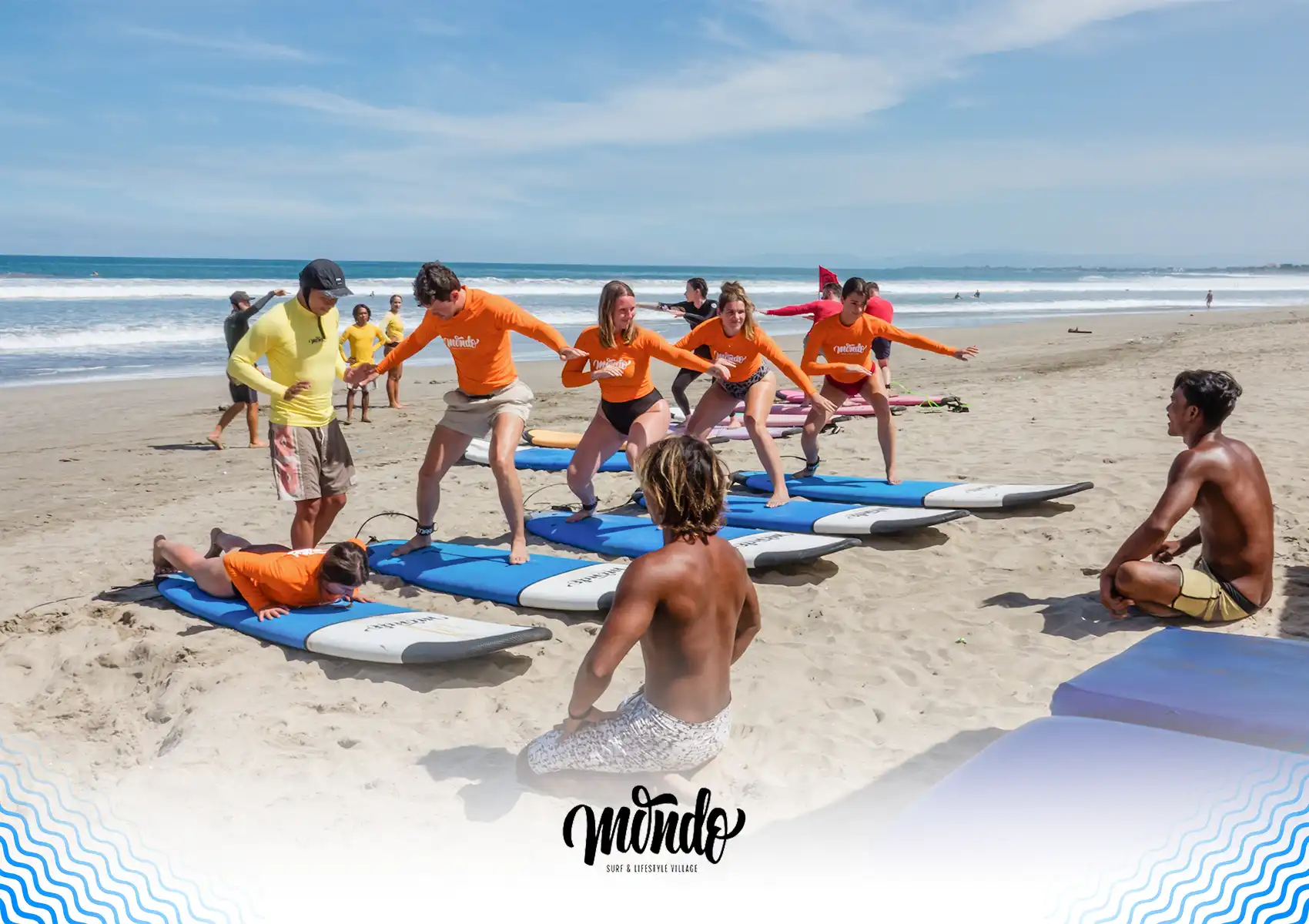
Turning is a habit rather than a trick, so it arrives through repetition on the small waves a surf camp in Bali can usually find.
Practise on Small Waves
Slow waves give you long enough to think about where you are looking. Bigger ones shorten every decision, so they teach you less at this stage even though they feel more exciting.
Use Video Feedback
Surf video analysis shows what your upper body actually did rather than what it felt like. This is why surf coaching in Bali often uses video footage. Surfers are often surprised to see square shoulders where they felt a turn.
Expect It to Feel Wrong at First
Leaning towards the part of the wave that is about to break goes against instinct. That discomfort fades within a few sessions, and the surfing on the other side of it is worth the awkward attempts.
Common Questions About Turning
How do you turn a surfboard for the first time?
Angle your take-off so the board already points along the wave. It is the easiest first turn because the direction is set before you stand up.
Why does my board not respond when I lean?
Usually because the movement comes from your shoulders alone while your weight stays centred. Shift over your back foot and lead with your eyes, and the rail will engage.
Should beginners learn to turn on a foam board?
Yes. Foam boards turn more slowly, but they teach the movement safely, and the habit transfers when you move to a board with less volume.
What is the difference between a bottom turn and a top turn?
A bottom turn happens at the base of the wave to set your direction and speed. A top turn occurs near the lip, sending you back down the face.
How long does it take to learn to turn?
It varies. Some surfers angle their first waves within a week at a surf camp in Bali, whilst controlled turns on the open face usually take considerably longer.
Take the Next Step Along the Wave
Ready to stop riding straight? Turning takes waves that suit you, a coach who can see what your shoulders are doing, and enough sessions in a row for the habit to hold. That is what a week at a surf camp in Bali is built around. Book your surf experience with Mondo Surf Village.
Ready to stop riding straight? Turning takes suitable waves, guidance from a coach who can see your movement, and enough consistent sessions for the habit to develop. That is what a week at a surf camp in Bali is built around. Book your surf experience with Mondo Surf Village.