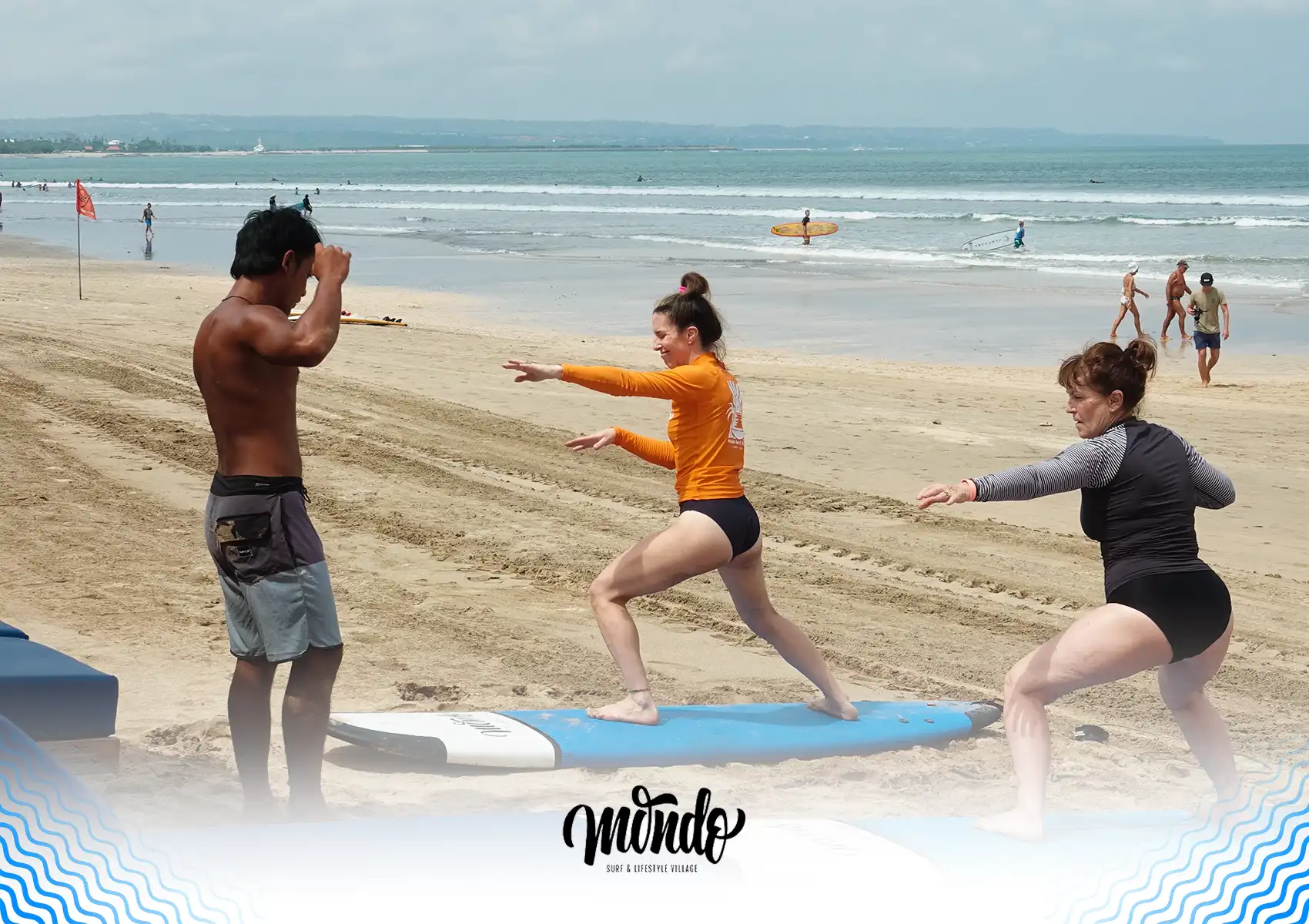
Everyone makes similar mistakes when they start surfing. That is reassuring because the solutions are already known, and none of them requires natural talent. The beginner surfing mistakes below are the ones that quietly cost whole sessions, from the board you picked up on the sand to the habit you have not noticed yet. Each has a simple correction that coaches at a surf camp in Bali work on every week.

Mistakes Before You Even Paddle Out
A session is often decided on the sand, before anybody gets wet, by three choices that look too small to matter.
Choosing a Board That Is Too Small
Small boards look like real surfing, and they punish everything you have not learned yet. Volume is what catches waves, so staying on something long and thick for longer is the quicker route to progress.
Ignoring the Conditions
Paddling out because you are ready rather than because the ocean is ready wastes the session. A few minutes watching from the beach tells you whether the size and the tide suit what you can currently do.
Entering the Water Anywhere
Walking straight in from wherever you parked usually means crossing the busiest or hardest part of the break. Look for the calmer stretch first, because getting out through the white water is far easier there.
Mistakes in the Water
Once you are out there, the errors are harder to spot, because they feel like effort, which is what surf lessons in Bali correct first.
Short Fast Paddle Strokes
Quick shallow arms feel powerful and move very little water. Longer strokes that reach forward and pull through the water use your back and shoulders more effectively, and they leave you far less tired an hour in.
Sitting in the Wrong Place
Sitting where the waves have already broken and where they have not yet started to break produces the same result: a session without waves. Line up with somebody who is catching them. Watch where waves are consistently being caught, then position yourself slightly outside and behind that area.
Looking Down at the Board
Your body follows your eyes, so watching your feet keeps you pointed toward the beach and slightly off-balance. Look at where the wave is going instead, even while standing still feels precarious.
Mistakes on the Wave
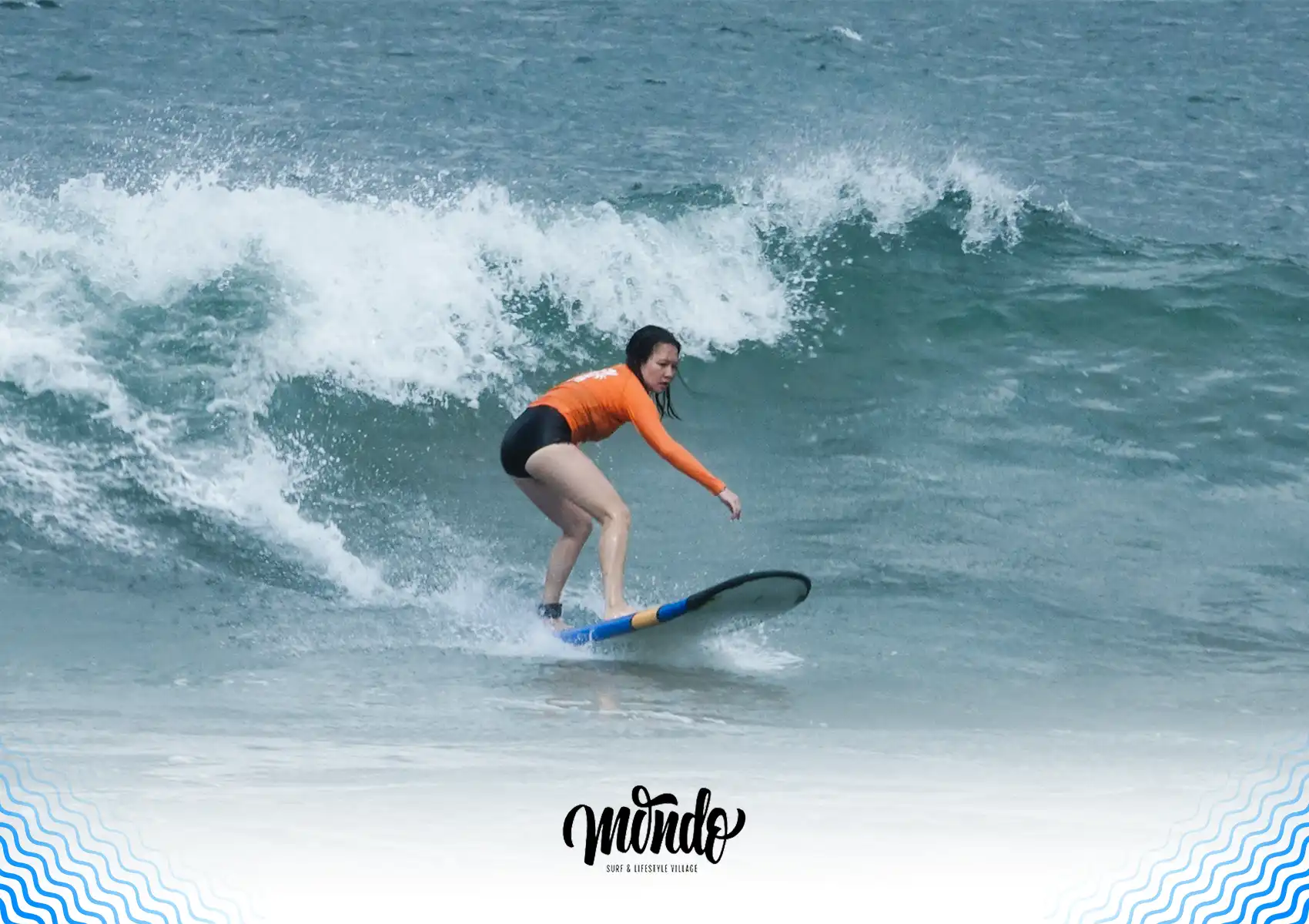
The wave itself lasts seconds, which is why the habits you carry into it matter more than anything you decide during it.
Standing Up in Stages
Going to a knee first feels safer, and it puts you behind the wave. One movement from lying to standing keeps your weight where the board needs it, even if the early attempts bury the nose.
Standing Too Upright
Straight legs and a high chest leave nothing to absorb the movement underneath you. Sink into your knees, keep your hands low, and let your legs take the bumps rather than your whole body.
Giving Up on the Wave Early
Beginners often stop paddling or step off the moment something feels wrong, which turns a recoverable wobble into a fall. Staying with it one second longer is how you learn what the board actually does.
The Mistake Behind the Mistakes
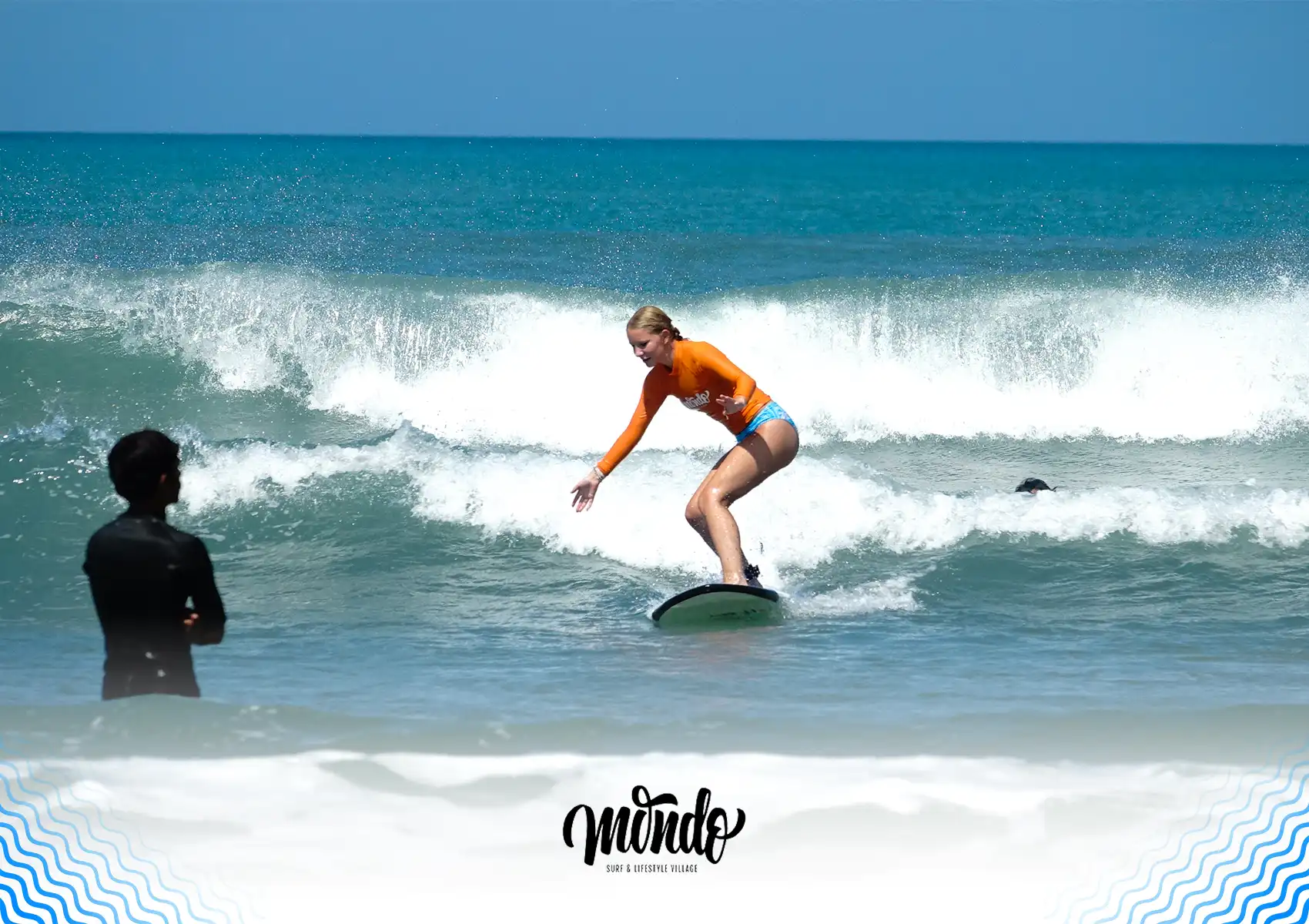
Underneath the specifics sits a pattern of impatience, and a coach at a surf camp in Bali will usually identify it first.
Trying to Fix Everything at Once
Thinking about your position, your timing, and your feet on the same wave means learning none of them. Choose one thing per session and let the rest stay imperfect for now.
Surfing Beyond Your Level Too Soon
Bigger waves do not accelerate progress; they simply reduce the number of waves you catch. Smaller conditions offer more repetition, which is why a surf camp for beginners in Bali often opts for the mellower option.
Skipping Rest and Recovery
Tired arms produce every mistake on this list. A rest day, a yoga session, and a proper night of sleep will do more for your surfing than a fourth tired session in a row.
Common Questions About Beginner Mistakes
What is the most common beginner surfing mistake?
One of the most common mistakes is paddling with short, fast strokes. It feels like hard work, moves very little water, and leaves you too tired to catch waves later in the session.
Why do I keep falling when I stand up?
Usually because the pop-up happens in stages or is too early. Move in one motion, and wait until the board is running with the wave before you commit.
How do beginners avoid getting in the way in the lineup?
Sit slightly to the side of the main peak, keep hold of your board, and look both ways before paddling for a wave. Position matters more than speed.
Should beginners surf every day?
Surfing on consecutive days helps, though not to the point of exhaustion. Two good sessions and a rest day usually beat three tired ones, particularly in your first week.
How quickly can beginners fix bad habits?
Simple faults, such as board position, often change within a single session once someone names them. Habits built over months take longer to change, which is why coaching at a surf camp in Bali starts with the fundamentals.
Fixing These Is Easier With Somebody Watching
Nobody spots their own habits from the board. A coach on the beach, video feedback afterwards, and waves matched to your level at a surf camp in Bali will help you overcome these mistakes faster than another week of guessing. Join a session at Mondo Surf Village.