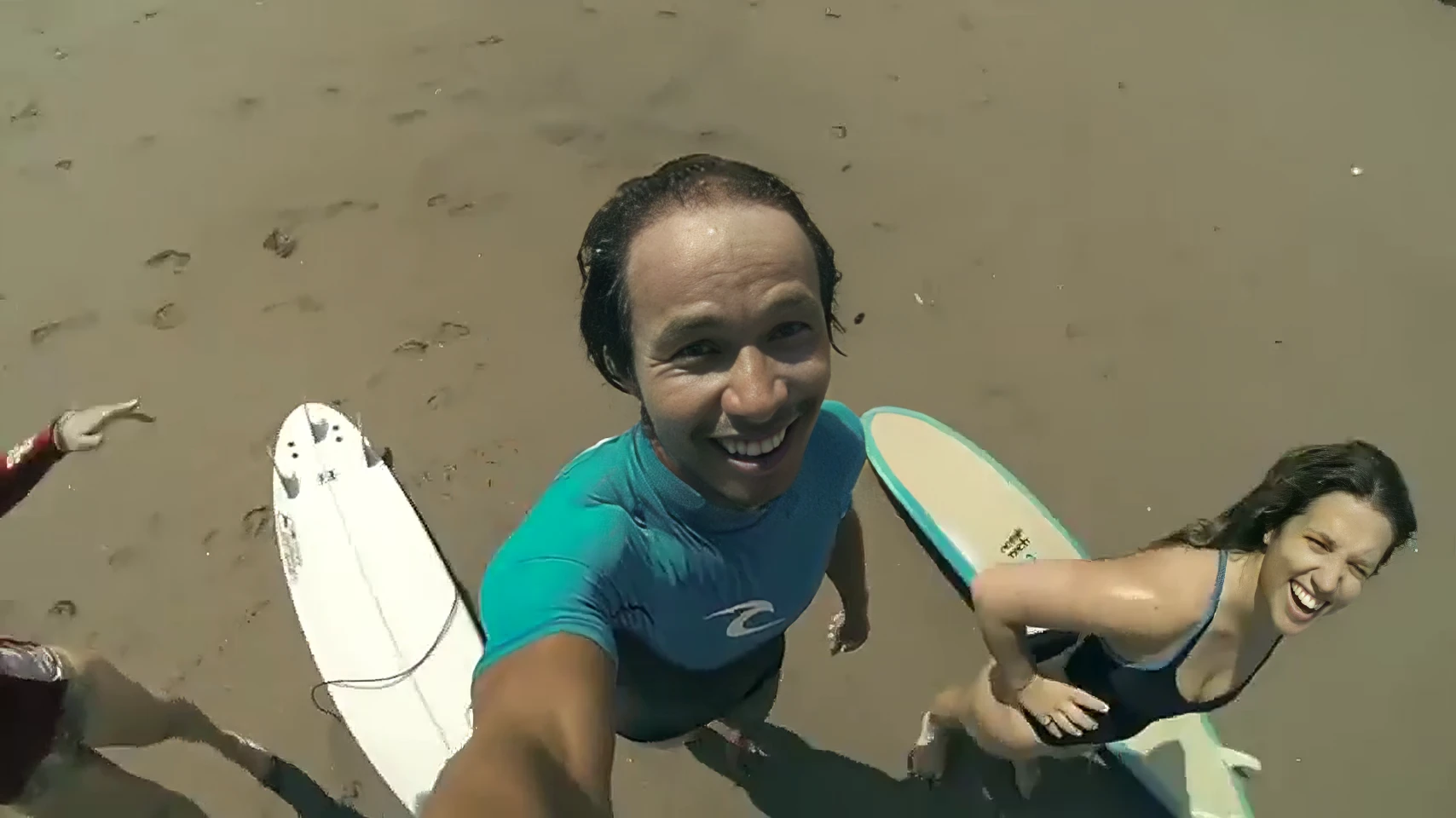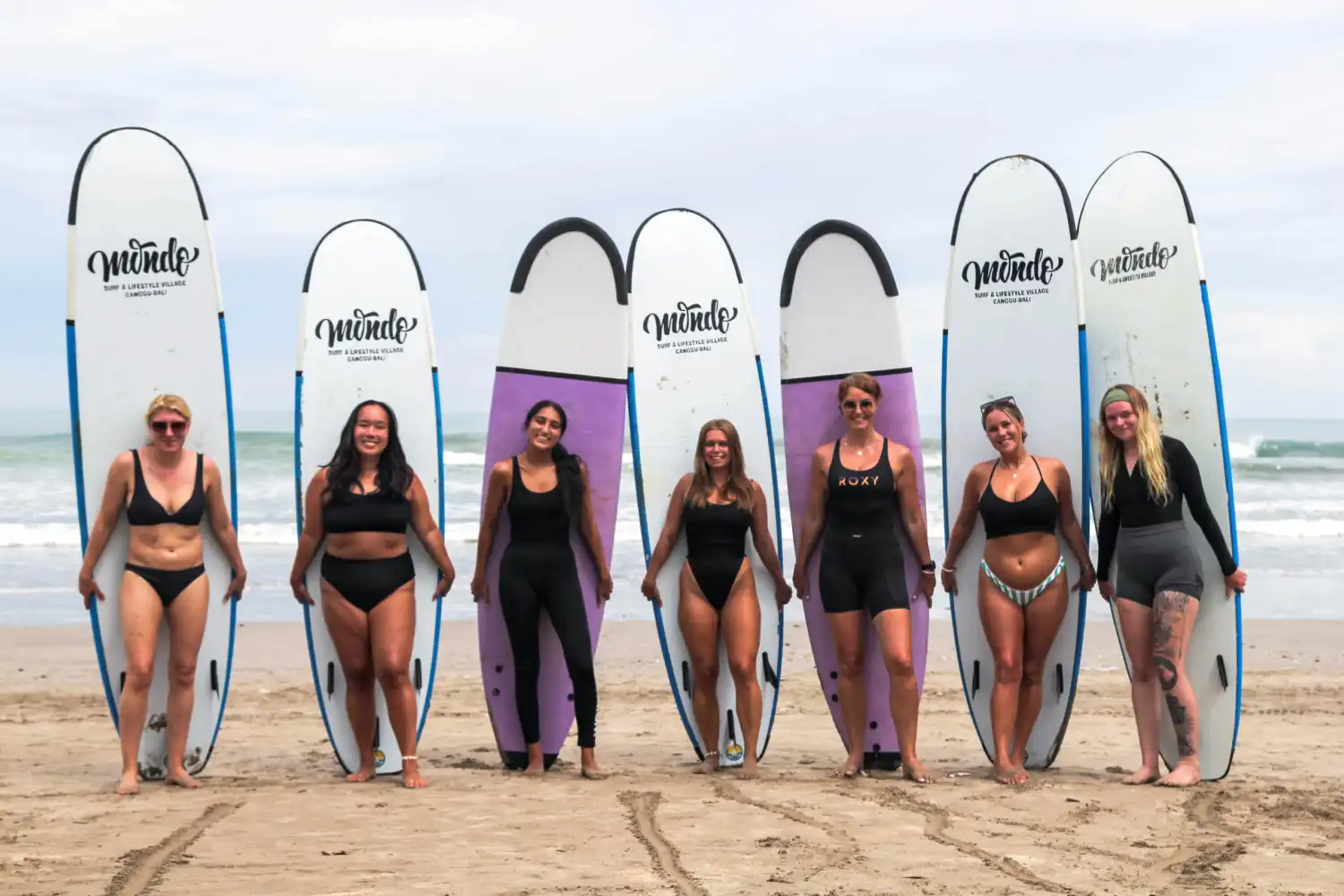

A forecast looks like a wall of numbers until you know which four matter. Swell size, swell period, wind, and tide will tell you almost everything about whether it is worth paddling out today. Learning how to read a surf forecast means matching those numbers to what you actually see when you arrive, and it is a habit worth building early at a surf camp in Bali.

The Four Things Worth Reading
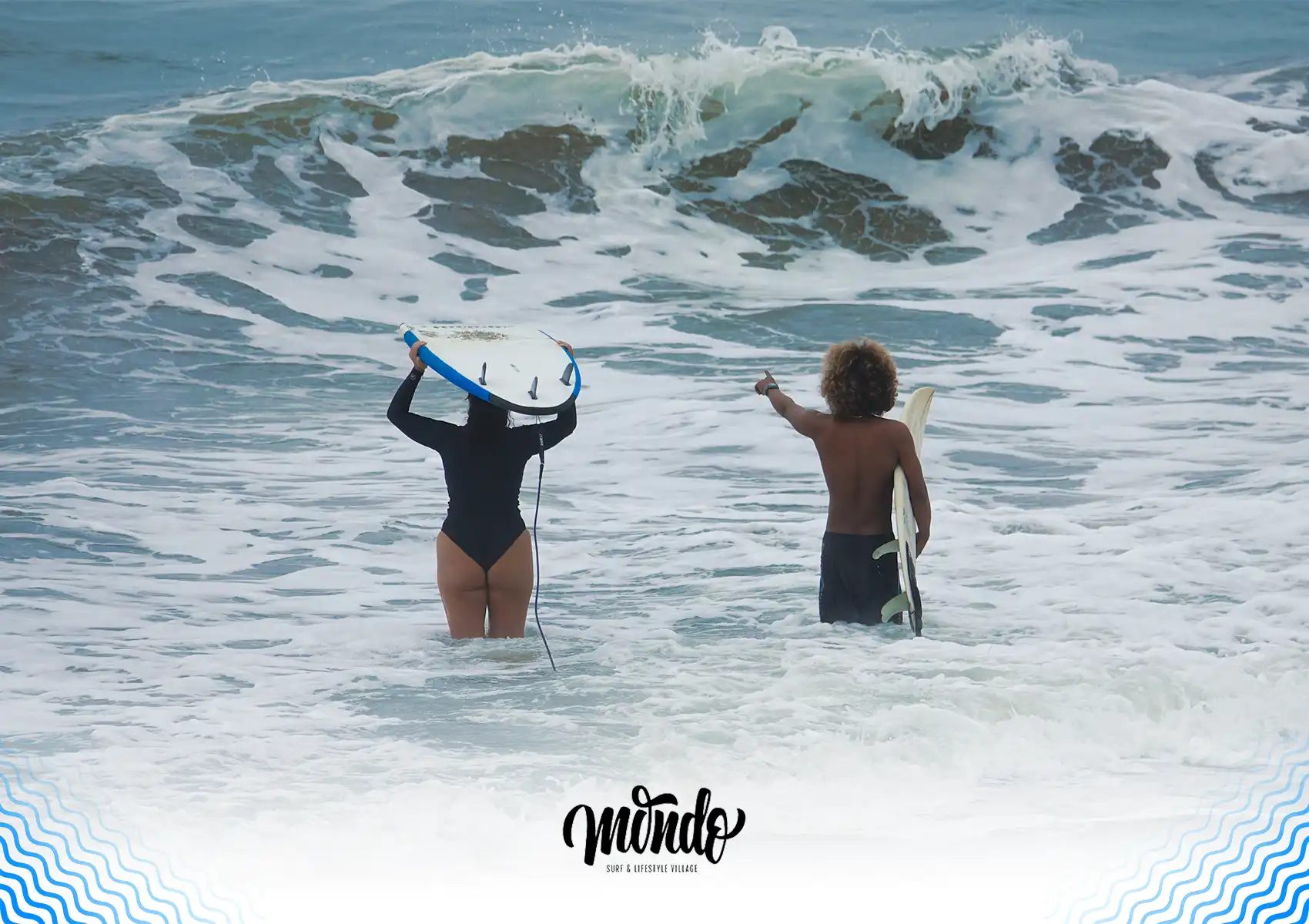
Everything else on a forecast page is detail. These four decide whether you paddle out and where to paddle out.
Swell Size
The number describes the swell out at sea rather than the wave you will ride. Depending on the swell period, wind, tide, and the shape of the seabed, a one-metre swell can produce very different waves by the time it reaches the shore.
Swell Period
Period is the gap in seconds between waves arriving. Short gaps mean weak and choppy surf, while longer gaps mean waves that have travelled further and break with more push behind them.
Wind Direction
Offshore wind, blowing from the land towards the sea, helps keep the wave face clean and well-shaped. Wind coming in off the ocean crumbles it, which is why the same swell can look clean at dawn and messy by lunchtime.
Tide
Tide changes the depth of water over the sand or the reef, so it changes where and how a wave breaks. Every spot has tides that suit it and tides that switch it off entirely.
How They Work Together
The four only make sense when viewed together, which is why coaching at a surf camp in Bali focuses on the day rather than forecasts.
Period Often Matters More Than Size
A smaller swell with a longer period can produce better waves than a larger swell with a shorter period. Energy that has travelled a long way breaks with shape rather than simply with height.
Wind Decides How Clean It Looks
Good size and bad wind will still ruin a session. Mornings in Bali are often the calmest part of the day, which is one reason surfers head into the water early.
Tide Changes the Same Spot Completely
A break that was fat and slow at high tide can turn quick and hollow as the water drops. Checking the tide alongside the swell explains most of the difference between two sessions on the same day.
What a Forecast Cannot Tell You
A forecast is a prediction about the ocean rather than a description of your session.
How Crowded It Will Be
Good numbers bring people. A modest forecast at a quieter spot often gives you more waves than perfect conditions where everybody else is already looking.
How It Actually Looks From the Sand
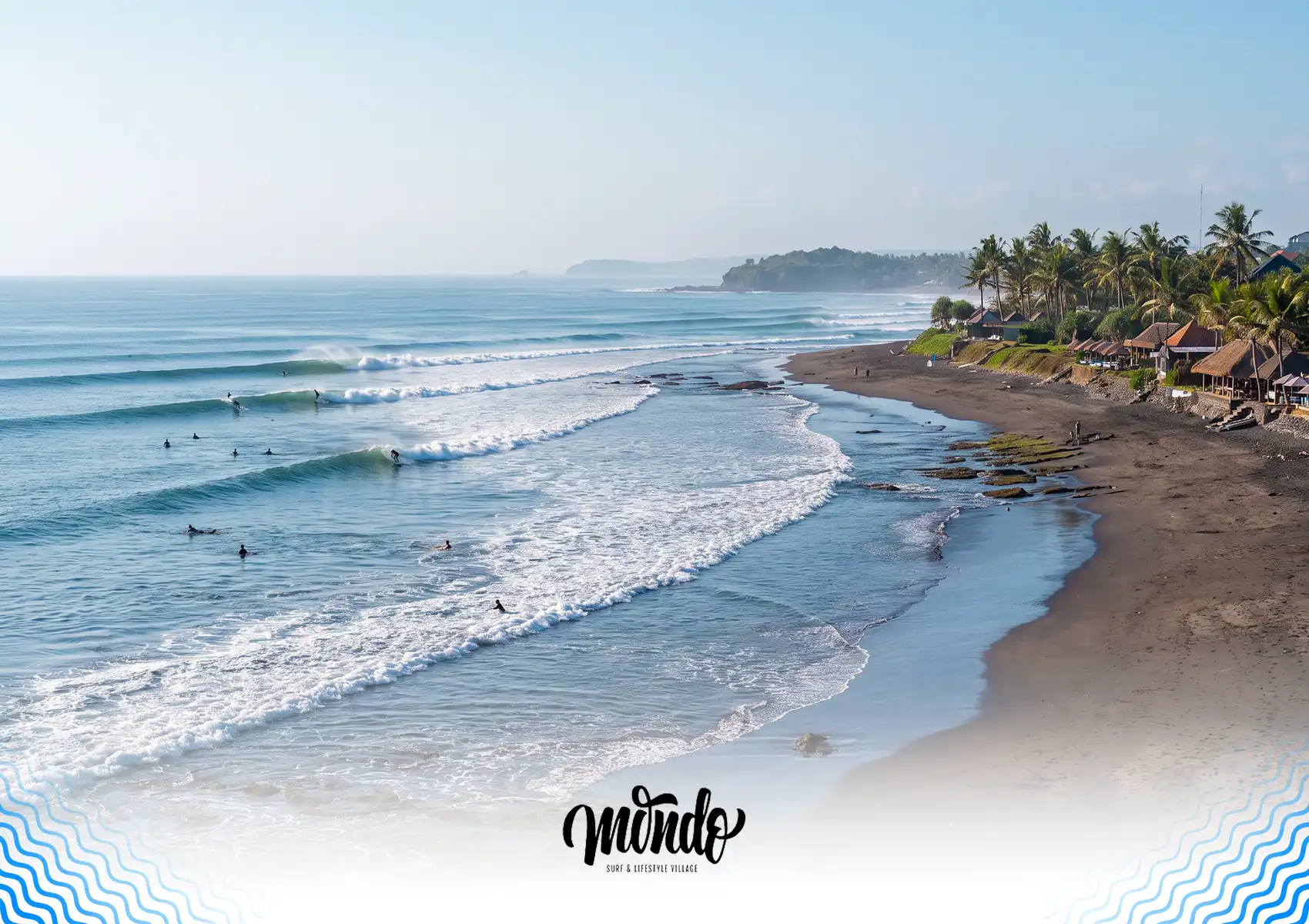
Numbers cannot show you the sandbank, the current, or what the water is doing on the day. A few minutes of watching from the beach settles questions no forecast can.
Whether It Suits Your Level Today
Clean and big is a great forecast and a poor beginner session. The question is never whether conditions are good; it is whether they are good for you, which is the judgement a surf camp in Bali makes each morning.
How to Build the Habit
Reading a forecast well is repetition rather than knowledge, and it comes together faster than you expect.
Read the Same Numbers Every Day
Check size, period, wind, and tide each morning, including on days you do not surf. Patterns appear within a couple of weeks, and the numbers stop feeling abstract.
Compare the Forecast With What You See
Learning happens when you read the numbers, look at the ocean, and notice how closely the forecast matches the conditions in front of you. That comparison teaches you what a given forecast means at each spot along the coast.
Ask the Coaches Who Surfed It This Morning
Somebody who was in the water an hour ago knows more than any forecast. At a Canggu surf camp, that information is available before breakfast, and it costs nothing to ask.
Common Questions About Surf Forecasts
How do you read a surf forecast as a beginner?
Start with swell size, swell period, wind direction, and tide, and ignore everything else at first. Those four cover almost every decision about whether to paddle out.
What swell period is good for surfing?
Longer periods generally mean better organised waves. Longer swell periods generally produce more organised waves. Swells of 10 seconds or more often carry more energy, while shorter periods are commonly associated with local windswell.
Does an offshore wind always mean good waves?
No. Offshore wind grooms the face, but a strong one can hold waves up until they break late and fast. Light wind from any direction often beats a strong wind from the right.
What size swell suits beginners?
Small and gentle, with plenty of whitewater to practise on. The right size also depends on the beach and the tide, as the same swell can produce very different conditions at different surf spots. The number matters less than the period and the spot, since a small long-period swell can still break with real force.
Do you still need a forecast if you surf with a coach?
Not for choosing your session, because a surf camp in Bali picks the spot and the timing for you. Reading it anyway is how you learn to make those calls for yourself later.
Let Somebody Else Read It for a Week
Ready to stop guessing? Sessions at a surf camp in Bali are planned around the conditions each day, so you surf when the coast is working rather than when a timetable says so, and you pick up the reading as you go. Join a session at Mondo Surf Village.