Learning how to pop up on a surfboard is the first challenge every beginner faces in the water. The movement looks simple from the beach, but executing it cleanly on a moving wave is a different matter entirely. This guide breaks the movement down into five steps that you can practise on dry land and apply directly in the water.

Why the Pop-Up Matters More Than Any Other Skill
Every wave begins and ends with the pop-up. Getting it right from the start builds the foundation for everything that follows.
Why Beginners Struggle With It
The pop-up fails for predictable reasons. Rushing the movement, looking down at the board, placing hands in the wrong position, and relying on the knees to help stand up are the four patterns coaches most often see. None of these is difficult to correct once you know what to look for. The challenge is that, in the water with a wave approaching, the body tends to move instinctively rather than follow the technique it has been trained to use.
How to Pop Up on a Surfboard for Beginners
For beginners, it is better to learn the pop-up in stages on dry land before attempting it as a single fluid movement in the water. Practising the sequence repeatedly on the floor builds the muscle memory that carries into the ocean. The goal on dry land is not speed. It is accuracy, so that when the wave arrives, the body executes the movement without conscious thought.
What You Need to Prepare Before You Start
Before working through the five steps, three things need to be in place. Stance, position on the board, and hand placement all determine whether the pop-up succeeds or fails before the movement itself begins.
Regular or Goofy Stance
Your stance determines which foot sits at the front of the board and which sits at the back. Regular stance places the left foot forward; goofy stance places the right foot forward. Neither is better than the other. The simplest way to find your natural stance is to notice which foot you naturally lead with when sliding on a slippery floor or stepping forward instinctively. Knowing this before your first session removes one variable from an already complex movement.
Finding the Sweet Spot on the Board
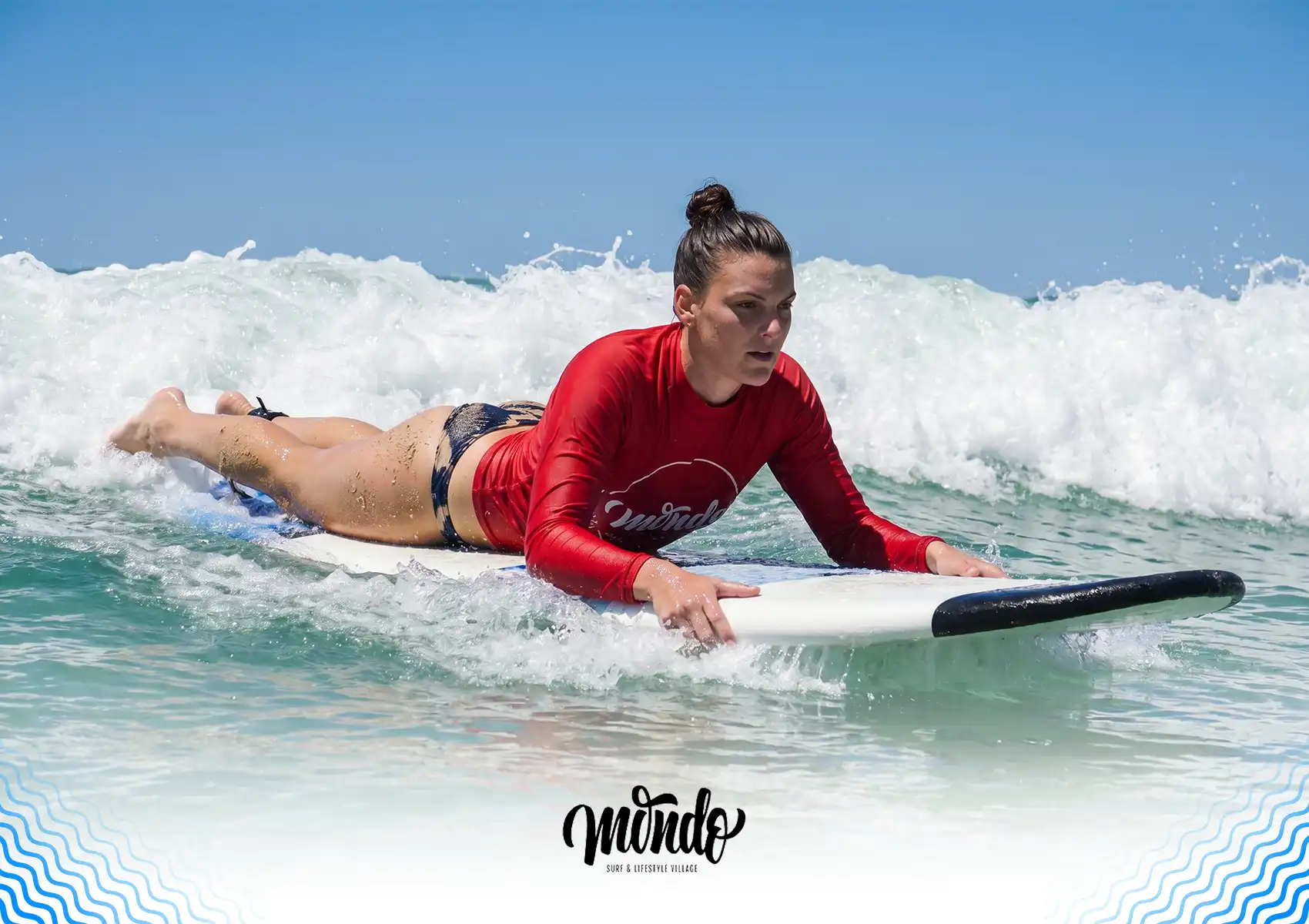
Your position on the board before the pop-up is just as important as the pop-up itself. If your body is positioned too far forward, the nose of the board will sink into the water when the wave arrives. Too far back and the board slows down, and the wave passes underneath you. The balanced middle position, often called the sweet spot, keeps the board moving efficiently and sets you up for a clean pop-up.
Hand Placement Before You Push
Your hands should be placed flat on the deck at ribcage level, shoulder-width apart, palms facing down with thumbs roughly in line with the lower ribs. Placing hands on the rails instead of the deck is one of the most common beginner mistakes. Grabbing the rails narrows the push-up base and pulls the board sideways, making the pop-up considerably harder to execute cleanly.
How to Pop Up on a Surfboard in Five Steps
These five steps break the pop-up into a sequence that can be practised on dry land and applied directly in the water. Coaches at Mondo Surf Village walk through this sequence on the sand before every session so the movement is already familiar when the wave arrives.
Step One
Arch your back and lift your chest. Push your upper body up from the board with your arms locked or slightly bent. Keep your hips and upper thighs in contact with the board at this stage. Keep your head up and your eyes forward from the very start.
Step Two
Place your hands at ribcage level. Hands flat on the deck, not on the rails. Palms facing down, with your thumbs roughly in line with your lower ribs. This is the launch position for everything that follows.
Step Three
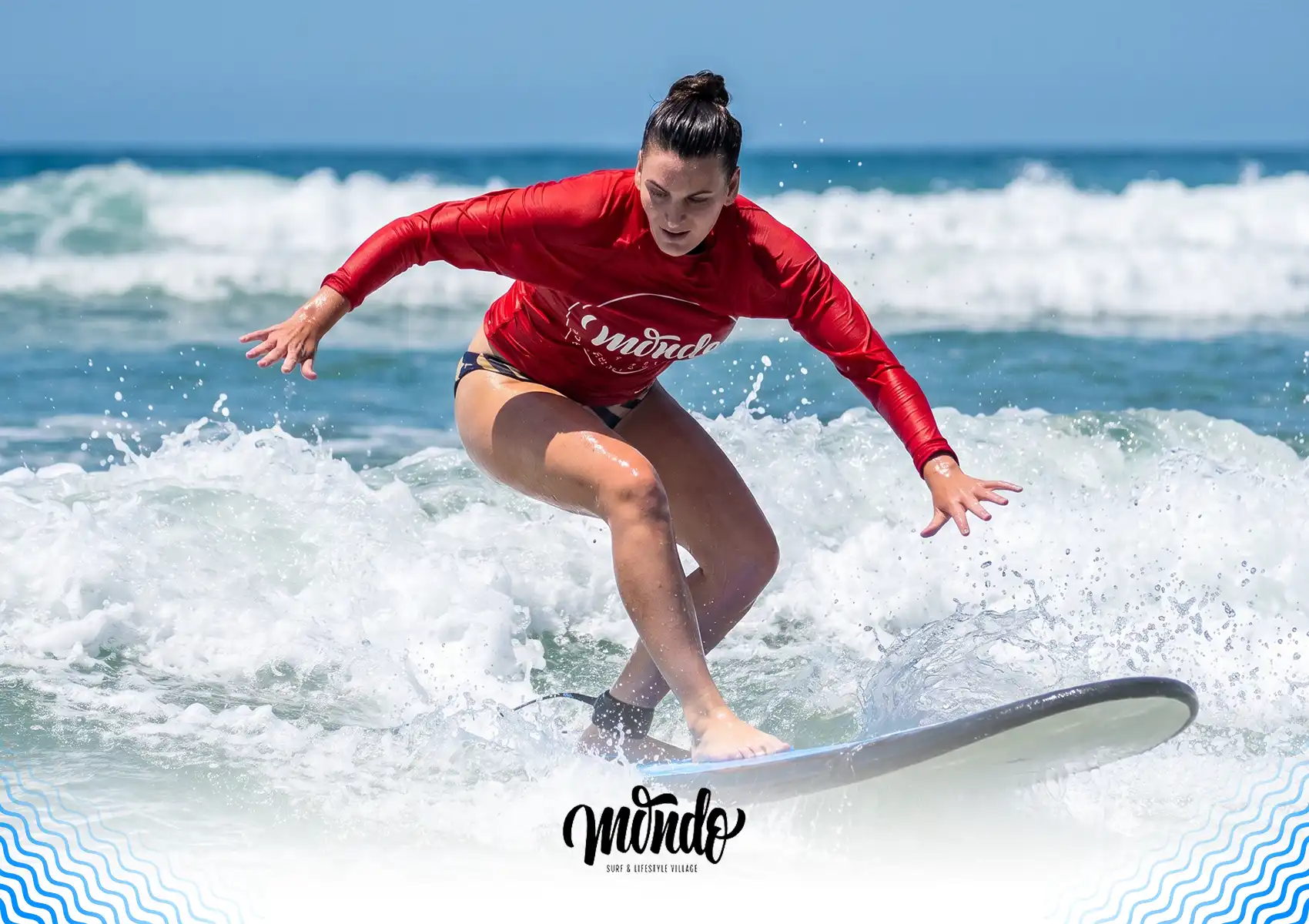
Bring both feet forward simultaneously. Ideally, both feet should land at the same time or within a fraction of a second of each other. Your front foot lands just above the middle of the board. Your back foot lands near the tail pad. Neither knee touches the board at any point during the movement.
Step Four
Land low with knees bent. Do not stand up straight immediately after your feet land. Stay low, knees bent, weight centred over the board. Standing up too quickly is one of the most reliable ways to lose balance on the wave before the ride has properly begun.
Step Five
Look where you want to go. Eyes up and forward from the first moment of the push-up through to the standing position. Looking down at the board disrupts your balance, reduces your awareness of the wave, and causes the board’s nose to sink. Looking forward directs the board naturally in the direction you intend to go.
How to Practise Your Pop-Up Before Getting in the Water
The pop-up is one of the few surfing movements that can be fully rehearsed on dry land, making it one of the fastest skills to build with consistent practice. This is why many beginners choose to learn at a surf camp, where dry land drills and water sessions take place every day in a structured environment.
Dry Land Drills and Repetition
Ten to fifteen pop-ups on dry land before every session build the muscle memory that carries into the water. Practising in front of a mirror or filming yourself on your phone helps you see the difference between what you think you are doing and what is actually happening. The body often moves differently from how it feels, and watching the movement on screen is one of the fastest ways to identify what needs correcting.
Using a Balance Board for Additional Practice
A balance board replicates the instability of a surfboard and adds a useful challenge to the dry land pop-up drill. It is not essential for beginners, but for surfers who want to develop their pop-up further between sessions, a balance board provides a more realistic practice environment than a flat floor.
Pop-Up Coaching at Mondo Surf Village
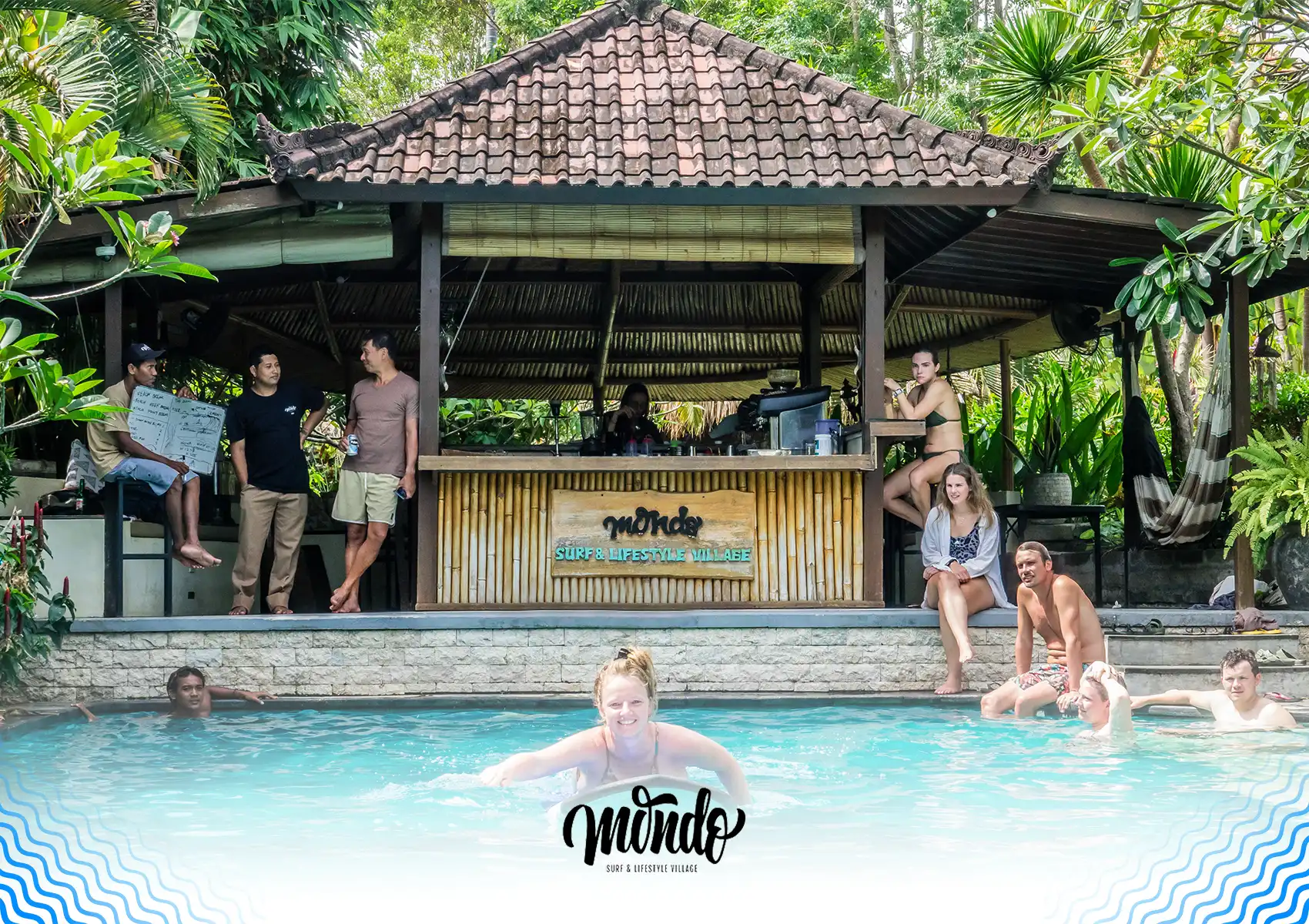
Understanding the five steps is the starting point. Having a coach observe and correct your pop-up in real time turns theory into a movement that holds up under the pressure of a real wave.
In-Water Coaching and Immediate Corrections
At Mondo Surf Village, coaches observe the pop-up from the water and make corrections specific to what each individual surfer is actually doing. A correction made at the moment the mistake occurs is significantly more effective than general technique advice delivered on the beach before the session begins.
Video Analysis to See Your Own Technique
Video analysis, reviewed on-screen after each session, shows surfers exactly what their pop-up looks like from the outside. The gap between what a beginner thinks they are doing and what is actually happening on the board is often considerable. Seeing it directly is one of the most effective tools available for closing that gap quickly.
Join Mondo Surf Village and Learn How to Pop Up on a Surfboard
If you are ready to work through how to pop up on a surfboard with direct coaching support, Mondo Surf Village runs a structured programme that covers technique from the sand through to the wave. Join Mondo Surf Village and develop a clean, consistent pop-up as part of a proper surf camp in Bali, with in-water coaching and video analysis from your first session.
Frequently Asked Questions
How do I know if I am in a regular or goofy stance?
Notice which foot you naturally lead with when sliding or stepping forward. That foot is typically your front foot. If you are still unsure, a coach can assess your natural stance during your first session.
How long does it take to learn a consistent pop-up?
Many beginners stand up during their first session in white water. A consistent pop-up on unbroken waves typically takes several sessions to develop. Dry land practice between sessions speeds the process considerably.
Should I use my knees to help me stand up?
No. Using the knees adds unnecessary steps, takes too long, and breaks the fluid movement the pop-up requires. It is a short-term solution that creates habits that are difficult to correct later.
What is the best way to practise the pop-up on dry land?
Lie flat on the floor and work through the five steps slowly, focusing on accuracy rather than speed. Film yourself or practise in front of a mirror to check hand placement, foot landing position, and whether your knees are staying off the ground throughout the movement.
Why do I keep falling forward when I pop up?
Falling forward is usually caused by being positioned too far forward on the board, standing up too quickly, or looking down during the movement. Check your position on the board before the pop-up and focus on landing with knees bent rather than standing upright immediately.