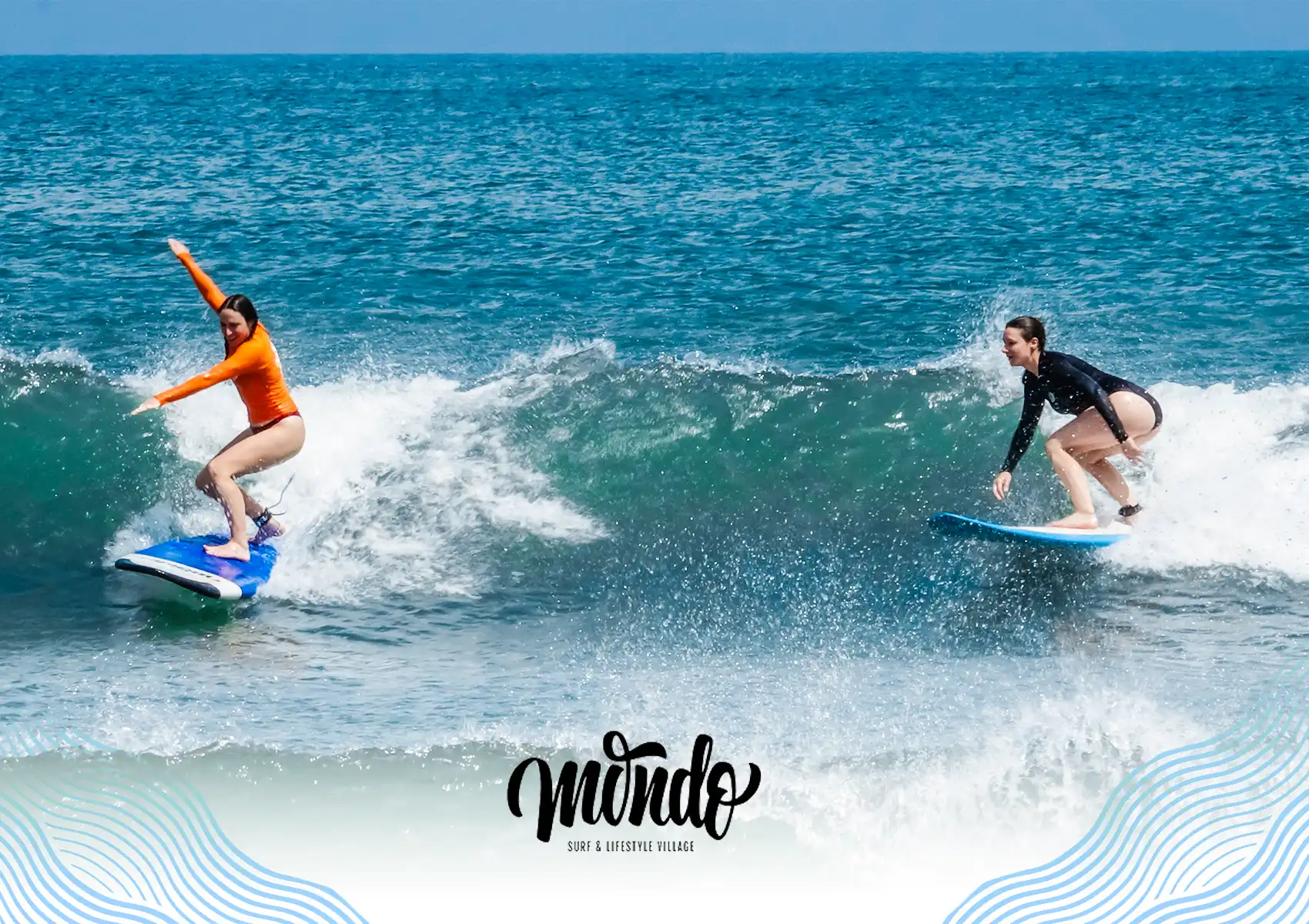
Learning to surf in Bali takes less preparation than many people imagine. The reason is simple: Bali is one of the best places in the world for beginners to start. The waves are gentle, the water is warm all year, and coaches are easy to find. Even so, a few things are worth knowing first, and this guide covers everything a beginner should know before joining a surf camp in Bali.
Why Bali Is One of the Best Places to Learn
The reputation is deserved, and for reasons that matter specifically to beginners.
Warm Water All Year Round
Bali’s ocean sits between 27 and 29 degrees every month of the year, so you never need a wetsuit. That matters more than it sounds. You can train for longer in the water, which means more waves and faster progress.
Waves for Every Stage of Learning
Within a small stretch of coast, Bali offers gentle sandy beach breaks for your first days and slower rolling waves to grow into once you find your feet. Everything sits close together, so you can keep progressing without travelling far.
How Difficult Is Learning to Surf in Bali
The answer has more nuance than simply “hard” or “easy”.
With proper coaching, standing up and riding a wave on your first day is a realistic goal, not a sales line. The right board, the right waves, and a well-timed push make an enormous difference.
The genuinely hard part is not the standing. It is the paddling. Your shoulders, arms, and lower back will work harder than they ever have, and by day two you will discover muscles you did not know existed.
Progress also comes in waves of its own. A brilliant session can be followed by a frustrating one, and wipeouts are part of every surfer’s day at every level. Expect all of it, and none of it will discourage you.
What a First Surf Lesson Looks Like for Beginners
Knowing how a lesson unfolds makes the first session feel far less daunting, and you can read what your first day at a surf camp looks like in full detail.
It Starts on the Sand
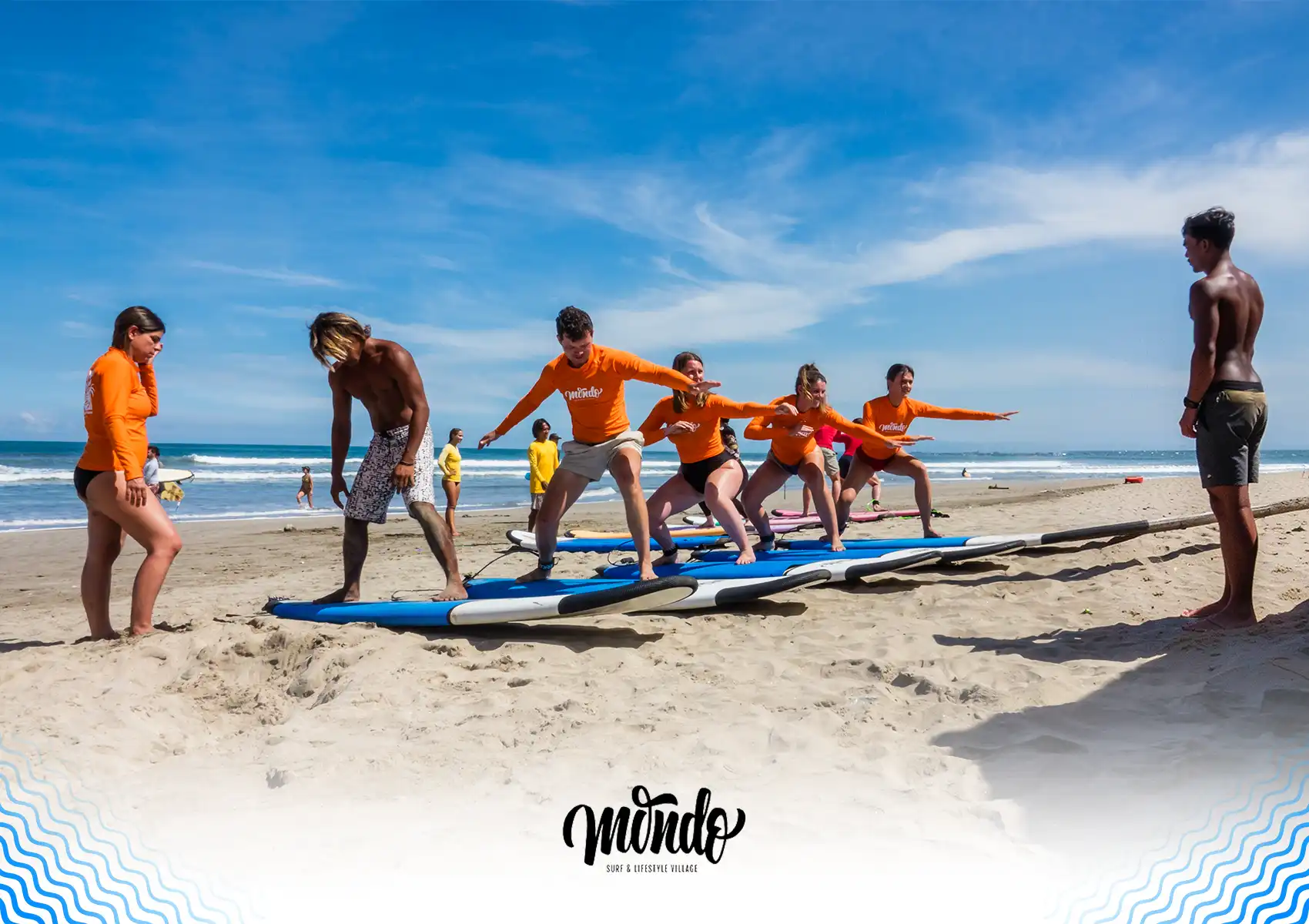
A good lesson always begins on land. Your coach helps you choose the right board, covers the safety basics, then drills the lying position, the paddle, and the pop-up until the pattern feels natural before you touch the water.
Into the Water with Support
In the water, your coach stays beside you. They position you in the right spot, tell you which wave to take, and give you a well-timed push, so you can focus on one thing only, which is standing up.
Feedback on Every Wave
After every attempt, your coach tells you what worked and what to fix. That direct feedback is what makes learning with a coach at a surf camp in Bali so much faster than learning on your own.
Lessons or Learning Alone
Every beginner quietly asks the same question: do I actually need a lesson?
Why Coaching Speeds Everything Up
A coach sees what you cannot. Which wave to take, when to start paddling, where to sit, and why you fell. With feedback on every single wave, you compress weeks of trial and error into days. Renting a board and hoping is the slow, and occasionally dangerous, alternative.
What a Structured Programme Adds
One lesson teaches you to stand. Consecutive days teach you to surf. A structured programme at a surf camp in Bali builds each session on the last, moves you from the foam board to a hard board when you are ready, and uses video feedback so you can see the difference between what you did and what it felt like. That difference is where the fastest improvement hides.
What to Prepare Before Your First Session
You need less than you think, but a few things help.
Basic Swimming Confidence
You do not need to be a strong swimmer, but you should be comfortable in moving water. If waves make you curious rather than fearful, you are ready. Beginner lessons also take place in shallow water, so you can stand up whenever you need to.
A Little Fitness Helps
Paddling relies on your shoulders, back, and core. Even a few weeks of light preparation, such as push-ups, swimming, or simple pop-up practice, will make your first sessions far more enjoyable and less tiring.
Rest and Hydration
Arrive fresh. A proper night of sleep and plenty of water make a real difference, because surfing drains your energy faster than beginners usually expect.
What to Bring
Swimwear, reef-safe sunscreen, and patience. Any good lesson includes the board and a rash guard, so there is no need to buy equipment before you arrive.
Start Learning With Us in Bali
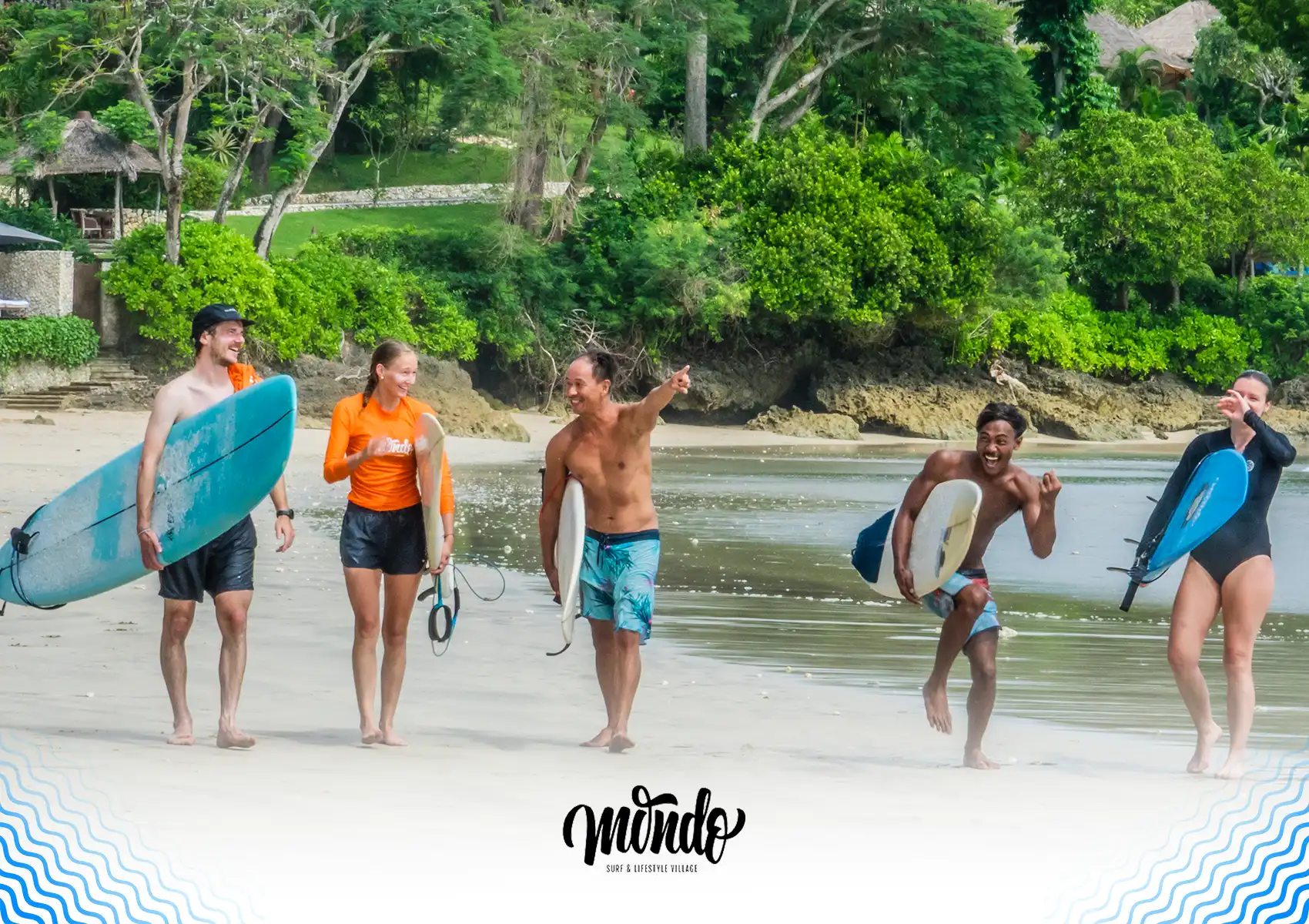
Knowing what to expect is half the preparation, and the other half only happens in the water. At Mondo Surf Village, our surf camp on Bali’s Pererenan coast turns learning to surf into a structured daily rhythm of coaching, practice, and progress. Ready for your first wave? Start your surfing journey with Mondo Surf Village.
FAQ About Learning to Surf in Bali
Here are quick answers to the questions we hear the most.
Where should you surf as a beginner in Bali?
The best places for beginners are sandy-bottomed beach breaks with slow, consistent waves. The coast from Canggu to Pererenan is known as one of the friendliest learning areas in Bali.
How long does it take to learn to surf in Bali?
You can expect to ride your first waves on day one with coaching. Reaching the stage where you catch and ride waves independently usually takes one to two weeks of consistent practice.
Can you learn to surf in Bali without any experience
Yes. Bali is one of the best places in the world for complete beginners, and coaching here is built around first timers.
What age is too old to start surfing
There is no upper age limit. If you are reasonably active and comfortable in the water, you can learn, and plenty of people catch their first wave past fifty.
Do you need to be a strong swimmer to surf in Bali
No, basic swimming ability and confidence in waves are enough for beginner lessons, which take place in shallow, manageable water.
What is the best time of year for learning to surf in Bali
Beginners can learn all year round. The dry season from May to September brings the most consistent conditions, but beginner-friendly waves exist in every month.