
Choosing your first board shapes how quickly you find your feet in the water, and the longboard surfboard is where almost every new surfer should begin. Its length, float and forgiveness make early waves feel achievable rather than frustrating. If you are learning to surf in Bali, knowing what a longboard does and how to choose the right one will help you get up and ride sooner.
What Is a Longboard Surfboard?
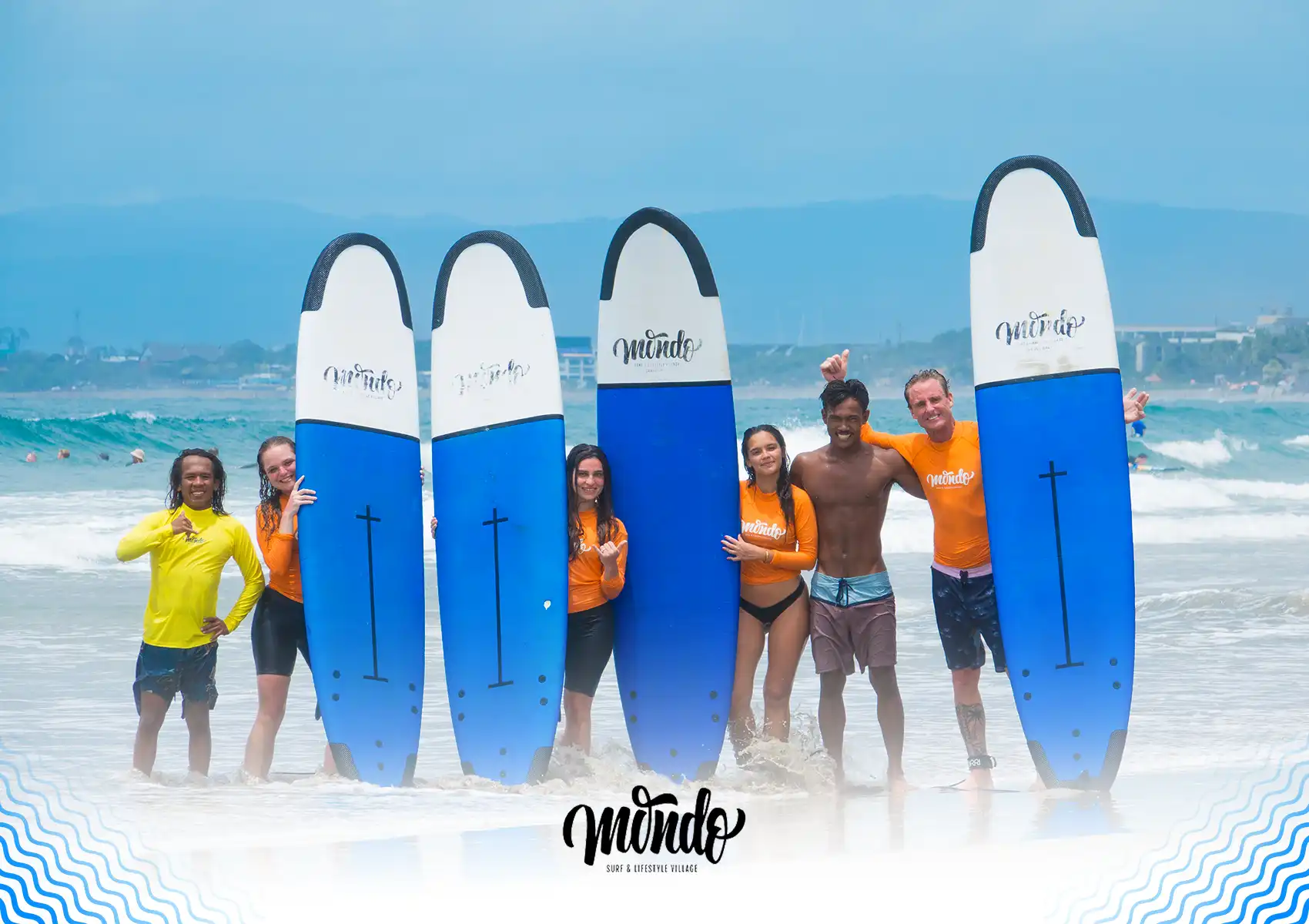
A longboard is the largest and most stable board you will find, which is why it is usually the first board new surfers use. The extra length and volume make paddling straightforward, help you catch waves sooner, and keep you balanced as you learn.
Longboard Characteristics
A longboard stands out for a few clear reasons.
- Size: Most longboards are at least nine feet long, or about 2.75 metres.
- Shape: Choose a board with a rounded nose, enough width for stability, and a gently tapered tail.
- Volume: Longboards have much more volume than shortboards, which gives them stability.
- Fins: A single fin gives you steady control, a 2+1 setup makes turning easier, and a quad setup adds speed.
For beginners, that extra length and volume make it easier to catch waves and get to your feet.
Longboard vs Shortboard
The best way to see why longboards suit beginners is to compare them with shortboards.
| Feature | Longboard | Shortboard |
| Length | Nine feet or more | About five to six feet |
| Stability | High, easy to balance | Low, tips easily |
| Paddling | Easy, floats well | Harder, less float |
| Catching waves | Early, even in small surf | Late, needs steeper waves |
| Turning | Slow and smooth | Quick and sharp |
| Best for | Beginners and cruising | Experienced surfers |
If you are just starting out, the longboard is almost always the better choice.
Why a Longboard Suits Beginners
The features that hold back advanced surfers on a longboard are the same ones that help beginners improve.
Stability That Builds Confidence
A wide, buoyant board floats high and stays steady, so you can balance without fighting the board. That stability lets you focus on paddling, positioning, and standing up instead of worrying about tipping over.
Easier Paddling and Earlier Waves
More foam means more float, so paddling takes less effort, and you can catch waves sooner, before they get steep. Those extra seconds make standing up easier, which is often the hardest part when you are starting out.
How to Choose Your First Longboard Surfboard
A few key factors decide whether a board helps you progress or slows you down. At a surf camp in Bali, coaches can help you make the right choice.
Length and Volume
As a general rule, taller and heavier surfers need longer boards with more volume, while lighter surfers can go a bit shorter. If you are not sure, pick the bigger board. Extra foam is easier to handle when you are learning.
Shape and Tail
A wide nose and full outline help the board stay balanced. A rounded or square tail makes the board feel more playful and easier to turn. The tail shape affects how the board moves in the water.
Fin Setup
For your first board, use a single centre fin. This setup keeps the board predictable and lets you focus on learning. You can try side fins later, once you are comfortable with the basics.
Getting Started on Your Longboard in Bali
Bali has lots of gentle, slow-breaking waves that suit longboards, which makes it a great place to learn. Soft, rolling waves over sand are much easier for beginners than fast, steep reef breaks. Start where the water is calm, and the risks are low. As you build confidence, you can try more challenging spots.
Good coaching helps you learn faster, and it does not have to be complicated. Watching yourself on video shows mistakes you might miss, and a coach can help you correct them before they become habits. Combine coaching with regular time in the water, and you will improve much faster than learning alone.
Start Your Longboard Journey with Mondo Surf Village
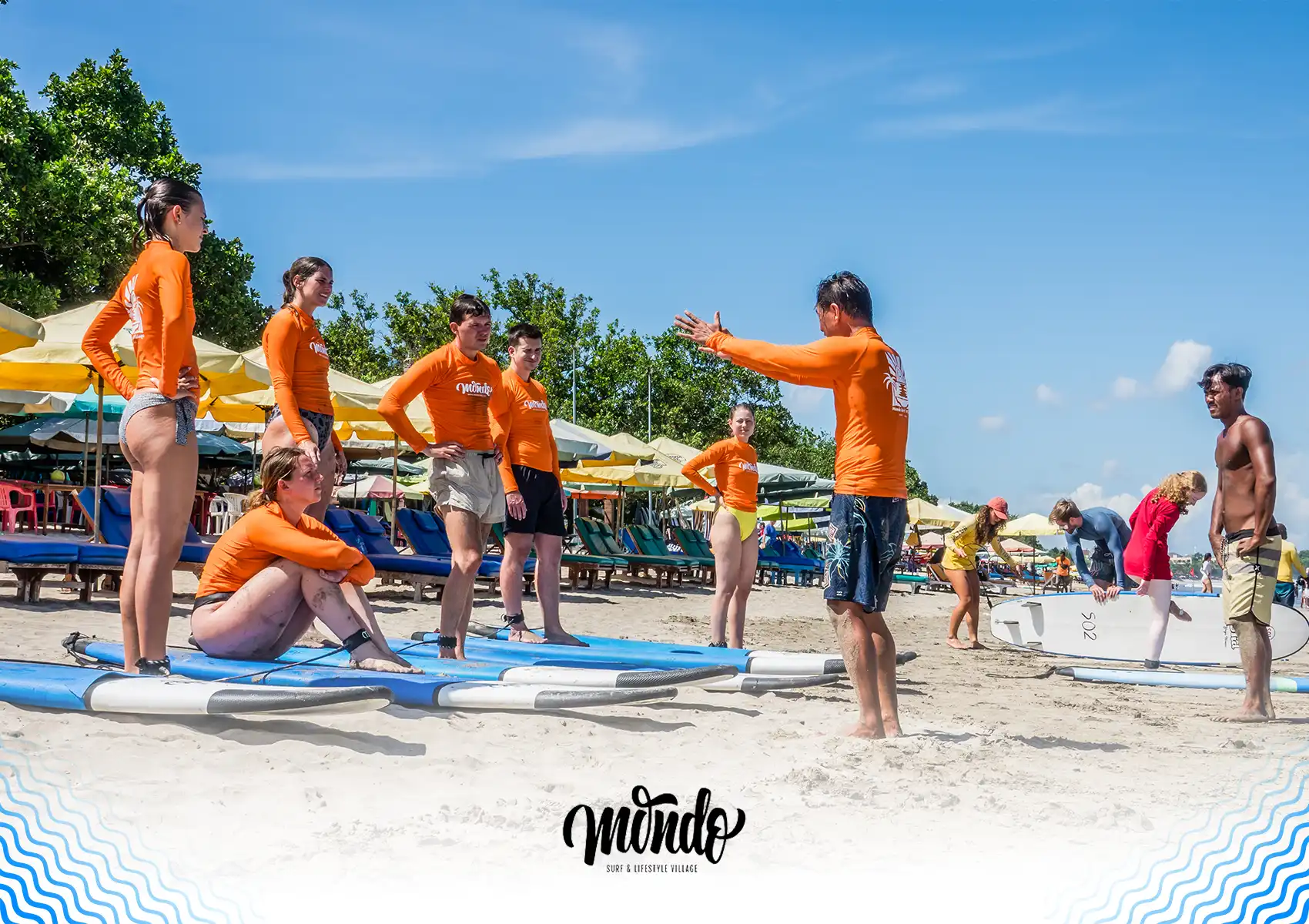
That extra guidance makes a real difference. At Mondo Surf Village, our surf camp in Bali, you get daily coaching and morning yoga, so you build skill and flexibility from your first days in the water. If you are ready to start, come learn at your own pace in our relaxed, natural setting. The beginner surf and yoga package is a good place to begin, and you can look through all our surf packages to find what fits you best.
Frequently Asked Questions
These are the questions beginners ask most often before buying or riding their first longboard.
What size longboard surfboard should a beginner get?
Most beginners do well on a board around nine feet or longer, with enough volume to float easily. If you are taller or heavier, choose a bigger board. Extra length and foam make paddling and balance much easier.
Is a longboard good for learning to surf?
Yes, a longboard is one of the best boards for learning. Its stability and float help you catch waves earlier and stand up sooner than you could on a smaller board.
Can you surf a longboard in small waves?
Yes, longboards are ideal for small, gentle waves. Their length and glide let you catch and ride waves that a shortboard would miss, which is why they work so well for beginners.
Is a longboard or shortboard better for beginners?
A longboard is better for almost every beginner. It is more stable, easier to paddle, and more forgiving of mistakes. A shortboard requires skills you haven’t built yet.
How long does it take to learn on a longboard?
With regular time in the water and some coaching, most beginners stand and ride small waves within a few sessions. Paddling and reading the ocean take longer, so you will see progress in steps, not all at once.
How do you take care of a longboard surfboard?
Rinse your board with fresh water after every session and keep it out of the sun and heat. Store it in a bag or a shaded spot, and fix any dings quickly so water does not get in.