
Spend a few minutes watching the ocean, and you will notice that some waves crash hard while others roll in gently, leaving a long line of foam. Those gentle, rolling waves are called spilling waves, and they are exactly what you want as a beginner. Their slow, forgiving shape gives you the time and space you need to learn.
What Are Spilling Waves
A spilling wave breaks slowly and gently, sometimes called a mushy wave by surfers. These waves form where the sea floor rises gradually, often over sandy beaches or shallow reefs.
When a spilling wave breaks, the top tumbles gently down the front, spreading into a wide patch of soft white water. This slow break gives you more time to get to your feet and makes small mistakes less costly. That extra time is what makes spilling waves ideal for beginners.
Experienced surfers may look for steeper, faster waves, but for someone learning, the slower, gentler shape of a spilling wave is exactly what you need. These waves are relaxed and easy to ride, which helps you focus on the basics.

How a Spilling Wave Breaks
As a spilling wave moves into shallow water, the top tips forward and spills gently, rather than the whole wave collapsing at once. This creates a steady line of white water rolling toward the beach, instead of a single heavy drop.
This happens because the sea floor rises slowly. The wave has more time to slow down and release its energy bit by bit, which is why the white water rolls forward in an even line instead of crashing all at once.
Why Spilling Waves Suit First-Time Surfers
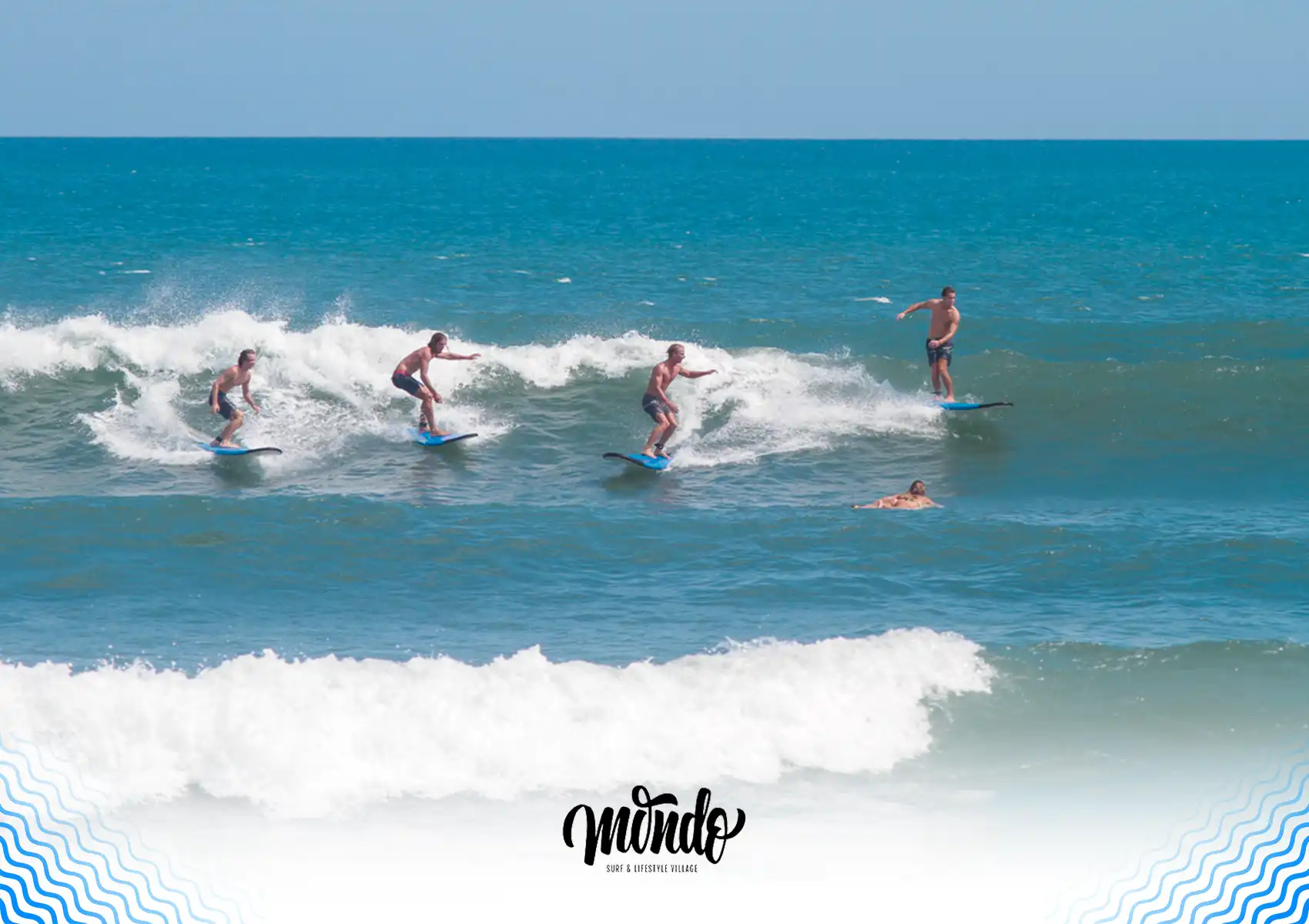
The gentle break of spilling waves is exactly why they’re the right place to start. What seems like a small detail from the beach becomes a real advantage when you are in the water, learning to catch your first wave.
A Forgiving Break That Gives You Time
Timing is often the hardest part for beginners. On a steep wave, things move quickly, and it is easy to miss your chance. Spilling waves build up their push slowly, giving you a few extra seconds to paddle, feel the lift, and stand up.
The slow break also makes falling less intimidating. If you fall on a spilling wave, you land in soft, foamy water instead of being thrown by a heavy wave. You will still fall, but it is less likely to hurt or shake your confidence, so you can get back on and try again right away.
Building Confidence Before Steeper Waves
Spilling waves offer a safe space to practise the hardest parts of surfing. With the right coaching, many people stand up in their first few sessions, but paddling and timing take longer to master. These waves let you make mistakes and learn from them without harsh consequences, which is exactly what beginners need.
Spilling waves also prepare you for the next step. The paddling, wave reading, and timing you develop on gentle waves are the same skills you will use on bigger, faster waves later. Starting small is not taking the easy way out. It is how most people who learn to surf in Bali build a foundation they can rely on as they progress.
Where Spilling Waves Form
Not every beach offers gentle, rolling waves. Understanding why helps you read the beach before you paddle out.
The Gently Sloping Seabed
Spilling waves form where the sea floor rises slowly and evenly toward the beach. As the wave moves over this gentle bottom, it slows down and breaks gradually, spilling forward as it comes in. Where the sea floor is steep, the wave stands up quickly and breaks hard, creating a much stronger wave.
Reading Conditions Before You Paddle Out
Before paddling out, take a few minutes to watch the waves from the beach. Spilling waves appear as long lines of white water that crumble forward slowly, not as steep walls that curl and drop quickly. Once you can spot the difference, you can choose the gentle waves that are best for learning.
It also helps to notice how the waves change as the tide moves in and out. The same beach can feel easy in the morning and become more challenging later in the day. This can be hard to judge when you are new, which is why a coach who knows the local beaches is so valuable. They can guide you to the right waves at the right time.
How to Ride Spilling Waves as a Beginner
Reading the waves is only part of the process. The rest is about being in the right place at the right moment.
Where to Sit and When to Paddle
Position yourself just outside where the waves begin to break. If you sit too close to the beach, you will be in the foam, which cannot carry you. When a wave approaches, start paddling early so your board is moving before the wave reaches you. Matching your speed to the wave lets it pick you up and turn that gentle push into a real ride.
Why Coaching and Video Feedback Help
When you are learning, small mistakes are often the hardest to notice, because you cannot see yourself while paddling or standing up. You might be looking down at your board or standing too slowly without realising that this is what is causing you to fall. A coach can watch from the outside and tell you exactly what to adjust. At a surf camp in Bali like Mondo Surf Village, sessions often include video feedback, which makes it even clearer. Seeing yourself on video shows you in seconds what the coach has been describing, and once you have seen it, it is much easier to remember and improve.
Ready for Your First Wave
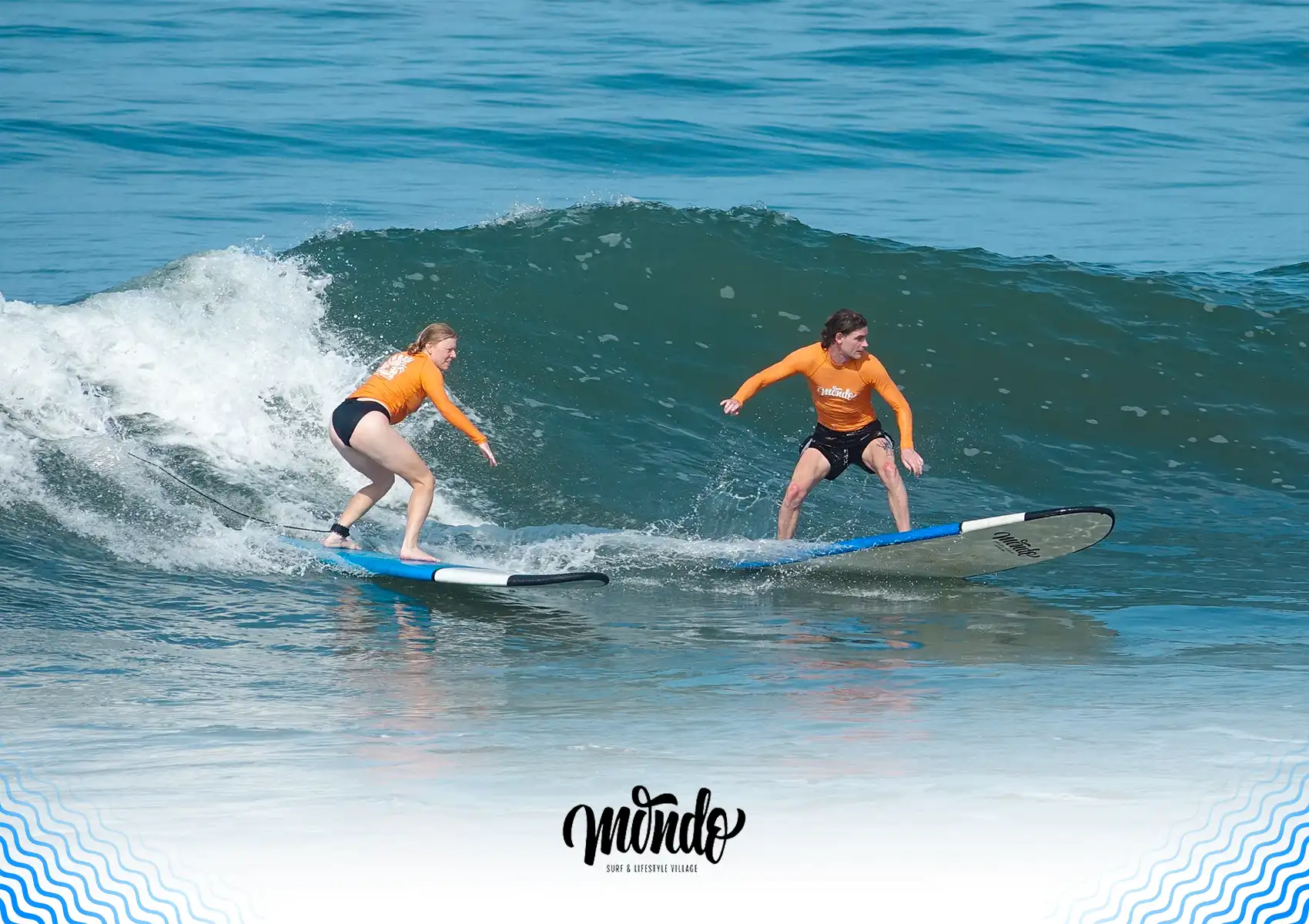
To sum up, spilling waves are gentle, slow-breaking waves that give beginners the time and safety they need to learn. They are kind when you fall, and they help you build the paddling and timing you will need for bigger waves later. Every surfer starts out watching these small waves and wondering if they can catch one. With patient coaching at a surf camp in Bali, you will get there faster than you think. Join your first session with Mondo Surf Village, where coaching starts right at the water’s edge.
Frequently Asked Questions
Are spilling waves good for beginners?
Yes, spilling waves are the best type for beginners. They break slowly, so you get more time to catch the wave and a softer landing when you fall, which makes them ideal for learning the basics.
What is the difference between spilling and plunging waves?
Spilling waves break slowly, with foam tumbling down the front over a few seconds. Plunging waves throw forward and break all at once with sudden force, which makes them faster, stronger, and better suited to experienced surfers.
Are spilling waves safe to surf?
Spilling waves are among the safest to learn on, because they let go of their power slowly instead of in one heavy hit. No wave is completely safe, so it still helps to surf near a coach and stay within your limits.
Can you find spilling waves in Bali?
Yes, Bali has plenty of gentle beach breaks that make spilling waves, and they suit first-timers well. Where and when they show up depends on the tide and the swell, so local help makes them easier to find.
What board should you use on spilling waves?
A longer, wider board with plenty of float works best. The extra float helps you paddle onto the gentle wave early and gives you a steady base to stand up on.