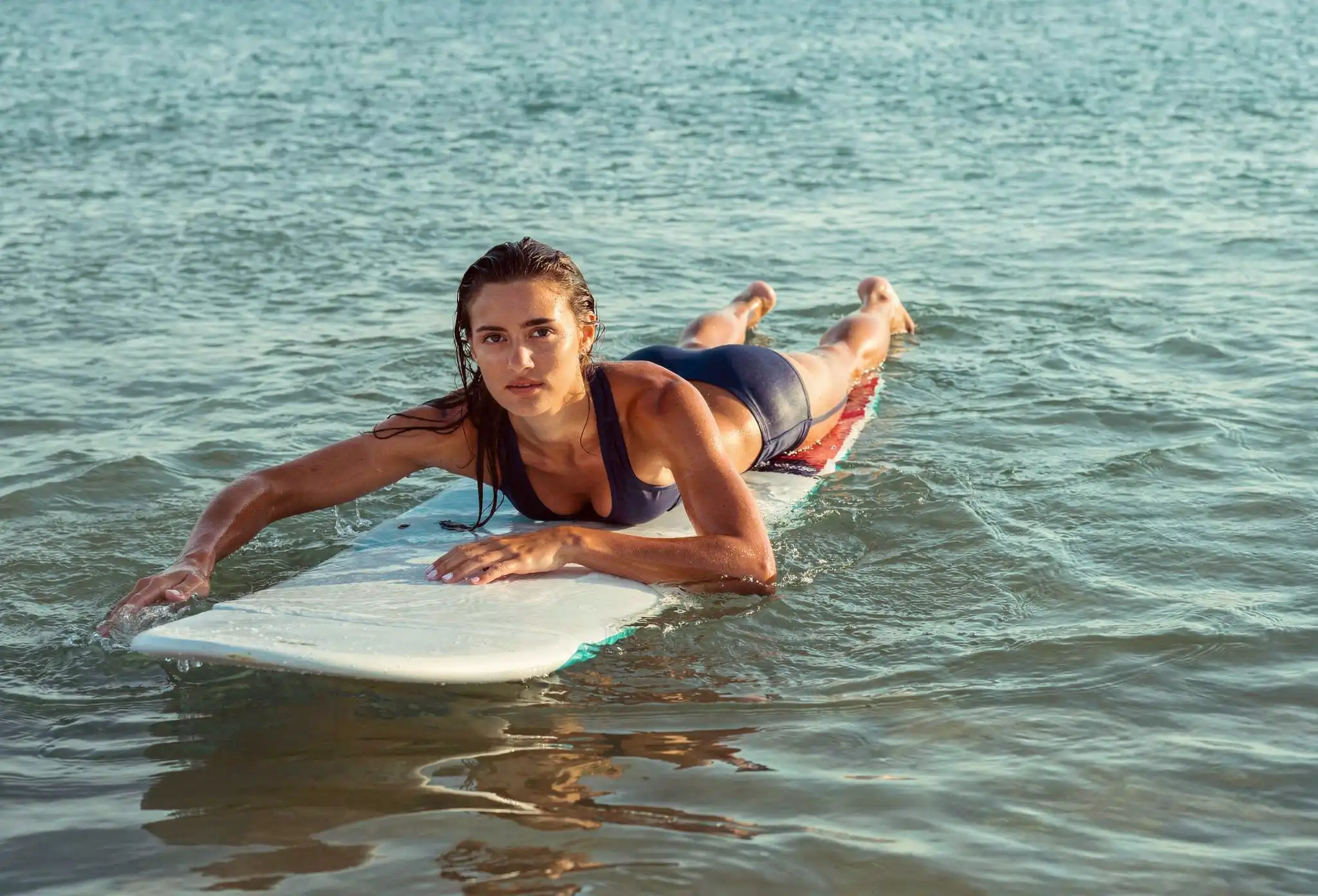
Your surf paddling technique affects how many waves you catch and how efficiently you progress. Beginners often think standing up is the hard part. The practical reality is simpler. If you learn how to paddle efficiently while surfing, you’ll find the rest of surfing more manageable. Whether you’re training at a surf camp in Bali or practising on your own, paddling forms the foundation of your progression. This guide breaks down paddling into actionable steps so you can catch more waves, build real endurance, and develop skills methodically. What is paddling in surfing? It’s how you move through the water, reach the lineup, and position yourself for waves. A better paddling technique means more waves caught. More waves caught means faster learning.

What Is Paddling in Surfing?
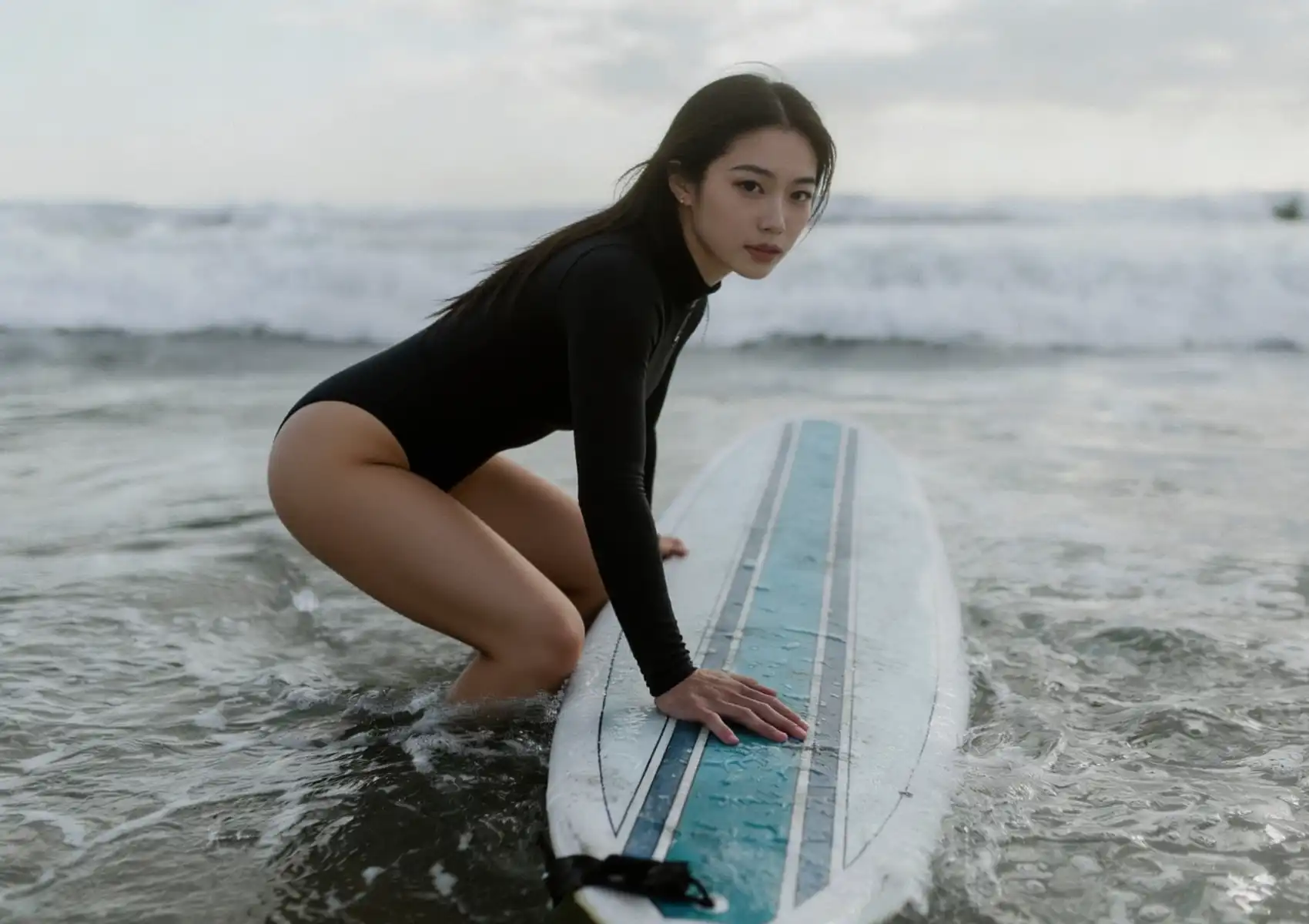
Paddling in surfing is the foundation of everything you do in the water. It’s how you generate forward motion, navigate to the lineup, and position yourself for waves. Without solid paddling technique, other aspects of surfing require more effort.
Paddling means moving your surfboard through water using controlled arm strokes. It’s not thrashing or panicking. It’s a smooth, rhythmic motion that propels you forward efficiently. Proper paddling engages your back and shoulder muscles, not just your arms. It keeps your body centred on the board. It minimises drag by maintaining a stable position and smooth movements. The practical goal is straightforward: cover distance without excessive energy expenditure, and position yourself when a wave arrives.
Why Surf Paddling Technique Matters
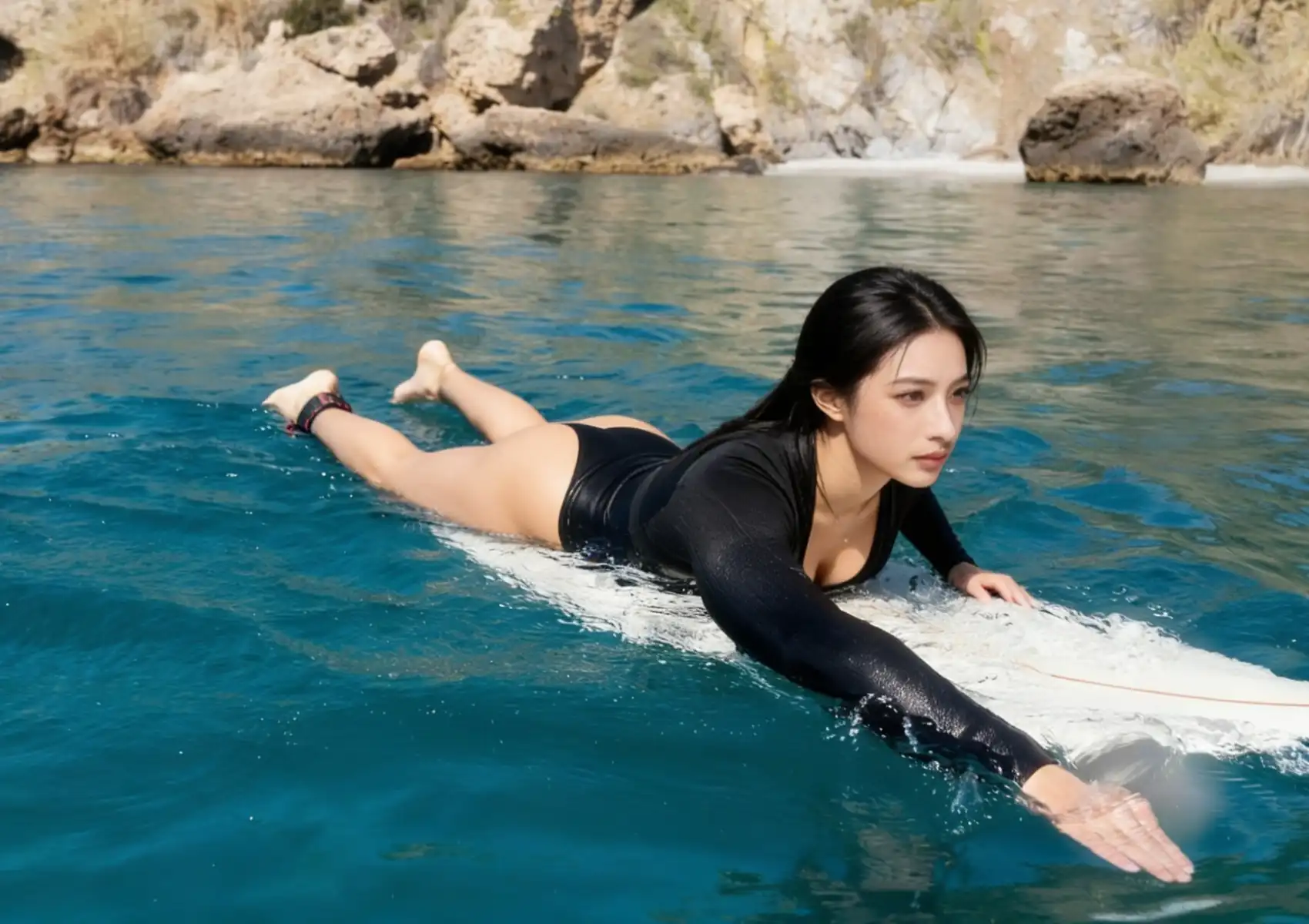
Paddling technique shapes how you experience each session. Good paddling gets you to the lineup without excessive fatigue. It positions you better when waves approach. It lets you catch more of the waves you’re lined up for. It conserves energy over extended sessions.
Your paddling technique directly affects wave count and positioning. With proper technique, you’ll catch more waves and sit in better positions than surfers relying on strength alone. This leads to more practice repetitions and steadier improvement.
How Paddling Affects Wave Count and Energy Levels
Paddling efficiency determines how many waves you can attempt during a session. A surfer with poor technique might catch 5 waves and feel tired. A surfer with good technique might catch 12 waves and still feel capable. The difference is energy management, not raw strength.
Better paddling also means your session quality improves. You’re not fighting the board or struggling against drag. You’re moving with purpose and rhythm, which keeps you mentally fresher and physically more capable.
Finding the Right Position on Your Surfboard
Your position on the board determines how much resistance you create when paddling. Get it right, and the board glides efficiently. Get it wrong, and you’re working against unnecessary drag.
The goal is to find your “sweet spot”, the position where your body and board move through the water with reasonable efficiency. This position changes slightly depending on board size and your bodyweight, but the principles remain consistent.
How Board Position Affects Speed
When you’re in the correct position, your surfboard sits relatively flat in the water. The nose is slightly out (roughly 2 to 5 centimetres). Your back is naturally arched. Your body feels centred and balanced. This position reduces drag and improves paddling efficiency.
When you’re out of position, paddling becomes noticeably harder. Your strokes need to be longer and more forceful to generate the same speed. Your shoulders fatigue faster.
Signs You Are Positioned Too Far Forward
If you’re too far up on the board, the nose dips underwater. This increases drag and slows your paddling. You’ll also struggle to see incoming waves because your view is obstructed. Your paddling becomes less efficient because you’re fighting the board sinking.
Signs You Are Positioned Too Far Back
If you’re too far back, the nose tilts upward excessively. The board becomes unstable side to side. Your paddling power decreases because the nose lifting reduces contact with the water. You’ll fatigue faster because your positioning forces inefficient movement patterns.
How to Paddle Efficiently Surfing
Efficiency comes from consistent technique, timing, and body awareness. It’s not about paddling harder. It’s about paddling with purpose.
The foundation of efficient paddling rests on four principles: keep your body long and balanced, lift your chest without excessive arching, maintain a stable head position, and remain relaxed throughout the motion.
Keep Your Body Long and Balanced
Lie flat on your board with your feet together. Keep your body aligned along the centre line. Imagine a line running down the middle of the board. Your body should align with it. Keeping your feet together prevents you from trying to stabilise an unbalanced position with your legs. When your body is properly aligned, the board moves more efficiently.
Lift Your Chest Without Creating Drag
Your chest should be slightly lifted, creating a natural arch in your back. Imagine a soccer ball under your chin. This positioning keeps your head up, your vision forward, and your nose at the right height. Avoid excessive arching. The goal is natural lift, not a dramatic cobra pose.
Maintain a Stable Head Position
Your head weighs approximately 20 kilogrammes. Where it goes affects your board position. Keep your head still and looking forward. Don’t rock your head side to side. Don’t drop your chin. A stable head position helps keep your board flat in the water.
Stay Relaxed While Paddling
Tension wastes energy. Relax your shoulders. Keep your hands relaxed and open, not cupped. Breathe steadily. Relaxation allows you to paddle for extended periods without excessive fatigue. Tension is what makes beginners’ arms and shoulders ache after short sessions.
Surf Paddling Technique for Stronger Strokes
Strength in paddling comes from proper mechanics rather than muscle alone. Good technique means each stroke generates propulsion effectively.
Your paddling stroke has four distinct phases. Understanding each one turns random effort into purposeful movement.
Enter the Water Smoothly
Your fingertips should enter first, followed by your wrist, then your elbow. This smooth entry reduces splash and drag. The more controlled your paddle entry, the better your technique. Your hand should penetrate the water in front of your head, near the board’s rail. Paddling wide (away from the rails) is less efficient and puts more stress on your shoulders.
Use Long Controlled Paddle Strokes
Your stroke should extend from in front of your head to your hip. This length generates more propulsion than short, choppy strokes. Pull the water consistently through the full range. Longer strokes move more water backwards and generate more forward momentum.
Engage Your Back and Shoulders
Your back and shoulder muscles are larger than your arms. Use them effectively. Imagine pulling yourself forward by pushing water backwards. Your elbow should stay high and bent throughout the stroke. This “early vertical forearm” position transforms paddling from just an arm motion into a full-body action.
Maintain a Consistent Rhythm
Paddling should be rhythmic rather than sporadic. One arm at a time, steady pace, consistent depth. This rhythm allows you to paddle for extended periods. Rhythm also helps you read the ocean better because you’re not constantly adjusting your stroke.
Building Paddling Strength for Surfing
Strength development on the board is supported by off-board training. Land-based conditioning accelerates your water progress.
Training should focus on your upper back, shoulders, core, and arms. Three sessions per week off the board, combined with consistent water time, build functional paddling endurance.
Swimming for Paddle Endurance
Swimming is the most direct off-water training for paddling. It builds muscular endurance without impact. Freestyle swimming, in particular, transfers to paddling mechanics. Aim for 20 to 30 minutes of steady swimming, two to three times weekly.
Mobility Exercises for Better Shoulder Movement
Tight shoulders limit your range of motion and increase injury risk. Shoulder circles, band pull-aparts, and doorframe stretches improve mobility. Better mobility means longer strokes with less effort. Spend 10 minutes daily on shoulder mobility work.
Strength Training for Surf Paddling
Push-ups (including diamond push-ups), rows, planks, and Superman holds develop the muscles you use paddling. Aim for 3 sets of 12 to 15 repetitions, two to three times weekly. Rest days are when your muscles recover and adapt.
Recovery Tips After Long Surf Sessions
Stretch your shoulders, chest, and back within an hour of finishing. Ice sore shoulders only if there’s inflammation. Sleep is when your muscles rebuild. Hydration supports recovery. Gentle yoga the day after intense sessions helps manage soreness and prevent stiffness.
Practising Surf Paddling Technique in Bali
Bali offers practical advantages for learning paddling. The consistent conditions, variety of waves, and available coaching combine to create a suitable learning environment.
Bali’s year-round waves mean you can focus on technique without battling extreme conditions. Beach breaks like Canggu and reef breaks like Uluwatu offer different paddling challenges at various difficulty levels.
Why Bali Is Suitable for Improving Paddle Skills
Bali has consistent waves throughout the year. Beach breaks and reef breaks offer different paddling practice opportunities. Experienced coaches understand paddling progression. The water temperature is comfortable for extended practice. The surfing community values technique development.
Choosing Waves That Match Your Ability
Beginners improve most effectively on beach breaks with gentle, rolling waves. These teach paddling mechanics without overwhelming pressure. Intermediate surfers benefit from larger beach breaks or mellow reef breaks. Advanced surfers refine their technique on demanding reef breaks where every paddling detail matters.
Learning Faster at a Surf Camp in Bali
A quality surf camp in Bali structures your progression logically. Coaches observe your paddling and provide specific feedback. Video analysis shows what’s working and what needs adjustment. Group sessions create accountability. Structured progression prevents wasted time.
Improve Your Paddling at Mondo Surf Village
At Mondo Surf Village, paddling technique is foundational. Coaches assess your current positioning and stroke mechanics before designing your progression.
Observation-led coaching means feedback is specific to your body, your board, and your current ability. Individual assessment works better than generic paddling advice.
Coaching That Focuses on Technique
Our coaches observe how you paddle out, how you position yourself in the lineup, and how you paddle into waves. They identify inefficiencies costing you wave count and energy. Coaching focuses on showing you what’s working and which adjustments lead to improvements.
Video Feedback and Surf Analysis
After sessions, you review footage with your coach. Seeing yourself paddle teaches more effectively than hearing about it. Video shows where your nose sits, where your body is centred, and how your elbow positions itself. You understand what proper technique looks like because you see it.
Surf Progression for Beginner and Intermediate Surfers
Beginner progression at Mondo Surf Village follows a structured approach: foundational paddling, body positioning, wave-catching, pop-up mechanics, and then turning. Each step builds on the previous one. Intermediate surfers refine their technique under pressure, learning to paddle effectively in larger waves and crowded lineups.
Frequently Asked Questions
Why Do My Arms Get Tired So Quickly When Surfing?
Poor paddling technique is often the reason. If you’re relying primarily on your arms rather than engaging your back and shoulders, fatigue sets in quickly. Incorrect positioning on the board increases drag, forcing harder paddling. Tension wastes energy. Relaxation and proper mechanics significantly reduce fatigue.
How Can I Improve My Paddling Endurance?
Combine consistent water time with off-water training. Swimming builds endurance directly. Push-ups, rows, and planks strengthen the muscles you use while paddling. Practising longer, slower paddles builds aerobic capacity. Paddling thousands of strokes teaches your body to be more efficient.
Does Paddle Technique Affect Wave Catching Success?
Yes. Good paddling technique positions you correctly when waves approach. You paddle into waves with genuine speed. You catch more waves than poorly paddling surfers miss. Wave catching success depends significantly on paddling quality.
Book Your Next Step at Our Surf Camp Bali
When you’re ready to improve your paddling techniques and make consistent progress with observation-led coaching, Mondo Surf Village offers structured development. Book your next training package at our surf camp in Bali today. Our coaches assess your current technique and guide you through practical progression so you catch more waves and build real paddling endurance.