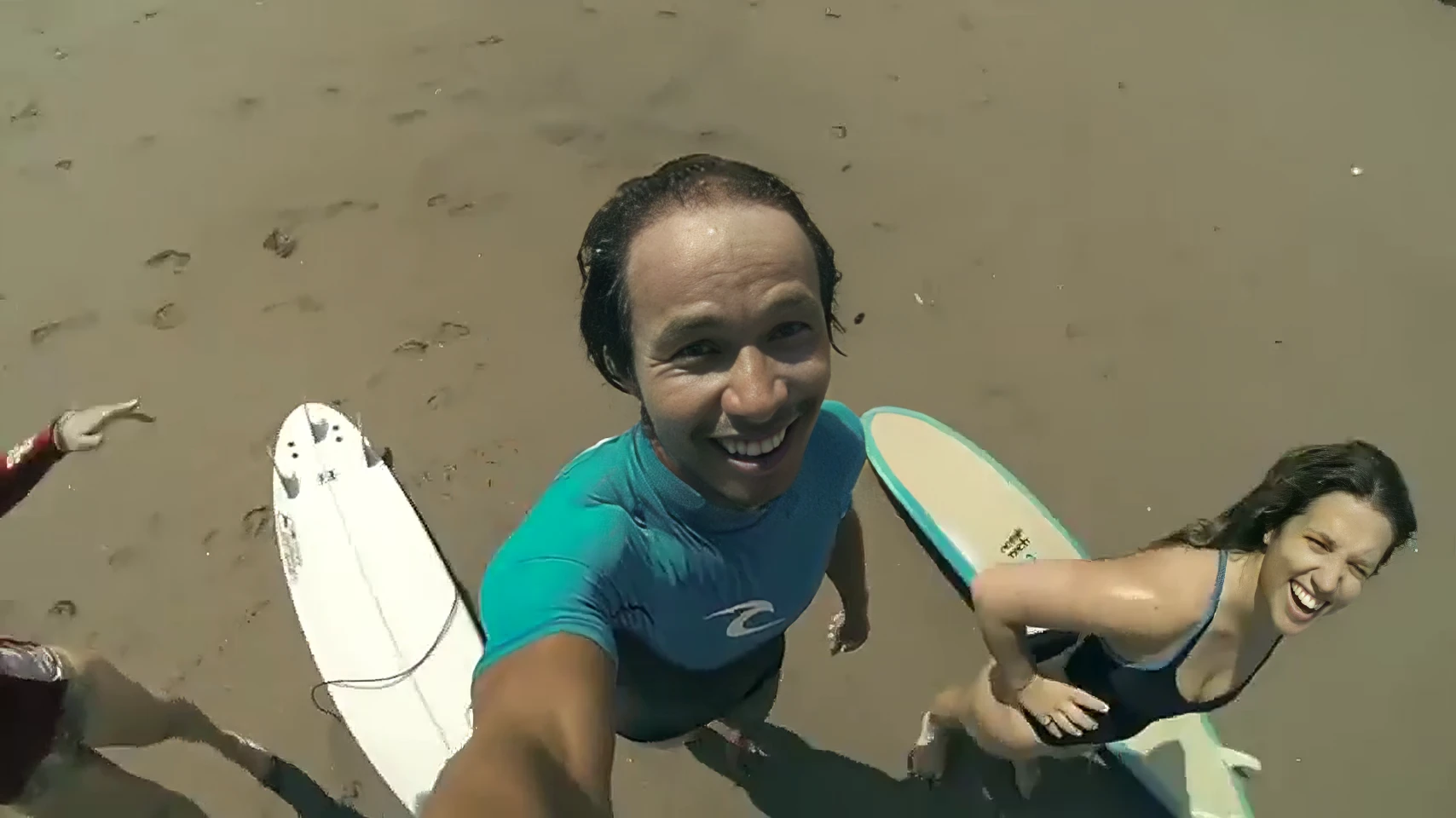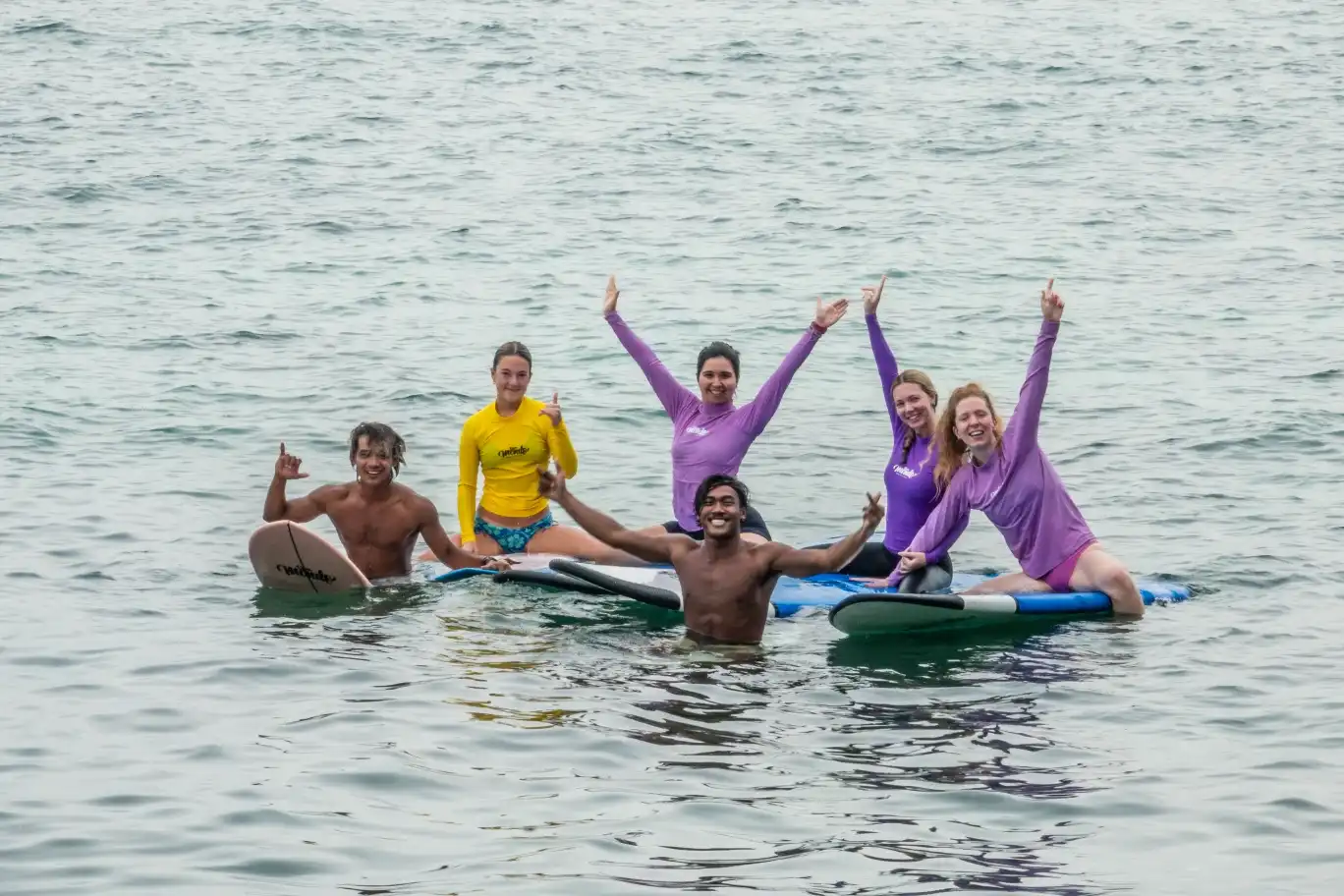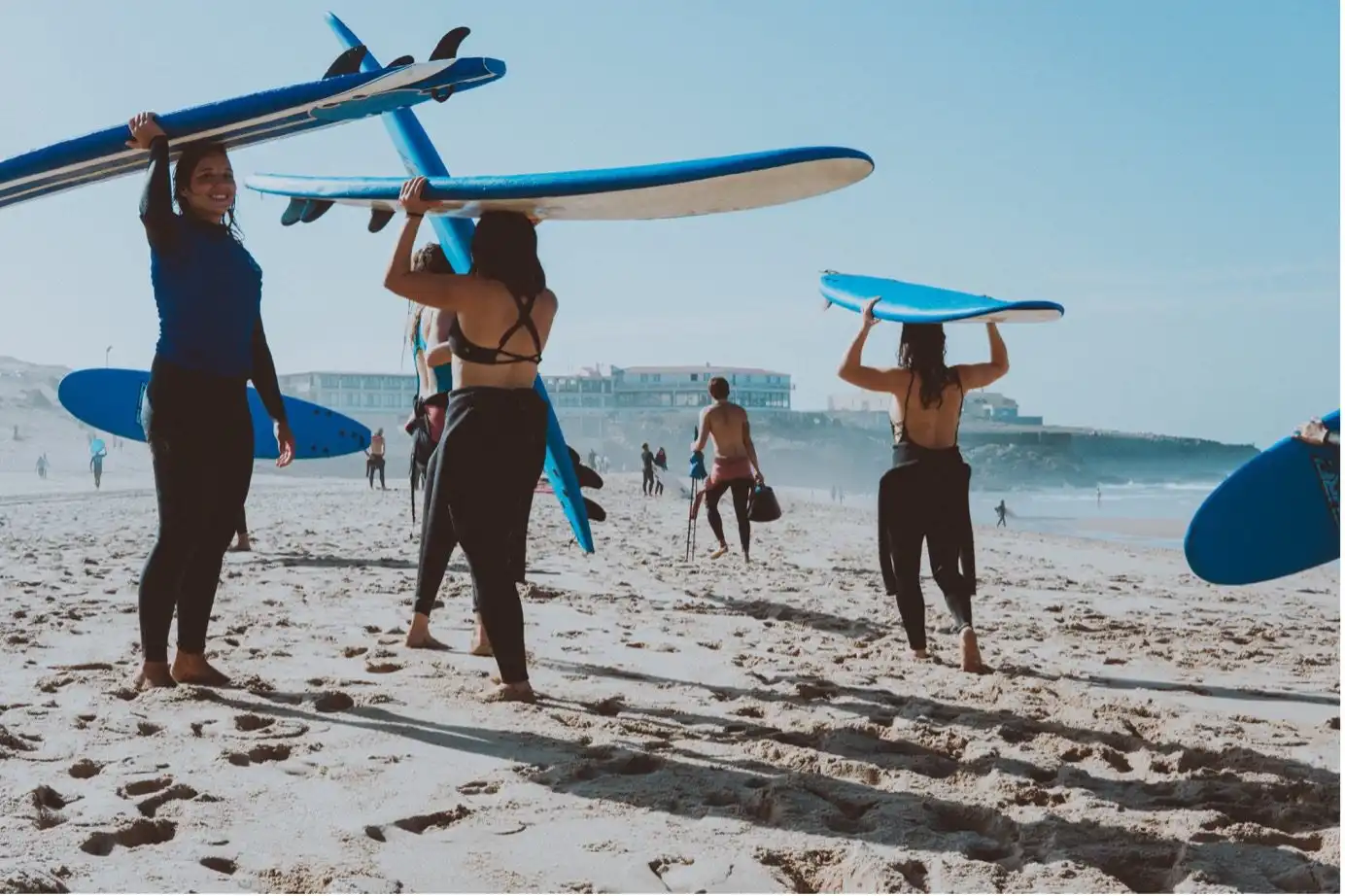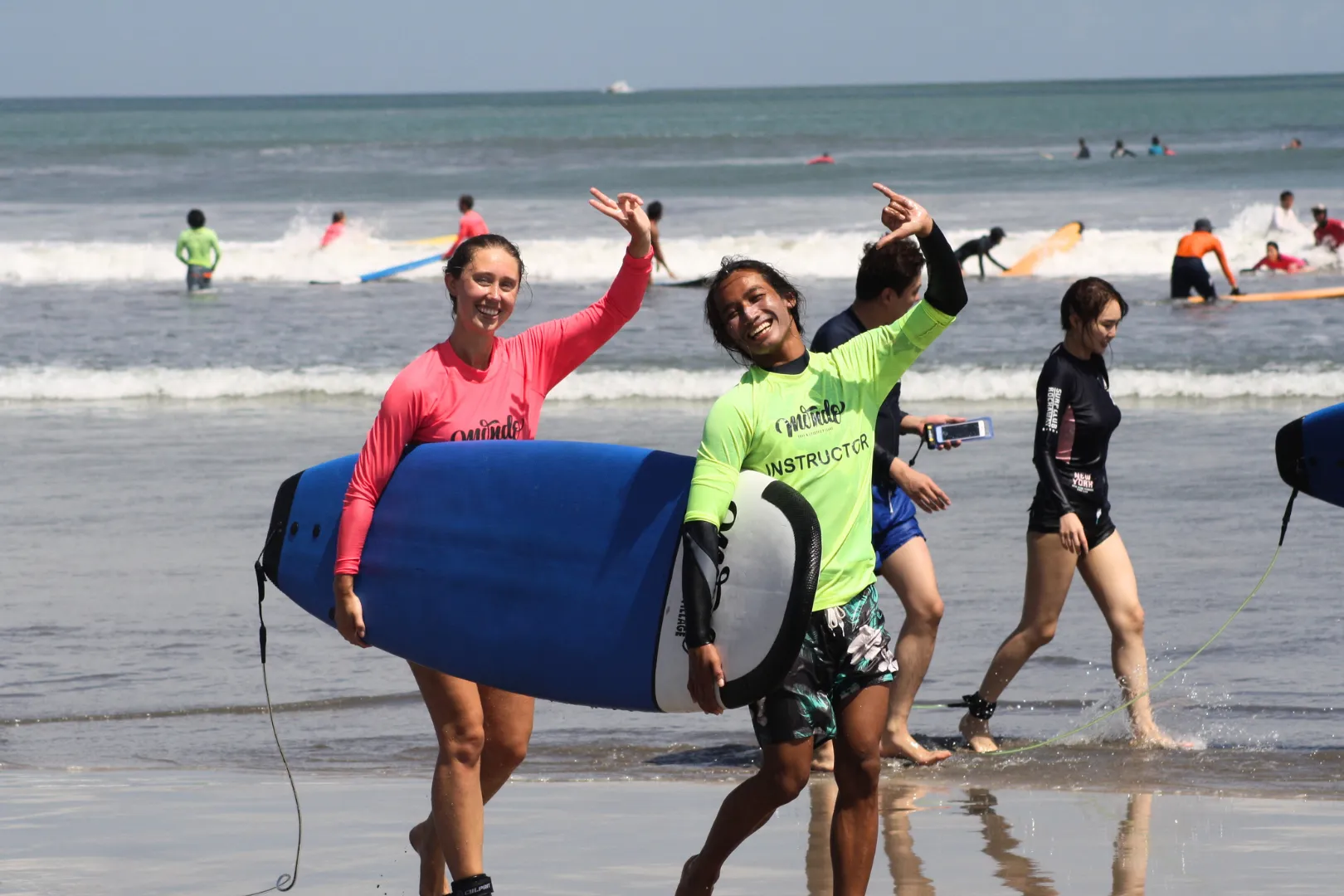

Watching from the sand is a useful way to spend time between sessions or while your arms recover. The surf photography tips below turn that time into photos worth keeping. Almost none of them involve buying anything. Position, timing, and patience often matter more than expensive gear, which is why photography sessions at a surf camp in Bali begin with understanding the beach before the camera.
These surf photography tips are especially useful for friends and family who are capturing beginner sessions at the beach.

Where to Stand
Almost every weak surf photo was taken from the wrong place, and moving along the sand fixes more than any setting will.
Shoot Along the Beach Rather Than Straight Out
Standing directly opposite the breaking wave often gives you the surfer’s back and a flatter-looking image. Walk along the sand until you are looking down the line of the wave, and the face opens up in front of you.
Get Low
Crouching or kneeling puts the camera closer to the water and gives smaller waves more depth and movement. It also places the horizon behind the rider instead of below them.
Move With the Peak
Sandbanks shift, and so does the spot where waves break best. Watch two or three sets before you settle, which is the same habit a surf camp in Bali applies when choosing where to surf.
When to Shoot
Light and patience decide more of the result than anything you do with your hands, and on a Bali surf holiday both are free.
The First and Last Hours of Light
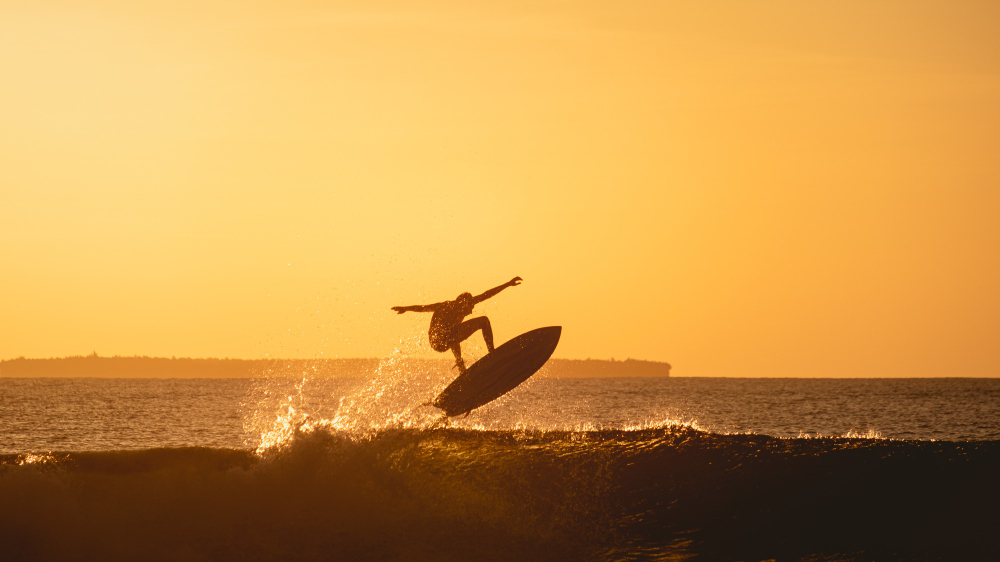
Depending on the coastline and conditions, early morning light can create cleaner contrast on the wave face, while evening light often creates warmer tones and silhouettes. The evening sun sits out over the water instead, turning spray and riders into silhouettes.
Watch the Set Before You Lift the Camera
Looking through a viewfinder narrows what you can see. Watch the first wave of a set with your own eyes, work out where the surfers are going, and shoot the ones that follow.
Shoot the Whole Ride
The best frame is rarely the take-off. Keep shooting through the turn and the finish, and remember that surf video analysis is the better tool for studying technique.
How to Frame a Surfer

Framing separates a photo of a surfer from a photo of surfing, and it is what a surf camp in Bali would fix first.
Leave Space Ahead of the Rider
Place the surfer on one side of the frame, leaving room in the direction they are travelling. A rider pinned against the edge looks stuck, even in a good moment.
Include the Wave and Not Only the Person
Zooming in too tightly can remove the movement and setting that make surf photography interesting. Pull back far enough to show the lip, the spray, and the shape of the wave being ridden.
Keep the Horizon Level
A tilted horizon is the quickest way to make a good frame look amateurish. Check it as you shoot, and straighten it afterwards if you have to.
Getting the Settings Roughly Right
Settings matter less than position, though a few basics can keep you from losing shots you have already framed well.
Fast Shutter Speeds Freeze the Spray
Surfing moves quickly, and water moves faster. A faster shutter speed, often around 1/1000 second or higher in bright conditions, helps freeze spray and fast movement.
Continuous Focus Follows the Surfer
Set the camera to track a moving subject rather than focusing once and locking. Combined with burst shooting, it gives you several chances to capture the strongest moment of the ride.
Protect the Camera From Salt and Sand
Salt spray travels further up the beach than you think, and sand finds every gap. Keep the bag closed, change lenses away from the water, and wipe everything down at the end.
Bring the Camera on Your Rest Day

Rest days are when the camera earns its place. Photography sits alongside surf coaching, yoga, and martial arts at a surf camp in Bali, so the hours out of the water are as full as the ones in it. At Mondo Surf Village, photography becomes another way to understand surfing, helping guests notice wave shape, timing, and movement even when they are not in the water. Book your surf experience with Mondo Surf Village.
Common Questions About Surf Photography
What camera settings work for surf photography?
A fast shutter speed, continuous focus, and burst shooting cover most of it. Around 1/1000 second or faster is a useful starting point for freezing spray and movement.
Do you need a long lens to photograph surfing?
From the beach, yes, if you want close frames of a rider. A longer lens makes it easier to capture surfers from the beach, although the exact focal length depends on how far you are from the break.
What time of day is best for surf photos?
Early morning and late afternoon. The light is softer, the angles are more interesting, and the wind tends to be lighter, which makes the waves look better anyway.
How do photographers shoot from in the water?
With a waterproof housing and a wide lens, swimming close to where the waves break. It requires strong swimming and good judgement, so it is not the place to begin.
Can beginners learn surf photography in a week?
The basics, yes. Position, light, and framing improve quickly with feedback, which is one reason photography sits alongside the surfing at a surf camp in Bali.