
When you are learning to surf in Bali, the leash is easy to overlook, yet it is the piece of safety gear you depend on most. A surfboard leash keeps your board close, protects the surfers around you, and saves you a long swim back to the beach. Choosing the right one is more straightforward than it looks, and a little know-how now spares you hassle in the water later.
What Is a Surfboard Leash?
A surfboard leash is the cord that connects you to your board, so the two stay together in the water. One end fastens around your ankle with a padded cuff, and the other clips to a plug near the tail of your board. The cord is made of stretchy urethane, so it gives under load rather than snapping tight.

Benefits of Using a Surfboard Leash
A surfboard leash does more than stop you from losing your board. It keeps you and everyone around you safer in the water. When you fall, the board stays within reach instead of washing to shore without you. That matters for nearby surfers too, since a loose board is heavy and solid and can easily injure someone. It also means less effort, because swimming to fetch a runaway board is tiring.
The Parts of a Surfboard Leash
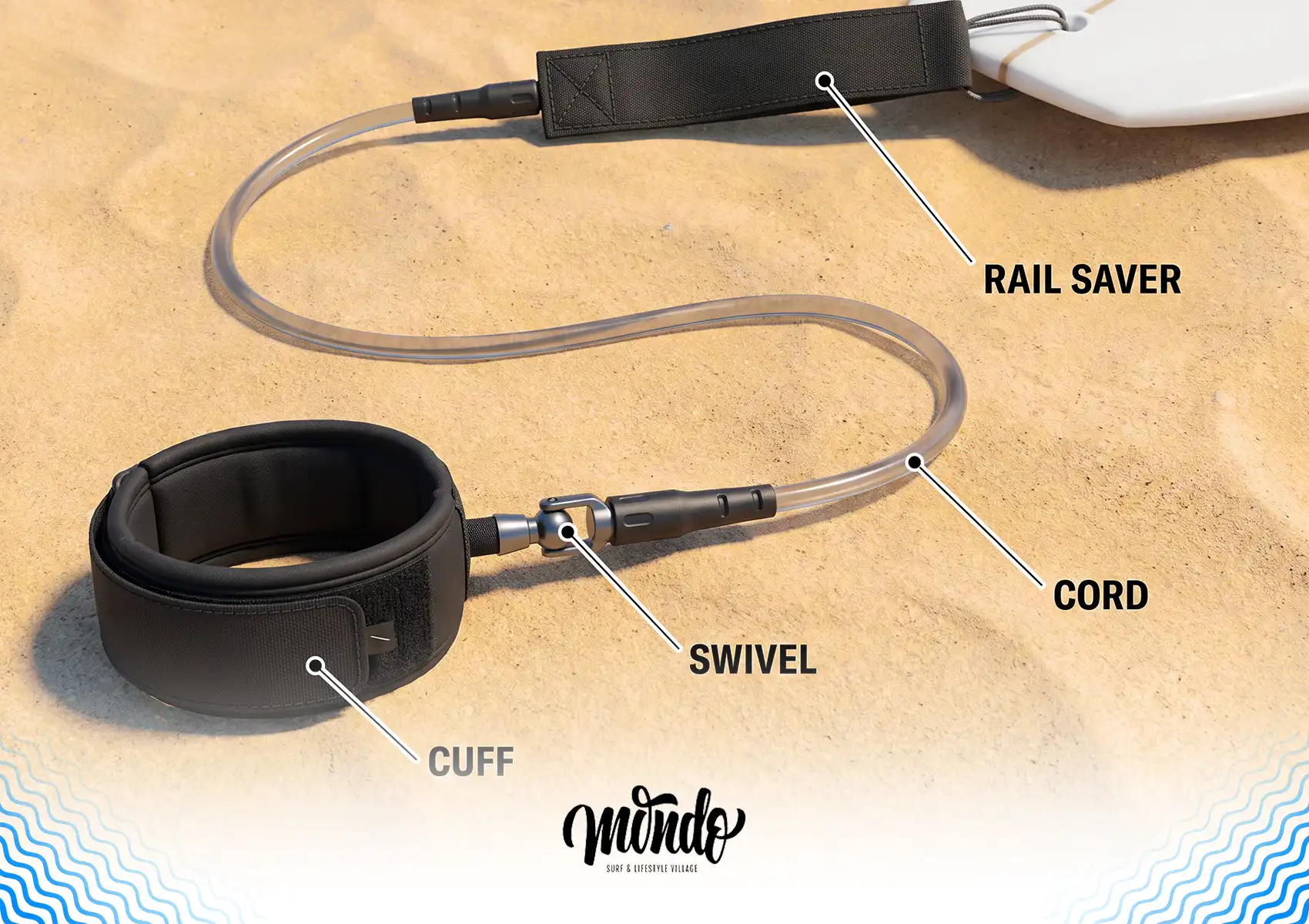
You do not need to know every component, but a few names help when you are choosing a leash or checking an old one for wear. Each part helps keep you safely attached to your board.
Cuff
The cuff is the padded strap that wraps around your ankle and holds the leash to your leg. It fastens with a hook-and-loop closure, and the padding keeps it comfortable during long sessions. Many cuffs also include a small pocket, which is a handy place to tuck a car or locker key while you surf. A good cuff sits firmly without pinching or cutting off circulation.
Cord
The cord is the springy rope between you and your board, and it does the real work. It stretches as the board is pulled away, so it doesn’t snap straight back at you, then draws it in gently once the wave has passed. A quality cord returns to its original length rather than staying stretched, which is one sign of a leash worth keeping.
Rail Saver
The rail saver is the flat fabric strap at the board end, where it ties to the leash plug. It spreads the pull across the tail so the thin leash string does not cut into the rail of your board. Without it, repeated tugs could slowly wear a groove into the tail.
Swivel
The swivel is a small rotating joint, usually where the cord meets the cuff or the rail saver. It lets the cord spin freely as you turn and tumble in the water, so the leash does not wind tightly around your ankle. For a beginner who falls often, that means fewer tangles to sort out between waves.
How to Choose the Right Surfboard Leash
Choosing a beginner leash is not complicated, and it is one of the first things we cover at our surf camp Bali.
Type
Start with a regular all-round leash. It handles the conditions most beginners surf in. Comp, pro, and big-wave leashes are made for situations you are not chasing yet, so there is no need to pay for them now.
Length
Match the leash to your surfboard. A board around seven feet long takes a leash of about the same length. If it is too short, the board can spring back at you when you fall. If it is too long, the extra cord drags and tangles more easily.
Thickness
A slightly thicker cord suits the bigger, heavier boards beginners ride, since it holds up under the extra pull. A thinner cord feels lighter, but it is better kept for smaller, high-performance boards later on. A standard thickness is the safe choice to start.
Ankle or Calf Placement
Wear the cuff on your back foot, which for most beginners means the ankle. An ankle cuff is easy to reach and fasten, and keeps the leash where you can feel it. A calf cuff sits higher and suits longboarders, who move up and down the board. Start at the ankle for now.
Common Surfboard Leash Mistakes to Avoid
A few small errors catch out new surfers, and each is easy to avoid once you know it.
- The wrong length. A leash that is too short or too long makes surfing harder and can pull the board back into you.
- A worn cord. Small nicks and cracks weaken the cord over time, so check it before you paddle out.
- The wrong foot. The cuff goes on your back foot, not your front, or it will trip you on every wave.
- Going too cheap. The cheapest leashes tend to snap or tangle, and a broken leash on a bigger day is a real problem.
- Sun damage. Leaving a leash in the sun makes the cord brittle, so keep it in the shade between sessions.
Bring It All Together at Mondo
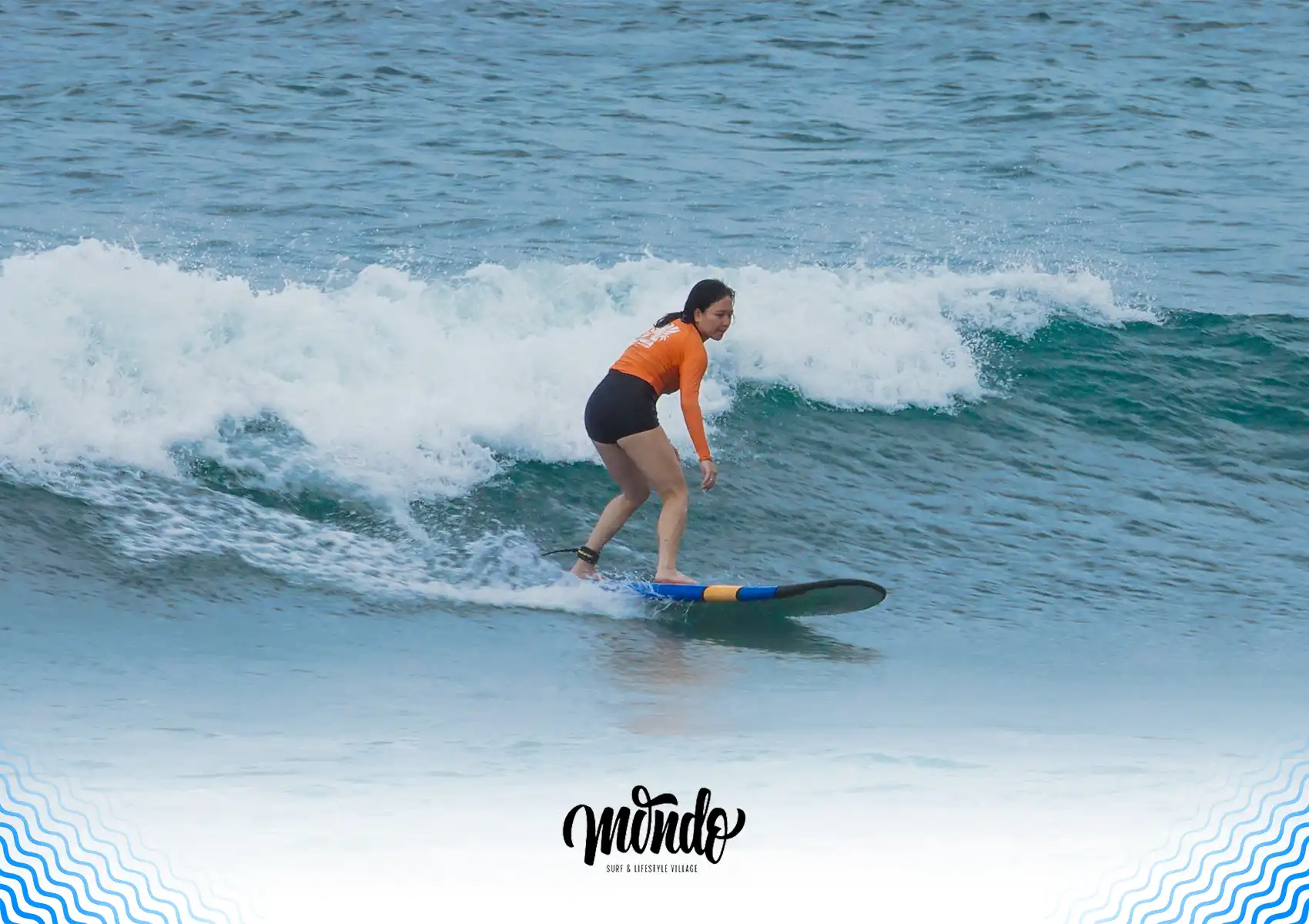
A leash is one of the simplest ways to surf more safely. It keeps your board with you and protects the people around you. As a beginner, choose a regular ankle leash about the same length as your board, and replace it once the cord cracks or stays stretched. The gear is only part of it, though. At Mondo Surf Village, our surf lessons in Bali pair patient surf coaching with daily yoga on the calm Canggu coast. Come and join a session at Mondo Surf Village.
Frequently Asked Questions
Do Beginners Really Need a Surfboard Leash?
Yes, beginners need a surfboard leash more than anyone. You will fall often while learning, so a leash stops your board from drifting off and keeps other surfers out of harm’s way.
What Length Leash Should a Beginner Get?
Choose a leash roughly the same length as your board. A larger beginner board of around eight feet takes an eight-foot leash, which keeps the board a safe distance away when you fall.
Can One Leash Work for Different Boards?
One leash can work across boards of a similar size, but not across very different ones. A shortboard leash will be too short for a longboard, so match the leash to the board you ride most.
How Often Should You Replace a Surfboard Leash?
Replace your leash as soon as you see cracks, deep nicks, or a stretched cord. For regular surfers, a leash often lasts a season or two, though checking it matters more than counting months.
Which Ankle Should the Leash Go On?
The cuff goes on your back foot. If you surf with your left foot forward, the leash goes on your right ankle, and the reverse if you surf with your right foot forward.