Paddling out looks simple from the beach. Then a wall of whitewater arrives, and you finish farther back than you started. Learning how to get past breaking waves is the skill that turns a frustrating session into a good one, and it is one of the first things coaches work on at a surf camp in Bali. Learning to paddle out efficiently saves energy, builds confidence, and gives you more opportunities to catch waves.

Why Getting Out Is Harder Than It Looks
The ocean pushes water towards the shore constantly, so every metre you gain has to be earned against something moving the other way.
The Whitewater Is the Obstacle
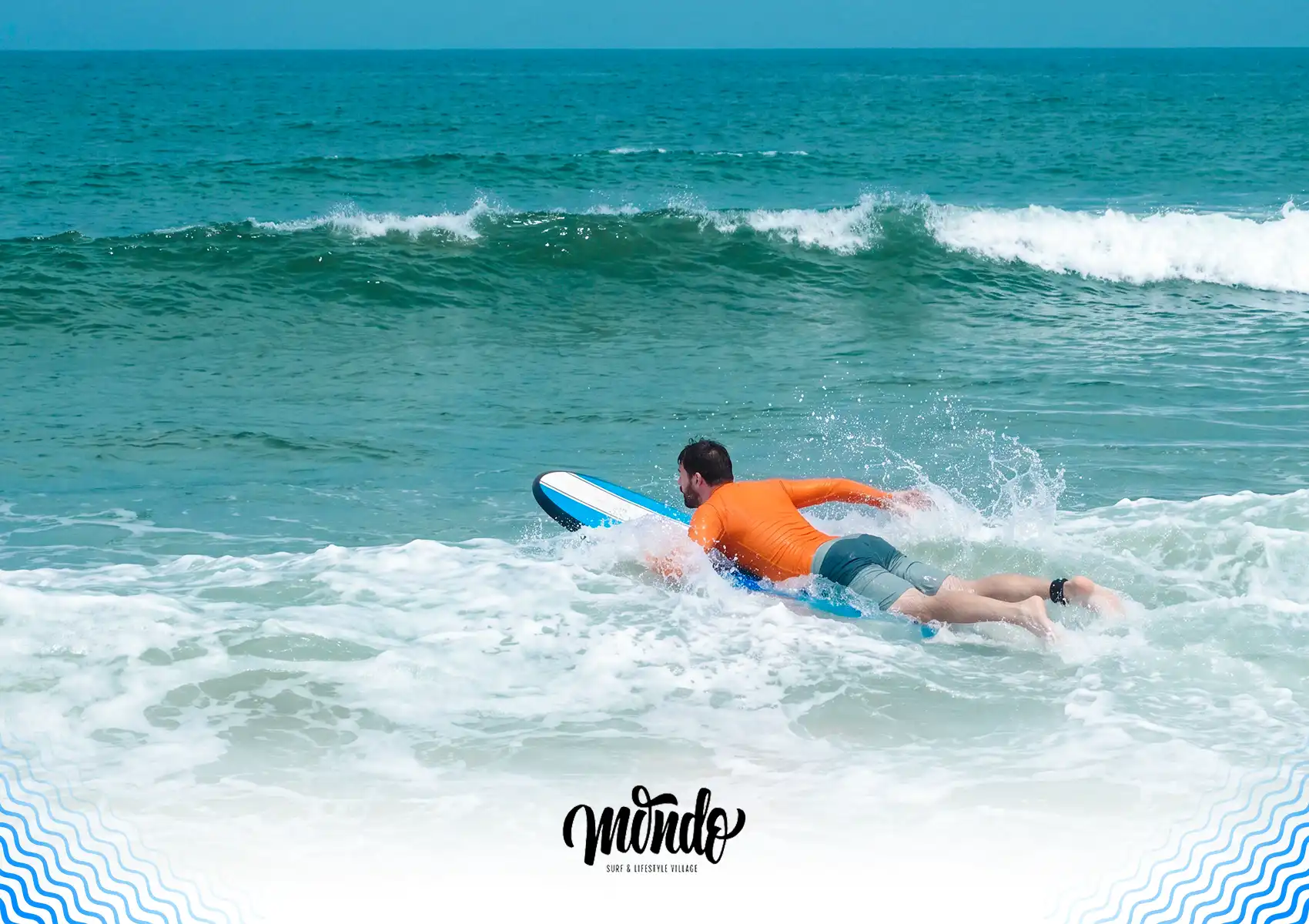
Broken waves carry a large volume of moving water towards the beach. That is the force pushing you backwards, and it is why paddling harder rarely solves anything on its own. Getting through it is a technique problem before it is a fitness problem.
Your Board Decides Your Method
A large, buoyant beginner board sits on top of the water and will not sink under a wave. A smaller board can be pushed beneath it. The method that works follows the board you are riding, rather than the level you think you have reached.
How to Read Your Way Out
A few minutes of watching from the sand will teach you more than ten minutes of effort in the water.
Watch Before You Enter
Stand on the beach and look for where the waves break and where they do not. A pattern usually appears within a couple of sets, and that pattern is your route out.
Follow the Deeper Water
Waves usually break where the seabed becomes shallower, while deeper channels often stay calmer. Follow that calmer water outwards where you can, even if it means walking further along the beach before you paddle.
Wait for the Lull
Sets arrive in groups with quieter gaps between them. Paddling out during a gap uses far less energy than pushing through the middle of a set, so let one finish and then commit. Combining that patience with efficient paddling technique is what makes the difference at a surf camp in Bali.
Two Ways to Get Past Breaking Waves
Both methods are simple to describe and awkward to execute, which is why they are worth practising deliberately rather than hoping for the best.
The Turtle Roll for Bigger Boards
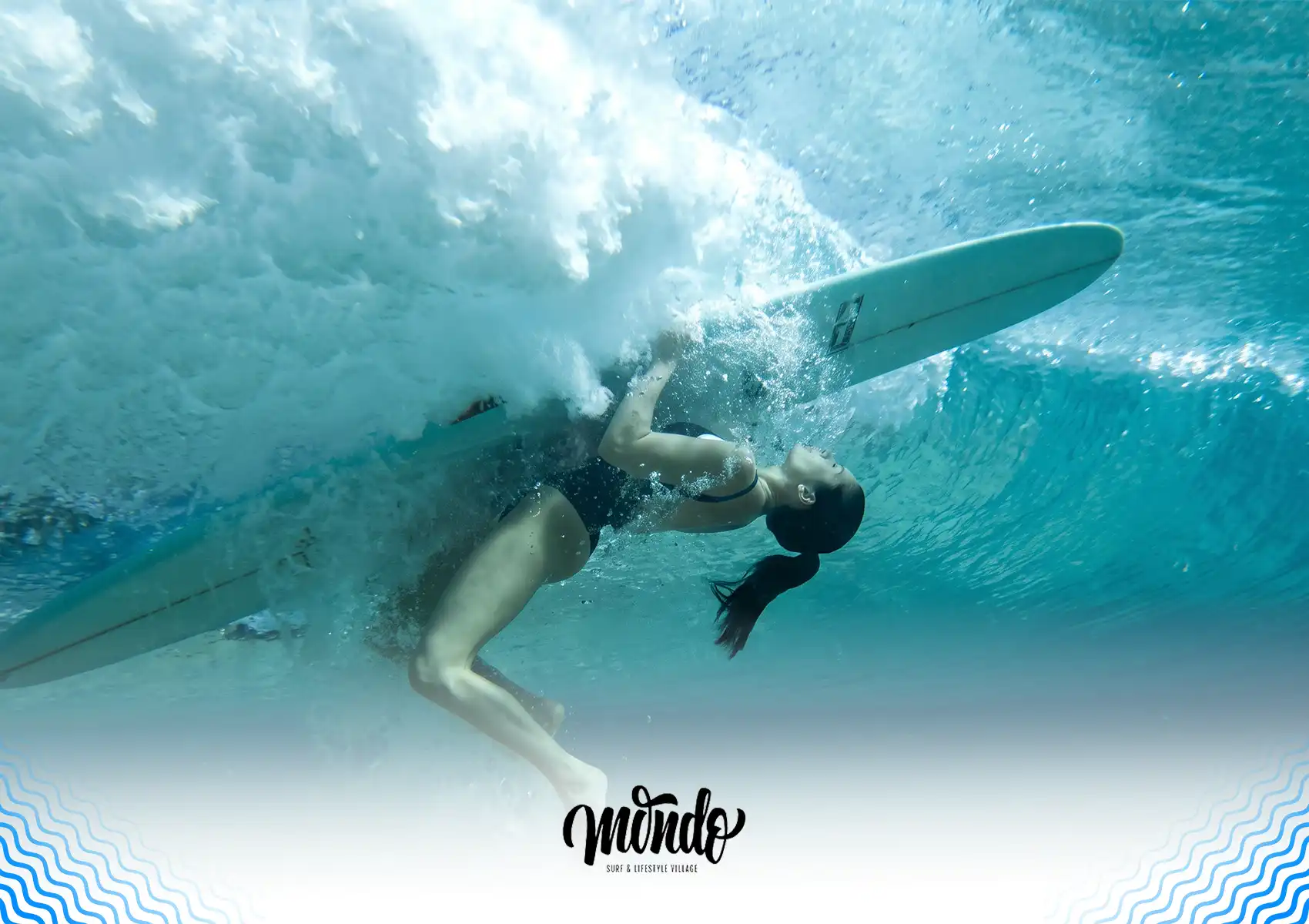
As the whitewater reaches you, roll the board upside down and hold the rails near the nose. Stay close underneath while the wave passes over, then roll back and start paddling immediately.
The Duck Dive for Smaller Boards
Push the nose under the oncoming wave with both arms, then drive the tail down with a knee or a foot. Success depends on timing. Too early and the wave lands on you; too late and it carries you back.
Keep Hold of Your Board
Letting go feels easier in the moment, and it sends a hard object into water where other people are surfing. Keep your hands on the rails and the board beside you or beneath you, never out in front.
How to Practise This in Bali
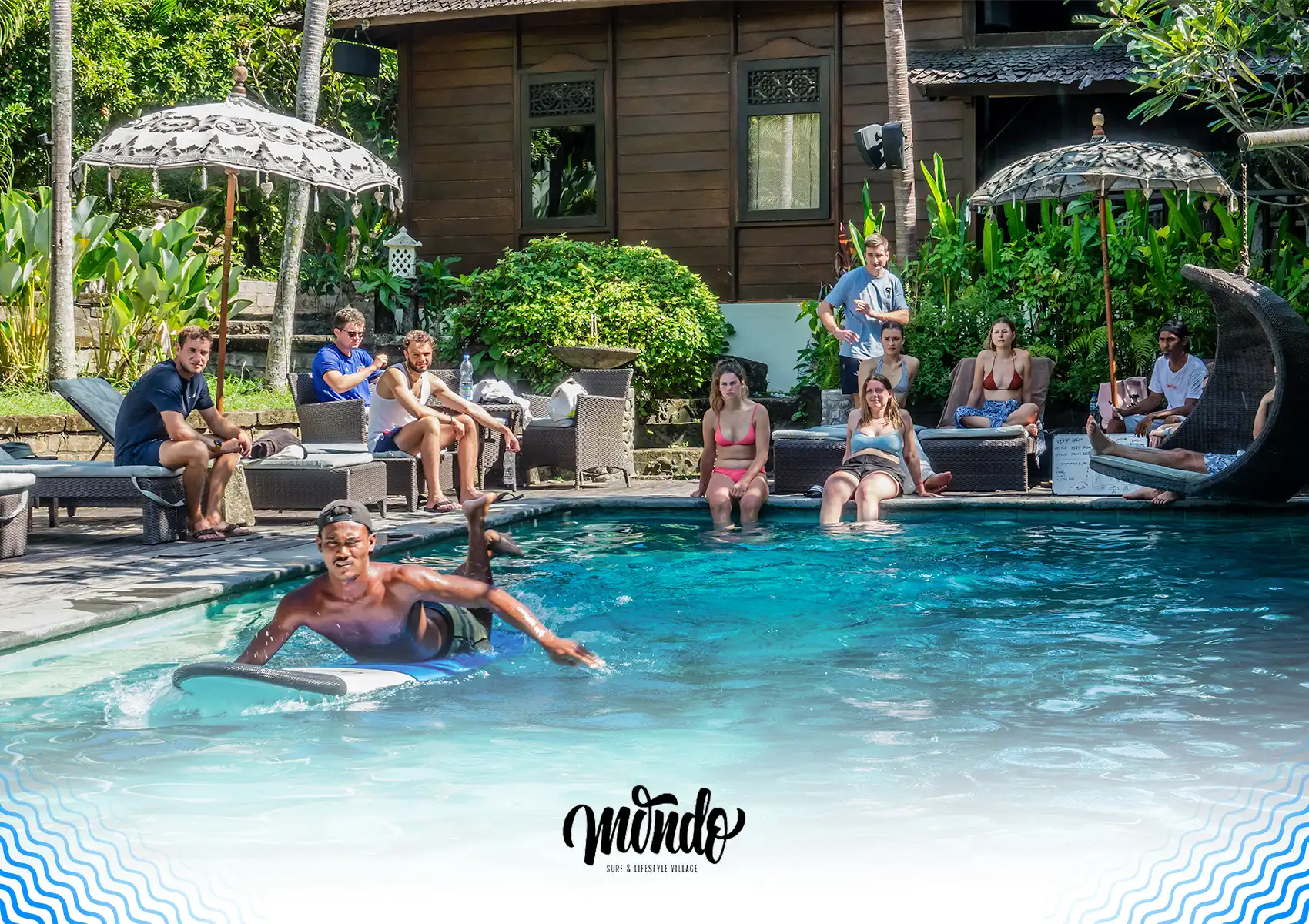
Bali gives you the conditions this skill needs, and a coach beside you turns weeks of guessing into a single session of feedback.
Start Where the Waves Are Small
Sandy beach breaks along the Pererenan and Canggu coast produce plenty of whitewater at a manageable size, which is why beginner coaching at a surf camp in Bali usually starts here. Getting it wrong costs you nothing more than a mouthful of saltwater and another attempt.
Have Someone Watching
Most of what goes wrong happens underwater, where you cannot see it and cannot feel it clearly. Surf video analysis and a coach in the water will show you the timing error you keep repeating.
Build the Strength Away From the Water
Rolling and diving through waves asks for back, shoulder, and core strength. Daily yoga and martial arts sessions build that steadily, and the morning yoga class before you surf loosens the shoulders you are about to use. Once getting through the whitewater feels comfortable, you can begin learning how to choose the right waves.
Common Questions About Getting Past the Waves
How do you get past waves when you cannot duck dive
Use the turtle roll. It is built for the large, buoyant boards that will not sink, and it keeps you attached to your board while the whitewater passes over you.
Is it easier to paddle out at high tide or low tide
It depends on the spot. Higher tides often mean deeper water and fewer waves breaking on your way out, whilst lower tides can leave a longer stretch of whitewater to cross.
How long does it take to learn to duck dive?
Most beginners need several weeks of regular practice before the movement becomes reliable in real waves. The movement itself is easy to understand, but the timing only becomes apparent through repeated observation of real waves.
Should beginners paddle out to the lineup straight away
Not usually. Beginners progress faster in the whitewater closer to shore, where there are more waves to practise on and far less to manage at once.
Do surf camps teach you how to paddle out
Yes. Getting through the waves is part of standard coaching at a surf camp in Bali, and it is normally taught alongside paddling and pop-up technique in the first sessions.
Ready to Stop Fighting the Whitewater
Learning how to get past breaking waves is one of the biggest milestones for any beginner. With experienced coaching, video feedback, and consistent practice, the paddle out becomes less exhausting and far more rewarding. Join a session at Mondo Surf Village.